Rahul Gandhi Turns Fire on Amit Shah After Pradhan’s Exit — Analyst Warns of BJP Trouble Ahead
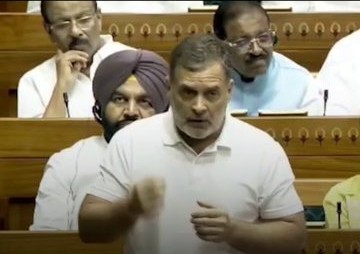
Rahul Gandhi speaks in the Lok Sabha (Image Sansad TV grab)
By TRH Op-Ed Desk
Political analyst Manish Anand says the Congress leader’s Lok Sabha attack on the Home Minister over student protests is no accident — and could rattle the BJP camp.
New Delhi, July 30, 2026 — Leader of the Opposition Rahul Gandhi has shifted his line of attack from former Education Minister Dharmendra Pradhan straight to Home Minister Amit Shah — and according to political analyst Manish Anand, that shift is deliberate, not incidental.
Speaking on The Raisina Hills, Anand walked through what unfolded in the Lok Sabha on Wednesday. During debate on legislation aimed at tightening anti-paper-leak rules, Gandhi pressed the government on who authorised the police response to student demonstrators outside Parliament on July 20. His core question, as Anand frames it: a crackdown involving batons, tear gas, pellet guns and electric shocks isn’t the kind of call a local police official makes alone — it has to go up the chain, and the chain leads to the Home Ministry.
Gandhi has already called Pradhan’s resignation “superficial,” arguing the former minister was more a figurehead than the person actually running the Education Ministry. Anand says that framing is central to Gandhi’s strategy — by suggesting Pradhan was never the real decision-maker, Congress keeps the pressure moving toward a bigger target: Shah himself, a figure many within the BJP regard as the party’s chief strategist and the architect behind several of its election wins.
Anand describes this as a calculated escalation rather than a spontaneous outburst. Gandhi, he notes, was not able to finish his remarks on the floor of the House and instead took the fight to a press conference afterward, keeping the spotlight squarely on Shah. For Anand, that persistence — and the choice of target — suggests Congress has settled on a more aggressive, better-sequenced approach than in past confrontations, one that could genuinely unsettle the BJP’s messaging heading into further sessions.
The analyst also weighs in on the legal backdrop. He points out that the Supreme Court had directed action against “anti-social elements” involved in the protests, and police claim roughly 150 to 200 such individuals were present. That court order, Anand argues, effectively hands police cover to act — but any crackdown risks reigniting the protest movement, since organisers have hinted they’ll return to the streets if that happens.
Anand draws a historical parallel to the UPA-era handling of the Anna Hazare movement, when the government chose dialogue over confrontation, versus its harder line against Baba Ramdev’s protest at Ramlila Maidan, which was cleared out overnight. He suggests today’s decisions — including the handling of protest leaders in the run-up to the July 20 march and a change in Delhi’s police commissioner just a day earlier — read less like routine administrative choices and more like political calls made at a senior level.
If Gandhi’s strategy of keeping Shah in the crosshairs gains traction, Anand argues, it puts the BJP in an uncomfortable position: defending its second-most powerful minister against an opposition that appears to be building a sustained, structured campaign rather than a one-off attack.
Modi Govt’s Double Game on Protests: Concessions by Day, Raids by Night, Says Analyst
Follow The Raisina Hills on WhatsApp, Instagram, YouTube, Facebook, and LinkedIn




About The Author