Prime Minister Is Appearing Neutral in a Moral Crisis of Epic Magnitude — Who Said It?
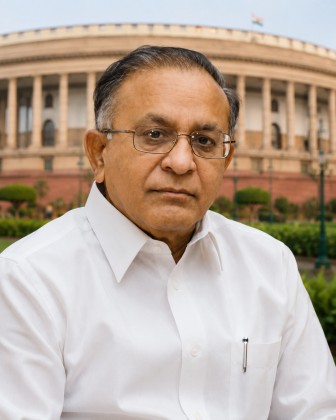
Former Congress leader S. Jaipal Reddy. (A representative image)
By NIRENDRA DEV
From S. Jaipal Reddy and V.N. Gadgil to K.L. Sharma, a look back at an era when political spokespersons and parliamentarians combined scholarship, wit and civility to deliver devastating political critiques.
New Delhi, July 30, 2026 — The quality of debate in Parliament is always under scrutiny these days. It often makes one nostalgic for the oratory of leaders such as S. Jaipal Reddy, K.L. Sharma, and V.N. Gadgil.
It also reminds one of the old school of journalism and a generation of lawmakers who scrutinised legislation thoroughly and debated it with substance rather than slogans.
K.L. Sharma, who pioneered the BJP’s media cell along with J.P. Mathur, made it a point to interact informally with reporters, often late into the night. Those conversations were as educational as they were newsworthy.
Jaipal Reddy, who passed away on July 28, 2019, excelled as the Janata Dal’s spokesperson before joining the Congress. He reportedly read at least 20 newspapers every morning to prepare for what he called the “afternoon onslaught” from journalists and political rivals. His preparation invariably reflected in the quality of his arguments.
By contrast, one Congress spokesperson in 2005 surprised journalists by feigning ignorance about which Union Minister had been served with a non-bailable warrant. Yet, in the same breath, he asserted that “the Congress and the Prime Minister are second to none in upholding public accountability.”
Such rhetoric rarely served the party’s interests. Around the same period, speculative stories about an imminent Cabinet expansion kept surfacing for weeks, often fuelled by party spokespersons themselves. Ironically, several of the Congress media managers—including Anand Sharma and Ambika Soni—were themselves among the hopefuls.
In the BJP too, many of the blue-eyed boys and girls of the Advani-Vajpayee era, particularly Sushma Swaraj, were politically ambitious. Some, however, went on to occupy the highest offices. Nirmala Sitharaman, a former BJP spokesperson and one of Prime Minister Narendra Modi’s closest confidantes, became India’s first full-time woman Defence Minister and later the country’s first full-time woman Finance Minister.
Though Jaipal Reddy joined the Congress later in his political career and frequently cornered Prime Minister Atal Bihari Vajpayee in Parliament, he may be remembered equally for his devastating wit directed at journalist-turned-politician Arun Shourie.
Responding to an article by Shourie that claimed V.P. Singh had approved the removal of bricks from Ayodhya, Jaipal Reddy remarked: “After excelling in journalism, Mr. Shourie is now trying to excel in fiction writing.”
The criticism was sharp, memorable and politically effective—without descending into personal abuse.
That was the hallmark of an earlier generation. The message was powerful, but the language remained civil.
Unlike today’s media-savvy political spokespersons, the role of party communicators has come full circle. Compared with the era of V.N. Gadgil in the Congress and K.L. Sharma in the BJP, there has been a perceptible shift in the way politicians engage with the media.
“One should have political acumen and a good grasp of issues,” the late Gadgil told me in 1998.
I had just arrived in Delhi from the Northeast and found his advice invaluable. When he learnt that I wanted to write about the Parliamentary Standing Committee system, Gadgil even offered to arrange an appointment with former Lok Sabha Speaker Shivraj Patil.
Despite his formidable intellect, Gadgil often described himself humorously as “a learned fool.”
Once I asked him whether he had ever made a mistake while answering journalists.
His reply was refreshingly candid.
“Yes. I should have avoided one direct question. I was asked whether Narasimha Rao was Mr Clean. I said yes. Then, slowly, cases against Rao started emerging. I should have skirted that question,” he said.
The deaths of Jaipal Reddy, K.L. Sharma and V.N. Gadgil created a vacuum in India’s political discourse. Their passing symbolised the transition from an era of scholarship and civility to one increasingly dominated by television sound bites.
They were not necessarily camera-savvy glib talkers. They relied on preparation, intellect and carefully crafted phrases.
When N.T. Rama Rao passed away, Jaipal Reddy summed up the moment in just five words: “National Front is orphan today.”
NTR had chaired the National Front, which included the Janata Dal, AGP, DMK and TDP.
There were many other moments when Jaipal Reddy demonstrated his extraordinary command over parliamentary language.
One such occasion came in December 2000 during the Lok Sabha debate on the Babri Masjid demolition.
The debate was held under Rule 184, a provision that required voting. The motion urged Prime Minister Atal Bihari Vajpayee to remove L.K. Advani, Murli Manohar Joshi and Uma Bharati from the Union Cabinet over their alleged role in the demolition.
Opening the debate, Jaipal Reddy launched a blistering attack on the Prime Minister. He said Vajpayee had mounted the “chauvinist Hindutva tiger” and completed his journey “from hypocrisy to theocracy.”
Calling the demolition of the Babri Masjid a “colossal crime,” Jaipal Reddy delivered one of the most memorable lines in modern parliamentary history: “The Prime Minister is appearing neutral in a moral crisis of epic magnitude.”
His speech did not end there.
He further remarked: “Govindacharya may be banished temporarily, but Prime Minister Vajpayee’s mask has been removed permanently.”
The comments angered BJP leaders including Vinay Katiyar and Ministers of State for Home I.D. Swami and Vidyasagar Rao.
The reference was to the controversy triggered after former BJP General Secretary K.N. Govindacharya was reported to have described Vajpayee as merely a “mask” for the BJP’s hardline Hindutva politics.
Today, Parliament continues to produce noise and confrontation. What it often lacks is the intellectual sharpness, wit and restraint that leaders like Jaipal Reddy, K.L. Sharma and V.N. Gadgil brought to public life.
They knew how to deliver a knockout punch without sounding vulgar. That may well be the biggest lesson their generation has left behind.
From George Fernandes to Kalyan Singh: Has Dharmendra Pradhan Entered BJP’s ‘Sacrifice’ Club?
Follow The Raisina Hills on WhatsApp, Instagram, YouTube, Facebook, and LinkedIn




About The Author