Satyajit Ray’s ‘Jana Aranya’ Still Echoes in Bengal
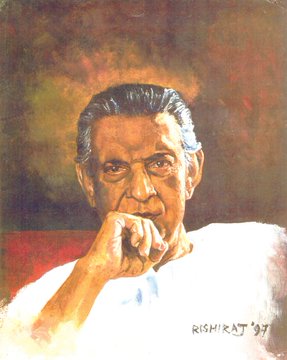
A portrait of Satyajeet Ray (Image X.com)
From Apur Sansar to Jana Aranya, Satyajit Ray captured a society caught between idealism and decay
By NIRENDRA DEV
Kolkata, April 24, 2026 —Few filmmakers have captured the soul of Bengal as profoundly as Satyajit Ray. From the intimate romance of Apur Sansar to the stark realism of Jana Aranya, Ray’s cinema continues to resonate with contemporary political and social currents.
In Jana Aranya, Ray delivered one of his most haunting observations: “The unemployed youth have only two choices—either corruption or revolution.” Decades later, that line still mirrors the anxieties of Bengal’s youth, raising uncomfortable questions about whether much has truly changed.
Ray’s collaboration with Soumitra Chatterjee reached emotional heights in Apur Sansar. The character of Apu—caught in an accidental marriage, evolving love, and eventual tragedy—remains one of Indian cinema’s most nuanced portrayals of human relationships.
In a memorable moment, Apu tells Aparna: “I love and admire my writing. I love you even more, you are even greater.” The line captures Ray’s ability to blend literary sensitivity with cinematic realism.
Critic Chidanand Das Gupta once described Ray’s craft as a balance of “outward and inward events in perfect relationship,” a technique visible in Apu’s silent grief and eventual reconciliation with fate.
The Calcutta Trilogy: A mirror to society
Jana Aranya, along with Pratidwandi and Seemabaddha, forms Ray’s celebrated “Calcutta Trilogy”—a searing commentary on urban decay, moral compromise, and shifting social structures.
In Pratidwandi, Siddhartha emerges as a conflicted intellectual—“a thinker, not a doer”—reflecting the turbulence of the Naxalite era. His outburst—“Are we animals?”—captures the frustration of a generation.
Meanwhile, Seemabaddha flips the lens, portraying a class that thrives not as victims but as participants in exploitation.
Ray’s later film Agantuk revisits questions of identity, trust, and civilisation. Through the enigmatic Manomohan Mitra, Ray challenges rigid social constructs, including religion and caste.
“I don’t believe in anything that divides people,” the character asserts—an idea that feels strikingly relevant in today’s politically charged environment.
Ray’s cinema consistently placed Bengal at a moral and ideological crossroads. The dilemma in Jana Aranya—corruption versus revolution—remains a powerful metaphor for contemporary society.
As political narratives evolve and identity debates intensify, Ray’s films serve as both archive and warning. They remind viewers that beneath changing regimes and rhetoric, the deeper struggles of society often remain unchanged.
From Pather Panchali to Jana Aranya, Ray chronicled not just stories, but the conscience of a people—one that continues to question, resist, and reflect.
Kaalbela to Kaalbela-2? Why Bengal Polls May Unveil a New Saga
Follow The Raisina Hills on WhatsApp, Instagram, YouTube, Facebook, and LinkedIn




About The Author