Kaalbela to Kaalbela-2? Why Bengal Polls May Unveil a New Saga
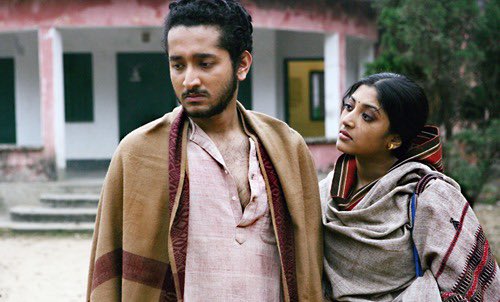
Animesh and Madhabilata from Kaalbela (Image X.com)
The legacy of Kaalbela by Samaresh Majumdar finds fresh relevance. Could a sequel capture the political churn in West Bengal?
By NIRENDRA DEV
Kolkata, April 19, 2026 — As West Bengal Assembly Elections 2026 near conclusion, Bengal’s turbulent political landscape seems ripe for a powerful cultural revisit. Few works capture the state’s ideological struggle and emotional churn as vividly as Kaalbela —a landmark political novel by Samaresh Majumdar, later adapted into an acclaimed film by Goutam Ghose in 2009. Today, the shifting currents of Bengal politics could easily inspire a sequel —Kaalbela-2 — for a new generation.
The word “Kaalbela” itself denotes timeliness—a moment shaped by history. The original narrative, both in the novel and the film, is rooted in the violent upheavals of the Naxalite movement in 1970s Calcutta. Featuring actors like Parambrata Chatterjee, Paoli Dam, and the legendary Soumitra Chatterjee, the film chronicles the journey of Animesh Mitra, a young man caught in the ideological crossfire of his time.
Animesh, a middle-class youth from Jalpaiguri, arrives in Calcutta with dreams of a career. His father’s warning—“the city will swallow you” and “politics is a luxury the middle class cannot afford”—sets the tone. Yet, like many of his generation, Animesh is drawn into student politics, eventually gravitating toward radical Naxalite ideology. His transformation reflects the journey of countless Bengali youths who were swept into political extremism, often without fully grasping its consequences.
The narrative does not romanticize rebellion. It exposes the brutal realities of the era—state repression, ideological fractures, and human rights violations under the then Congress-led regime of Siddhartha Shankar Ray. Police excesses, custodial torture, and fake encounters form a chilling backdrop. Characters like Subhas Sen are eliminated, while others, like Animesh, are left physically and emotionally scarred.
Equally striking is the portrayal of internal divisions within the Left movement. The ideological split between Marxists and Naxalites—both emerging from similar roots—led to mistrust, violence, and disillusionment. In one powerful moment, a former comrade turned minister tells Animesh: “You did not understand what was to be done and what was not.” That line encapsulates the tragedy of a generation caught between idealism and miscalculation.
‘I Have Been Used’: How a 1986 Gulzar Film Predicted Fake News
Kaalbela also humanizes collateral damage. Tridip, a poet and a broken lover, is drawn into politics without conviction and pays the ultimate price. Women, including tribal activists, face horrific abuse in custody. These are not just plot points—they mirror real historical trauma in Bengal’s socio-political memory.
The film ends on a somber note. Animesh returns from prison to find a changed world. His beloved Madhabilata, once from an affluent family, now lives in poverty with their child. The personal cost of political upheaval becomes painfully clear.
This is where the idea of Kaalbela-2 becomes compelling—especially in the context of 2026. Bengal today is no longer the Calcutta of the 1970s. The ideological battleground has shifted from Left versus ultra-Left to a more complex contest involving regional forces and national parties. Yet, the emotional and political undercurrents remain strikingly familiar.
A sequel could center on Arka, Animesh’s son—now a middle-aged man navigating a very different Bengal. Perhaps he is a typical bhadralok professional, burdened by routine, disconnected from the ideological fire that defined his father’s youth. Or perhaps he is haunted by it—constantly measuring the present against the past.
The generational shift could also extend to Arka’s children, who inhabit a hyper-polarized political environment. Old slogans may find new avatars. A line like “This country belongs to India, not to foreign agents” could morph into contemporary rhetoric reflecting present-day anxieties and identity politics.
Yet, beyond politics, Kaalbela-2 could retain the emotional core of the original—alienation, love, and existential drift. The quiet despair of a young man waking up to loneliness, or the slow erosion of ideals in a pragmatic world, remains timeless.
Any such reimagining must end where it began—with a tribute to Samaresh Majumdar. Best known for his Animesh trilogy, of which Kaalbela won the Sahitya Akademi Award in 1984, Majumdar chronicled Bengal’s soul with rare honesty. His legacy extends beyond this work, including creations like the detective Arjun, adapted into films such as Arjun – Kalimpong E Sitaharan, and novels like Buno Haansh.
As Bengal heads into another decisive election cycle, revisiting Kaalbela is not just nostalgia—it is a reminder that history, in this state, never quite stops echoing.
Follow The Raisina Hills on WhatsApp, Instagram, YouTube, Facebook, and LinkedIn




About The Author