BRICS Delhi Summit 2026: India-China Thaw Signals New Global Order
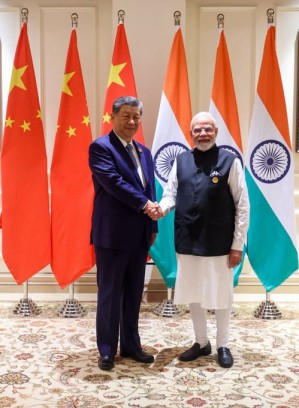
Prime Minister Narendra Modi with Chinese President Xi Jinping on sidelines of BRICS Summit in New Delhi (Image Modi on X)
By TRH Op-Ed Desk
China’s support for India at the BRICS summit, alongside calls for local-currency trade and reform of global financial institutions, could signal a deeper shift towards a multipolar world.
New Delhi, September 12, 2026 — The BRICS Summit in New Delhi could mark a turning point in global diplomacy, with the grouping increasingly emerging as an alternative platform to the Western-led international order, according to Manish Anand, a geopolitics analyst.
Analysing the outcome of the summit for The Raisina Hills, Anand said China’s support for India on several key issues, including its bid for a permanent seat on the United Nations Security Council, was among the most significant developments.
He said Chinese President Xi Jinping’s meeting with Prime Minister Narendra Modi, along with the presence of a high-level Chinese delegation, indicated Beijing’s interest in giving bilateral relations a more positive direction despite the unresolved boundary question.
“Xi Jinping’s support for India’s permanent membership of the UN Security Council is particularly significant because China had been one of the major obstacles to India’s bid,” Anand said.
According to Anand, the BRICS joint declaration’s reference to the Pahalgam terror attack and its condemnation of terrorism also represented an important outcome for India, particularly given China’s and Iran’s participation in the grouping.
Local currencies and the de-dollarisation debate
Anand said the BRICS push to promote trade in local currencies could eventually become one of the most consequential economic developments emerging from the summit.
BRICS has clarified that it is not working towards creating a common currency. However, leaders have backed greater use of national currencies in bilateral and intra-BRICS trade.
“This is a decisive step towards de-dollarisation,” Anand said, arguing that reducing dependence on the dollar could gradually give emerging economies greater strategic autonomy.
He said the dollar’s position as the principal international trading and reserve currency has historically reinforced US economic and geopolitical influence.
With BRICS expanding to 11 full members and attracting additional partner countries, Anand argued that the grouping’s economic weight gives its initiatives greater significance.
Reform of IMF, World Bank
The Delhi declaration’s call for reform of international financial institutions was another major development, Anand said.
The demand for reform of the International Monetary Fund and World Bank reflects growing dissatisfaction among emerging economies with the financial architecture created after the Second World War.
“If the future is shared, the right to shape that future should also be shared,” Anand said, citing Modi’s message at the summit.
He argued that emerging economies and the Global South are seeking a greater voice in institutions that shape global economic governance.
BRICS Leaders Adopt New Delhi Declaration, Push UN Reform and Condemn Unilateral Tariffs
India-China relations show signs of stabilisation
Anand said the Modi-Xi engagement could also have implications beyond BRICS.
He pointed to China’s stated willingness to strengthen communication with India and properly handle bilateral differences, saying this could create space for stabilisation after years of heightened tensions.
According to Anand, Beijing increasingly has an economic incentive to maintain stable relations with India, particularly amid uncertainty surrounding US tariff policy.
He also suggested that recent changes within China’s military leadership could indicate a greater emphasis by Xi on economic stability rather than military confrontation.
BRICS as a platform for dialogue
The summit also brought together countries with sharply differing interests.
Anand pointed to the presence of Iran and the United Arab Emirates at the same platform and their bilateral engagement as evidence of BRICS’ potential as a diplomatic forum.
He said China’s stated interest in helping address the West Asian conflict could further increase the grouping’s diplomatic relevance.
The discussion around the Strait of Hormuz also underlined the importance of energy security and freedom of navigation to the wider BRICS agenda, Anand said.
A new geopolitical beginning from Delhi?
For years, critics have argued that BRICS lacks a common purpose because its members have vastly different political systems, economic interests and strategic priorities.
Anand believes the Delhi summit challenges that assessment.
“The joint declaration itself is a major achievement,” he said, arguing that the summit has demonstrated that countries with competing interests can still negotiate common positions.
In his assessment, the emerging configuration could increasingly see India, China and Russia acting as three important poles within a more multipolar global system.
The BRICS Delhi summit, Anand concluded, may therefore be remembered not simply for its declarations but as an indication that global diplomacy is moving towards a system in which emerging powers want a larger role in shaping the rules of the international order.
BRICS Delhi Is More Than a Summit: The Quiet Erosion of Trust in the US
Follow The Raisina Hills on WhatsApp, Instagram, YouTube, Facebook, and LinkedIn




About The Author