BRICS Leaders Adopt New Delhi Declaration, Push UN Reform and Condemn Unilateral Tariffs

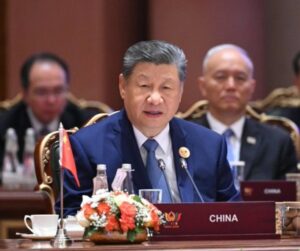
BRICS leaders at the XVIII BRICS Summit in New Delhi, September 2026 (Image Modi on X)
By TRH Foreign Affairs Desk
Leaders of the BRICS bloc adopted the “New Delhi Declaration” at the conclusion of the XVIII BRICS Summit, held in New Delhi, under the theme “Building for Resilience, Innovation, Cooperation and Sustainability” — capping India’s year as BRICS chair with a sweeping 140-point document spanning global governance, security, trade, technology and culture.
New Delhi, September 12, 2026 — The New Delhi BRICS 2026 declaration renews long-standing BRICS demands for reform of the “Bretton Woods Institutions,” urging a more representative IMF and World Bank, and calls for entry into force of the stalled 16th IMF quota review “with no further delay.” Leaders also weighed in on the ongoing selection of the next UN Secretary-General, pointedly noting that no woman has ever held the post and that only three nationals from Latin America, Africa and Asia combined have occupied it. The bloc reiterated support for a reformed UN Security Council that expands developing-country representation, with China and Russia explicitly reaffirming support for Brazil and India’s aspirations to a greater role, including on the Council.
Leaders voiced “serious concerns about the rise of unilateral tariff and non-tariff measures which distort trade and are inconsistent with WTO rules,” and condemned unilateral economic sanctions more broadly as unlawful under international law. The declaration backs Ethiopia and Iran’s bids to join the WTO and welcomes China’s expansion of zero-tariff treatment to 53 African countries.
Middle East and Conflict Zones
The declaration devotes substantial space to Gaza, expressing “deep concern” over continued violence despite the October 2025 ceasefire, opposing forced displacement of Palestinians, and reaffirming support for a two-state solution and full UN membership for Palestine. It notes the ICJ’s provisional measures affirming Israel’s obligation to ensure humanitarian aid access.
Leaders also welcomed the Lebanon ceasefire while condemning its violations and reiterating calls for Israeli withdrawal from Lebanese territory, and mourned peacekeepers — including four Indonesians — killed in attacks on UNIFIL. Separate paragraphs address deteriorating conditions in Sudan, support for a Syrian-led political transition, and continued blockade measures against Cuba.
Terrorism
In language of direct relevance to host nation India, the bloc “condemn[ed] in the strongest terms the terrorist attack in Jammu and Kashmir on 22 April 2025, during which 26 people were killed,” while reaffirming a broader commitment to combating cross-border terrorism financing and rejecting “double standards” in counterterrorism.
Economic and Technology Initiatives
The declaration catalogues a wide array of new or advancing BRICS mechanisms: continued technical work on a New Investment Platform and cross-border payments in local currencies (with leaders stressing “there is no one-size-fits-all approach”); progress on a BRICS Grain Exchange; a proposed BRICS Insurance Resilience Centre, including a “Risk Lab” India has offered to host at GIFT City, Gujarat; and expanded cooperation on artificial intelligence governance, referencing India’s February 2026 AI Impact Summit.
Leaders also welcomed a ten-year milestone for the BRICS Science, Technology and Innovation Framework Programme and discussed a feasibility study for BRICS submarine cable infrastructure.
Climate, Health and Culture
The bloc reaffirmed commitment to the Paris Agreement, welcomed the Tropical Forest Forever Facility launched at the Belém Climate Summit, and opposed carbon border adjustment mechanisms as discriminatory trade barriers. On health, leaders endorsed a new BRICS Mission for Healthy Lifestyle and highlighted tuberculosis and mental health as priorities, with India’s NIMHANS named coordinating centre for a new mental health network.
The declaration also references dozens of ministerial meetings held across India this year, from Chandigarh (health) to Kochi (women) to Agra (SMEs) to Indore (agriculture).
Handover to China
The summit closed with BRICS members thanking India for its 2026 chairship and extending “full support” to China to host the XIX BRICS Summit in 2027, marking the next leg of the bloc’s rotating leadership as it enters its third decade.
Modi’s G20 Victory Lap: The 2023 Moment That Defined His Global Image
Follow The Raisina Hills on WhatsApp, Instagram, YouTube, Facebook, and LinkedIn




About The Author