BRICS Delhi Is More Than a Summit: The Quiet Erosion of Trust in the US

Prime Minister Narendra Modi addresses the 18th BRICS Summit in New Delhi as the grouping debates global governance, trade and financial reform. (Image Modi on X)
By NIRENDRA DEV
The BRICS Summit in Delhi is revealing a deeper geopolitical shift: emerging economies are seeking greater financial and strategic autonomy while questioning the assumptions of the US-led global order.
New Delhi, September 12, 2026 — The 18th BRICS Summit in New Delhi turned out to be about more than the formal agenda of an expanding economic grouping. Beneath the declarations and diplomatic language lies a more consequential message: trust in the US-led global economic architecture is weakening, and an increasing number of countries are looking for greater room to protect their economic sovereignty.
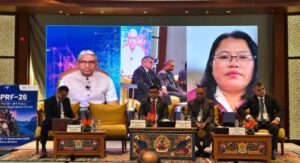
Iranian President Masoud Pezeshkian made that message particularly clear at the BRICS Business Forum on Friday when he called on BRICS members to expand the use of national currencies in trade and strengthen financial cooperation.
On the surface, it was an economic proposal. In strategic terms, however, it reflects a much wider debate over the role of the US dollar in international trade and finance.
The emerging refrain is increasingly clear: diversification of currencies, payment systems and financing mechanisms is being presented not necessarily as an attack on the existing system, but as insurance against excessive dependence on any single power.
BRICS in Delhi, America at Ground Zero — A Summit in the Shadow of 9/11 and Trump
The hidden message from Delhi
The more powerful message from New Delhi may therefore be about trust.
Countries across the Global South are increasingly seeking alternatives that can insulate them from geopolitical sanctions, tariff shocks and political pressure. BRICS, which has expanded well beyond its original membership, is becoming one of the principal platforms for that conversation.
For Prime Minister Narendra Modi, who has consistently sought to position India as an independent pole in a changing international system, the summit offers an opportunity to shape that evolution without turning BRICS into an explicitly anti-Western bloc.
BRICS has changed significantly from what it was two decades ago.
Its ambition today is subtler: build economic resilience, increase strategic autonomy and create alternative mechanisms without necessarily declaring war on the existing global order.
Iran, Russia and the dollar question
The Iranian challenge to the existing financial architecture is particularly significant.
Pezeshkian argued that economic security cannot be separated from national and regional security.
“Economic security is not separate from national and regional security,” he said, warning that when trade, energy, infrastructure or financial systems come under political or military pressure, the consequences can extend well beyond national borders.
Russia has also repeatedly challenged the dominance of Western-led economic institutions and the use of sanctions as an instrument of geopolitical pressure.
The broader concern among several emerging economies is that economic interdependence can become a vulnerability when payment systems, currencies, technology or energy supplies are subject to geopolitical restrictions.
The debate is therefore no longer simply about de-dollarisation.
It is about diversification.
Has the old global order begun to crack?
The post-war international economic order rested on a complicated combination of open trade, American economic and financial predominance and secure access to energy.
All three pillars are under pressure.
Trade has become increasingly politicised. Tariffs and sanctions have become regular instruments of foreign policy. Energy markets have been repeatedly disrupted by geopolitical conflicts.
The Trump administration’s use of tariffs has added another layer to the debate, particularly when trade measures become entangled with political disputes involving individual countries.
For much of the Global South, the lesson is straightforward: economic resilience requires diversification of trade partners, financing sources, supply chains and payment mechanisms.
The weaponisation of financial interdependence may therefore have produced an unintended consequence — encouraging other countries to reduce their exposure to the very systems that Washington has historically dominated.
Indonesia, South Africa, Brazil, China, Iran and India, despite their vastly different political and economic systems, share an interest in retaining greater strategic flexibility.
That does not mean they have collectively decided to abandon the dollar or the Western financial system.
It means they increasingly want alternatives.
India-China: rivalry with room for engagement
The India-China relationship adds another important dimension.
Despite their strategic rivalry and unresolved border differences, Beijing has signalled an interest in stabilising ties.
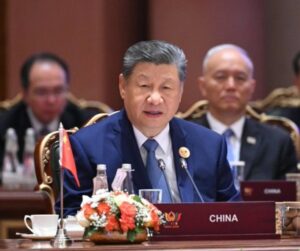
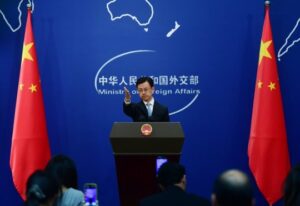
“China stands ready to work with India… by strengthening communication, enhancing cooperation, and properly handling differences,” Chinese Foreign Ministry spokesperson Mao Ning said.
For New Delhi, the challenge is to manage competition with Beijing without allowing bilateral tensions to destroy India’s wider strategic interests.
India’s position is especially complicated because it maintains important relationships with the US, Russia, Iran, Israel, Europe and the wider Global South.
The Ukraine conflict, tensions involving Iran and the US, and continuing uncertainty in energy markets have all tested India’s ability to maintain strategic autonomy.
So far, New Delhi has attempted to navigate these competing pressures without formally aligning itself with any single geopolitical camp.
That balancing act may become even more important as BRICS evolves.
Reforming the global financial system
The BRICS finance ministers and central bank governors have also called for reform of major global development financial institutions, including the International Monetary Fund and World Bank.
The demand is not new. Emerging economies have for years argued that their growing economic weight is not adequately reflected in the governance structures of these institutions.
But the political significance of the demand is increasing.
The argument from BRICS countries is essentially that the institutions created in the aftermath of the Second World War cannot indefinitely operate according to an economic balance that no longer reflects the world of the 21st century.
BRICS’ growing economic weight strengthens that argument.
The grouping’s expansion has also made it more representative of major emerging economies and energy producers, even though internal differences remain substantial.
Modi’s G20 Victory Lap: The 2023 Moment That Defined His Global Image
Modi’s message: BRICS is not against anyone
Modi has been careful to avoid presenting BRICS as an anti-American or anti-Western project.
Addressing the 18th BRICS Summit, he said India had sought to advance the grouping through consensus.
“We respect each other’s perspectives and move forward through consensus,” Modi said.
“We strive to advance not by opposing anyone, but by taking everyone along.”
That formulation is important.
India does not want BRICS to become another military or ideological bloc. Its preferred model is a platform where countries with different political systems can cooperate on trade, technology, finance, energy and development while retaining their strategic autonomy.
Modi also highlighted the significance of BRICS reaching its 20th anniversary.
“In human life, the age of 20 marks the beginning of a new phase of maturity and responsibility,” he said.
“Today, BRICS, too, has reached a moment of ‘coming of age’.”
The Prime Minister proposed that the grouping prepare 10 proposals for global governance reform and develop them into a “BRICS Reform Roadmap” for consideration at the next summit.
His larger message was unmistakable: the objective should be to transform what he called a “pyramid of privilege” into a “platform of partnership”.
A post-unipolar world?
The most consequential question arising from Delhi may therefore not be whether BRICS can replace the dollar, the G7 or Western-led institutions.
That is neither imminent nor certain.
The bigger question is whether the world is moving from a system dominated by one principal economic and strategic power towards a more fragmented and multipolar order.
The unipolar moment that emerged after the collapse of the Soviet Union was never guaranteed to last indefinitely. The rise of China, the economic weight of India and other emerging economies, Russia’s strategic revival and the growing assertiveness of the Global South have all altered the balance.
The BRICS summit in Delhi is part of that transition.
Modi put the argument in distinctly political terms: “If our future is shared, the right to shape that future should also be shared.”
That may ultimately be the most important message emerging from BRICS 2026.
The countries gathered in Delhi are not necessarily demanding the end of American influence.
They are demanding greater choice.
And in international politics, the demand for choice is often the first sign that an old order is losing its unquestioned authority.
BRICS Leaders Adopt New Delhi Declaration, Push UN Reform and Condemn Unilateral Tariffs
Follow The Raisina Hills on WhatsApp, Instagram, YouTube, Facebook, and LinkedIn




About The Author