Tata Sons Listing: Why Afcons Infrastructure Could Be the SP Group Stock to Watch
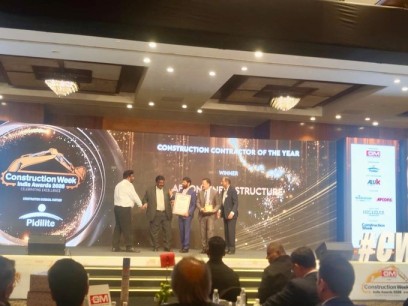
RBI’s move to push Tata Sons towards listing could unlock value for Shapoorji Pallonji Group, with listed infrastructure major Afcons emerging as a potential indirect beneficiary. (Image Afcons on X)
By S. JHA
Afcons Infrastructure — positive indirect read, but not a direct Tata Sons beneficiary. The stronger catalyst is the potential unlocking and monetisation of SP Group’s Tata Sons stake and what the group does with the resulting liquidity.
Mumbai, September 12, 2026 — The Reserve Bank of India’s decision to push Tata Sons towards an immediate stock-market listing could have consequences well beyond the Tata Group.
One of the biggest indirect beneficiaries could be Afcons Infrastructure Ltd, the listed flagship infrastructure company of the Shapoorji Pallonji Group.
The reason is straightforward: the Shapoorji Pallonji Group is the second-largest shareholder in Tata Sons, holding an estimated 18.37% stake. The group has been seeking ways to unlock value from that holding as it works to raise funds and manage its substantial debt obligations.
The RBI has now rejected Tata Sons’ application to voluntarily surrender its Certificate of Registration as a Core Investment Company, effectively removing the immediate route for Tata Sons to remain outside the public markets. The decision puts the ₹2.01 lakh crore holding company on the path towards listing and greater public disclosure.
Why Afcons could benefit
Afcons does not directly own the Tata Sons stake. Therefore, any benefit to Afcons should not be interpreted as a direct Tata Sons asset revaluation inside Afcons’ balance sheet.
The potential benefit comes through the wider Shapoorji Pallonji Group.
A successful Tata Sons listing could provide the SP Group with a much more transparent market value for its holding and potentially create a major liquidity event. Recent reports indicate that Shapoor Mistry is looking to raise around ₹25,000 crore over two years by monetising part of the group’s Tata Sons stake.
That liquidity could help the group reduce refinancing pressure and strengthen its overall financial position.
This matters for Afcons because the listed infrastructure company is part of the SP Group, although it has historically been managed with considerable financial independence from the promoter group.
CRISIL Ratings said in August that Afcons had limited operating and financial linkages with the SP Group and that debt at key promoter holding companies was non-recourse to Afcons’ cash flows.
The Tata Sons listing is therefore not a direct debt-relief event for Afcons.
It is potentially a group-level balance-sheet and sentiment catalyst.
Manika Plastech IPO: Should You Apply? Financials Look Strong, But Where Is the Order Book?
Afcons already has an independent business case
Afcons is not dependent on Tata Sons for its investment story.
The company is a major engineering, procurement and construction player with exposure to infrastructure projects, including transportation, marine, urban infrastructure and other large projects.
Afcons reported consolidated revenue of ₹11,976 crore and profit after tax of ₹251 crore in FY2026, according to CRISIL. The company was listed on Indian stock exchanges in November 2024 after its IPO.
Its order book also remained substantial. Afcons reported an order book of ₹32,681 crore at the end of September 2025, while first-half FY26 PAT rose 6.8% year-on-year to ₹242 crore.
However, investors also need to note the risks.
CRISIL in August 2026 revised Afcons’ long-term rating outlook to Negative from Stable, citing moderation in operating performance, higher working-capital intensity and delays in receivables realisation. The rating agency nevertheless reaffirmed its AA- rating.
What about Sterling and Wilson Renewable Energy?
The other prominent listed SP-linked company is Sterling and Wilson Renewable Energy Ltd (NSE: SWSOLAR).
The company is part of the broader SP Group ecosystem and remains listed on the exchanges.
However, the Tata Sons listing thesis is less direct for Sterling and Wilson Renewable Energy than for Afcons.
Afcons offers a cleaner connection to the SP Group’s core infrastructure platform and has a substantial listed operating business of its own.
Sterling and Wilson Renewable Energy, meanwhile, remains a separate renewable-energy investment story, with its own operational, financial and execution factors.
Coforge Board Row: What the Independent Director Crisis Reveals About Corporate Governance
The bigger SP Group trigger
The real investment trigger is therefore not simply: “Tata Sons lists, therefore Afcons rises.”
The more accurate chain is: Tata Sons listing → transparent valuation of SP Group’s 18.37% holding → potential monetisation → improved SP Group liquidity/deleveraging → potentially lower group-level financial pressure → possible positive sentiment around listed SP assets, including Afcons.
The first two links are particularly important.
The SP Group has been trying to raise substantial funds, including through debt markets. Reuters reported in July that the group launched a $650 million dollar bond issue as part of a broader ₹255 billion fundraising programme, primarily aimed at refinancing existing debt. The ability to monetise its Tata Sons holding has been an important factor in the group’s financing strategy.
A listed Tata Sons would change that equation.
Instead of holding a highly valuable but illiquid private-company stake, the SP Group could potentially have a transparent market price and greater flexibility in monetising part of its holding, subject of course to Tata Sons’ eventual listing structure, lock-ins, regulatory requirements and market conditions.
Afcons remains the stock to watch
For stock-market investors looking for a listed SP Group proxy, Afcons Infrastructure is arguably the cleaner Tata Sons-listing-related beneficiary.
But it should be treated as a second-order beneficiary, not a direct Tata Sons play.
The immediate beneficiary of a successful listing would be the Tata Sons shareholders themselves, particularly the Tata Trusts and the Shapoorji Pallonji Group.
For the SP Group, the listing could potentially unlock billions of rupees of value.
For Afcons shareholders, the question is what the SP Group ultimately does with that liquidity.
If the proceeds are primarily used to deleverage promoter-level entities and strengthen the group’s financial position, the development could gradually improve investor perception around its listed businesses.
If, however, the Tata Sons stake is monetised mainly to meet short-term refinancing obligations, the benefit to Afcons could be considerably more limited.
For now, Afcons Infrastructure is the listed SP Group stock to watch — but the Tata Sons listing should be viewed as a potential group-level catalyst rather than a direct fundamental re-rating trigger for Afcons.
(This article is only for informational purposes. No investment advice is made here. Investors should consult a SEBI-registered advisor for market-linked decision-making.)
Sonaselection India IPO: Revenue Soars 4X, But Debt and Cash Flow Raise Red Flags
Follow The Raisina Hills on WhatsApp, Instagram, YouTube, Facebook, and LinkedIn




About The Author