Ajit Doval-Wang Yi Talks: 8 Key Outcomes of India-China Boundary Negotiations in Beijing
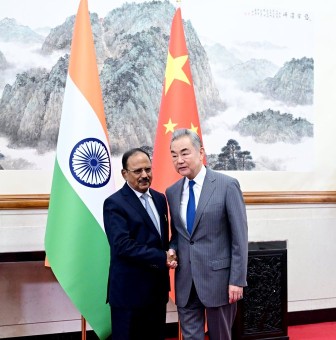
NSA Ajit Doval with China's FM Wang Yi (Image Indian embassy in China)
By TRH Foreign Affairs Desk
India and China agree on additional military hotlines, new border meeting points, faster LAC communication, renewed river talks and the next round of boundary negotiations in India in 2027.
New Delhi, August 26, 2026 — India and China have agreed on a series of measures to strengthen border management, improve communication along the Line of Actual Control (LAC) and advance negotiations on a framework for settling the boundary question following the 25th round of talks between their Special Representatives, National Security Adviser Ajit Doval and Chinese Foreign Minister Wang Yi, in Beijing on Tuesday.
The talks marked an important diplomatic engagement between the two countries after years of military and diplomatic tensions along the LAC. The outcomes indicate an effort by both sides to institutionalise mechanisms for managing border tensions while keeping negotiations on the boundary question alive.
The two sides also agreed to hold the 26th round of Special Representatives’ talks in India in 2027.
- Commitment to Peace and Stable Bilateral Ties
India and China reaffirmed their commitment to follow the guidance provided by the leaders of the two countries.
They agreed to maintain peace and tranquillity in the border areas and work towards creating an atmosphere conducive to the “healthy and steady development” of bilateral relations.
The formulation is significant because stability along the LAC remains central to the broader India-China relationship. New Delhi has consistently maintained that peace and tranquillity along the border are essential for the normalisation of bilateral ties.
- Boundary Settlement Talks to Continue
The two sides reaffirmed their commitment to negotiations on a framework for the settlement of the boundary question.
The negotiations will continue in accordance with the 2005 Agreement on Political Parameters and Guiding Principles for Settlement of the India-China Boundary Question, as well as the consensus reached during subsequent Special Representatives’ meetings.
The stated objective remains a “fair, reasonable and mutually acceptable solution” to the boundary dispute.
This indicates that while immediate border management remains a priority, both countries are keeping the larger political process for resolving the boundary question on the table.
- New Push for Boundary Delimitation and Border Management
The two sides agreed that the Expert Group on Boundary Delimitation and the Working Group on Border Management under the Working Mechanism for Consultation and Coordination (WMCC) would advance discussions on an “Early and Substantial Harvest” relating to boundary delimitation and border management.
The first task for the two groups will be to agree on their respective Terms of Reference.
This could prove significant if the working-level mechanisms are able to translate the political understanding between the Special Representatives into concrete arrangements on the ground.
India-China Talks: Ajit Doval, Wang Yi Discuss Border Peace and Boundary Delimitation
- Faster Response to LAC Incidents
India and China agreed that situations arising on the ground should be addressed promptly through existing diplomatic and military channels.
These include the WMCC, local commander-level meetings and other agreed mechanisms.
The objective is to resolve outstanding issues and prevent misunderstanding and miscalculation along the LAC.
The two sides also discussed ways to improve their understanding of the LAC in appropriate areas as part of efforts to strengthen border management.
The emphasis on preventing miscalculation is particularly important along a disputed and heavily militarised frontier where an incident can rapidly escalate.
- More Military Communication Channels
In a significant border-management measure, the two sides agreed to add two meeting points for the General Level Mechanism/Senior Highest Military Commander (SHMC) meetings.
They also agreed to establish two additional border military hotline channels in the Eastern and Middle Sectors.
The move is aimed at improving direct military-to-military communication and creating additional mechanisms to manage unexpected developments along the LAC.
For India, improved communication channels could help reduce the risk of local incidents escalating because of delays or gaps in communication.
- Kailash-Manasarovar Yatra and Border Trade
The two sides noted progress in trans-border cooperation.
India appreciated China’s efforts to increase the number of batches of Indian pilgrims undertaking the Kailash-Manasarovar Yatra in the Tibet Autonomous Region.
Both sides also welcomed the reopening of three designated border trading points.
They agreed to strengthen exchanges and cooperation in areas including border trade and pilgrimage, with the stated objective of creating an atmosphere of dialogue, peace, consultation and cooperation in the border areas.
The reference to the Kailash-Manasarovar Yatra is politically and diplomatically significant because the pilgrimage has remained an important people-to-people link between India and Tibet.
- Trans-Border Rivers: Talks in September
India and China also agreed to convene the next meeting of the Expert-Level Mechanism on Trans-border Rivers in September.
The two sides will maintain communication on issues including hydrological data sharing and renewal of relevant memorandums of understanding.
The river issue has growing strategic importance for India, given that several major river systems originate in the Tibetan plateau before flowing downstream into India.
Regular data sharing is particularly important for flood forecasting and disaster management in downstream regions.
- Next Special Representatives’ Talks in India in 2027
The two countries agreed to hold the 26th round of Special Representatives’ talks in India in 2027.
The decision provides continuity to the Special Representatives’ mechanism and indicates that both sides intend to keep the boundary negotiations active despite the complexity of the dispute.
What the Eight Outcomes Mean for India-China Relations
The Beijing meeting does not represent a final settlement of the boundary dispute. Instead, the outcomes point towards a structured effort to manage the border while gradually rebuilding diplomatic engagement.
Three elements stand out.
First, both sides have reaffirmed the importance of peace and tranquillity along the LAC. Second, they have agreed to expand military and diplomatic communication mechanisms, including additional meeting points and hotlines. Third, the two countries have sought to widen cooperation beyond the immediate boundary issue through pilgrimage, border trade and trans-border river mechanisms.
The decision to continue the Special Representatives’ process is also important. The 2005 framework remains the stated basis for negotiations, but reaching a final boundary settlement will require sustained political engagement.
For India, the key test will be whether these agreements translate into greater predictability on the ground. Additional communication channels can reduce the danger of unintended escalation, but durable stability will ultimately depend on how effectively both sides address unresolved issues along the LAC.
The reopening of border trade and expansion of the Kailash-Manasarovar Yatra also suggests that both sides are testing the possibility of gradually expanding cooperation in areas where practical engagement is possible.
The September meeting on trans-border rivers could be another important indicator of whether the improving diplomatic atmosphere can produce tangible cooperation on issues directly affecting India’s downstream interests.
Overall, the 25th round appears to have produced a roadmap for managing differences rather than resolving them. The next challenge will be implementation.
The Roof of the World Is Melting — And Downstream Nations Are Running Out of Time to Prepare
Follow The Raisina Hills on WhatsApp, Instagram, YouTube, Facebook, and LinkedIn




About The Author