Dolly Parton Dies at 80: How Poverty Made an American Icon
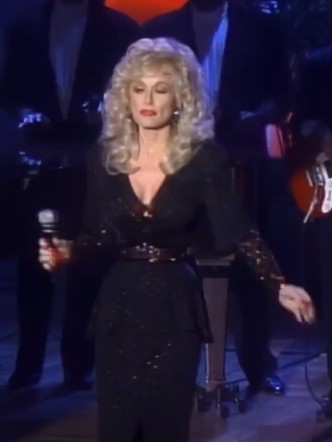
Dolly Parton performing on stage during her decades-long music career (Image video grab)
By TRH Entertainment Desk
The “Queen of Country” wrote thousands of songs, built a theme park empire, gave away millions of books to children, and somehow remained, by nearly every account, exactly who she always said she was.
Mumbai, August 26, 2026 — Dolly Parton, the rhinestone-clad singer-songwriter who rose from a one-room cabin in the Great Smoky Mountains to become one of the most beloved and enduring figures in American entertainment, died Tuesday, in Nashville. She was 80.
Parton’s death was confirmed both in a statement from her representatives and in a video posted to her social media accounts by her nephew, Bryan Seaver. Parton died after a brief battle with cancer, at the Vanderbilt-Ingram Cancer Center, surrounded by loved ones. Her publicist, Marcel Pariseau, said in a statement that she had been “bravely facing a brief battle with cancer” before her death.
The announcement came from Seaver in an emotional video, in which he identified himself as representing the Parton and Owens family and described his aunt’s many roles to the people who loved her: “Sister, Sis and Granny to one generation and Gigi to the next.” He added a detail that underscored how deliberately Parton had planned even this moment: “This video announcement is something Dolly asked of me years ago, before I fully absorbed it as a future reality.”
ABC News reported the death capped a difficult final year for Parton, who had referenced unspecified “health challenges” in a September 2025 Instagram post, and who was still grieving the March 2025 death of Carl Dean, her husband of nearly 60 years. She had cancelled a scheduled Dollywood appearance just 10 days before her death, telling fans in a video message that her doctor had advised against travel due to dizziness and dehydration.
From a One-Room Cabin to Nashville
Parton was born January 19, 1946, in Sevier County, Tennessee, the fourth of 12 children raised in poverty by a farmer father and a mother who sang religious ballads around the house. Parton later spoke candidly about that upbringing rather than shying away from it, telling interviewers she didn’t mind being associated with rural poverty: as she put it, discussing the label some used for families like hers, “Well, what they call ‘white trash,’ I don’t li—” (her remarks trailing into a broader reflection on identity and pride in where she came from).
NBC News reported that the day after graduating from Sevier County High School in 1964, Parton left for Nashville, where she first built a career writing songs for other performers — sometimes alongside her uncle, Bill Owens — mining her own hardscrabble childhood for material in songs like “Coat of Many Colors” and “Tennessee Homesick Blues.”
A Songwriting and Recording Career Without Parallel
Parton released nearly 50 studio albums over her career, sold more than 100 million records worldwide, won 10 competitive Grammy Awards from 55 nominations, and never slowed the pace of her output even as she moved into television and film stardom. Her catalogue includes some of the most recognizable songs in American music, among them “Jolene,” “9 to 5,” and “I Will Always Love You” — the latter written, famously, in the same songwriting session as “Jolene.”
A Berklee College of Music professor, Katherine Dacey, described what made Parton’s voice so distinctive in comments given to NBC News before her death: “Dolly Parton has one of the most distinctive voices in American pop music,” Dacey said, attributing its character to Parton’s fast vibrato and vocal twang.
Despite that towering body of work, Parton treated her own success with a modesty her peers frequently pushed back against. CBS News reported that in 2022, when nominated for the Rock & Roll Hall of Fame, Parton attempted to withdraw her own name from consideration, saying she didn’t feel she had “earned that right” — a self-effacement fans and fellow musicians roundly rejected. In a CBS Mornings interview that same year, she called the devotion of her fans “an honor,” while admitting, “it scares me to death sometimes. I’m always sayin’ I’m not all that, I’m even not all there sometimes.”
Beyond Music: Dollywood and the Imagination Library
Parton’s influence extended well past recording studios and stages. Her Dollywood theme park in Pigeon Forge, Tennessee, became a fixture of the region’s economy and identity, and her Imagination Library program — which mails free books to children from birth until they start school — grew into one of the most far-reaching literacy initiatives run by any individual in American history. Fox News Digital reported the program has distributed more than 300 million books to children around the world, a figure former Vice President Kamala Harris specifically highlighted in a tribute posted to X, calling it, alongside Parton’s music and style, part of what made her “one of one.”
Parton’s team credited her with helping fund research behind a lifesaving vaccine used globally — part of what her own team described in a statement as unconditional generosity extended to “countless people whom she would never meet.”
The Tributes
Reaction to Parton’s death came from across American public life within hours. US President Trump called her death “a true loss for millions of people” at the White House, adding, “There has never been anyone like her, and never will,” and ordered the American flag lowered nationwide starting Tuesday evening.
Fellow musicians offered their own personal tributes. CBS News quoted Linda Ronstadt, who recorded the acclaimed 1987 “Trio” album with Parton and Emmylou Harris, saying: “I am deeply saddened by the passing of my friend, Dolly Parton. One of the most extraordinary musical experiences of my life was recording with her. The world is a poorer place without her.” Country star Reba McEntire wrote of Parton: “Your love, your music and you gave so much with your huge huge heart… We will remember and cherish every memory and every note you ever played and sang.”
A Life That Outran the Myth
What distinguished Parton from many entertainment legends, longtime observers have noted, was how little distance ever separated the public image from the person behind it — the warmth, generosity, and self-deprecating humor that defined her interviews for six decades were, by all accounts, not a persona but simply who she was. She leaves behind no children — she and Dean chose not to have any during their 58-year marriage — but a body of work, philanthropy, and cultural goodwill that reached, in some form, nearly every corner of American life.
Hayden Panettiere’s ‘This Is Me’ Reads Differently After Her Death
Follow The Raisina Hills on WhatsApp, Instagram, YouTube, Facebook, and LinkedIn




About The Author