Sonia Gandhi breaks silence on Emergency, Rajiv Gandhi’s assassination and refusing PM’s post
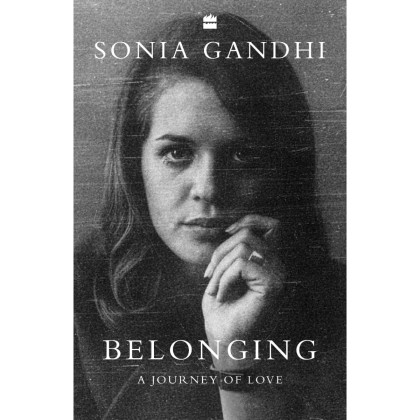
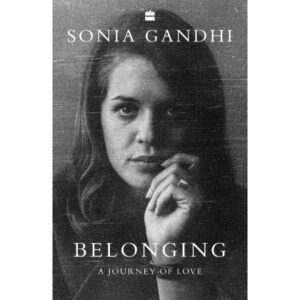
Sonia Gandhi breaks silence on Emergency, Rajiv Gandhi's assassination and refusing PM's post (Image Amazon, Book cover)
By AMIT KUMAR
From Indira Gandhi’s assassination and the Emergency to refusing the prime minister’s post in 2004 and criticising the Modi government, Sonia Gandhi revisits the defining moments of her life in Indian politics.
New Delhi, November 10, 2026 — Sonia Gandhi’s memoir, Belonging: A Journey of Love, offers more than a personal account of her journey from a small Italian town to the centre of Indian political power. Through memories of family, bereavement, political responsibility and difficult decisions, the Congress leader revisits some of the most consequential chapters of India’s recent political history.
The excerpts and interviews published ahead of the November 10 release reveal a woman attempting to explain her relationship with India, the Nehru-Gandhi family and the political responsibilities she inherited following two devastating assassinations.
One of the most revealing accounts concerns her decision not to become prime minister after the Congress-led United Progressive Alliance won the 2004 general election.
In an exclusive excerpt published by The Indian Express, Sonia recalls the intense pressure exerted by alliance leaders to persuade her to accept the country’s highest executive office. She describes feeling overwhelmed when leaders surrounded her and insisted that they would not accept her refusal.
Her children, Rahul and Priyanka Gandhi, were deeply disturbed by what they perceived as pressure on their mother. Priyanka urged her not to surrender her decision, while Rahul questioned why she was allowing herself to be pressured.
Sonia recalls spending a sleepless night thinking about the consequences of accepting the position. She eventually reaffirmed her decision and nominated Manmohan Singh for prime minister.
The episode offers her own explanation of a decision that has remained central to discussions about the Congress, the UPA government and the nature of political power in India.
The Emergency and Indira Gandhi
Another important dimension of the memoir is Sonia’s retrospective assessment of the Emergency imposed by Indira Gandhi between 1975 and 1977.
In her interview with The Hindu, Sonia describes the Emergency as a dark chapter in independent India’s history. She acknowledges that democratic rights were curtailed and habeas corpus suspended, while also discussing the political circumstances and unrest that preceded the decision.
She calls the Emergency a mistake and suggests that keeping Sanjay Gandhi in check could have prevented much of the subsequent damage.
Her reflections are significant because they come from someone who witnessed the period from within the Nehru-Gandhi family, although her recollections and interpretations remain her own account of those events.
The fear of losing Rajiv Gandhi
An especially emotional passage published by The Guardian revisits Indira Gandhi’s assassination in October 1984.
Sonia describes the shock of learning that her mother-in-law had been shot and the anguish of seeing her body after the attack. She also recalls pleading with Rajiv not to accept the prime ministership, fearing that he too would become a target.
Her words reveal the personal anxiety behind a political transition that took place within hours of Indira Gandhi’s assassination.
Rajiv Gandhi was assassinated in 1991.
A political assessment of contemporary India
The memoir also becomes a platform for Sonia’s assessment of the Narendra Modi government.
In her interview with The Hindu, she alleges that the BJP-RSS dispensation has caused “great damage” to India’s democratic institutions and social fabric over the past 12 years. She argues that rebuilding institutional confidence would require considerable effort even after the present government leaves office.
Ultimately, Belonging attempts to reclaim Sonia Gandhi’s personal narrative from decades of public speculation. Whether discussing her marriage, family tragedies, the Emergency or her refusal to become prime minister, she presents her life as a journey shaped by love, loss and a sense of responsibility towards India.
It is also an account of a political family whose private experiences have repeatedly intersected with the country’s public history.
Follow The Raisina Hills on WhatsApp, Instagram, YouTube, Facebook, and LinkedIn




About The Author