Manipur: Centre’s Hardline Security Strategy Enters a New Phase

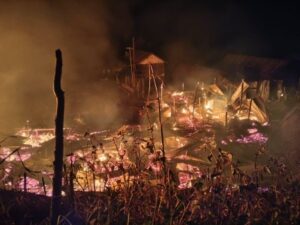
Centre Shifts to Hardline Strategy as Violence Spreads Beyond Meitei-Kuki Divide in Manipur. (Image Nirendra Dev)
By NIRENDRA DEV
CoBRA commandos, armoured vehicles and tougher rules of engagement mark a new phase as tensions increasingly involve Naga groups alongside Meitei-Kuki fault lines.
Imphal, July 20, 2026 — The Centre’s security approach in Manipur has entered a new phase in 2026, with security agencies adopting a far more aggressive operational posture amid evolving ethnic and insurgent challenges.
The operational directive is unambiguous: “Anyone found with a gun is to be arrested or fired upon if they do not surrender.”
The strategy follows a series of attacks on security forces, including an NSCN-IM ambush on the Assam Rifles in Manipur and an IED attack targeting the force in neighbouring Nagaland.
CoBRA deployment marks strategic shift
In June 2026, the CRPF inducted two battalions of the Commando Battalion for Resolute Action (CoBRA) into Manipur. The elite force, which earned distinction in anti-Maoist operations, has now been tasked with stepping up operations against armed groups, dismantling bunkers and recovering illegal weapons.
The CRPF has also instructed its personnel to:
- Use only armoured vehicles during movement.
- Avoid sudden or unplanned deployments.
- Neutralise armed miscreants operating in civilian areas.
- At least 100 armoured vehicles have reportedly been deployed to Manipur over the past two months.
The CRPF remains the largest Central force in the state, with around 20,000 personnel across 200 companies. It is supported by nearly 10,000 BSF personnel and around 26,000 troops from the Assam Rifles and the Indian Army.
CoBRA personnel have also undergone pre-induction training in crowd management, anticipating resistance from local populations—particularly women—during security operations.
Amit Shah’s message: Insurgency is no longer acceptable
Speaking at the North Eastern Council (NEC) meeting in Shillong, Union Home Minister Amit Shah declared that the era of insurgency in the Northeast was effectively over.
“The Modi government ended the era of violence in the Northeast and transformed the region from a hotspot of disputes to a hotspot of opportunities,” Shah said.
Security officials interpret that message as a signal that future outbreaks of violence will be met with swift and decisive action.
Conflict enters a new phase
Analysts believe Manipur’s security landscape is changing. While the violence that erupted in 2023 was largely viewed as a Meitei-Kuki conflict, developments in 2026 indicate a broader and more complex security challenge involving Naga groups as well.
The escalation of tensions between Kukis and Tangkhul Nagas around Litan in Ukhrul district in February 2026 is seen by security observers as a significant turning point.
According to informed security sources, the transition is “not without good reasons,” with several armed groups fearing that their traditional influence and dominance could be challenged by the Centre’s tougher security posture.
Political transition and local discontent
The Centre has simultaneously pursued political restructuring in Manipur.
Following the resignation of Chief Minister N. Biren Singh on February 9, 2025, President’s Rule was imposed four days later. It was revoked on February 4, 2026, when Yumnam Khemchand Singh assumed office as Chief Minister with two Deputy Chief Ministers—Nemcha Kipgen representing the Kuki community and Losii Dikho, a Mao Naga leader.
However, local residents in the violence-hit Kamjong-Chassad belt complain that neither deputy chief minister has visited the affected areas despite continuing displacement and insecurity.
Nemcha Kipgen’s appointment was opposed by sections of the Kuki community, while the choice of a Mao Naga deputy chief minister also generated resentment among Tangkhul Nagas.
Subsequent confrontations, including a February altercation at a protest picket in Ukhrul district, have contributed to renewed tensions, resulting in killings, abductions, highway blockades and the displacement of more than 200 Kuki villagers.
Against this backdrop, security agencies are considering wider deployment of CoBRA units in the hill districts of Churachandpur, Kangpokpi and Ukhrul, signalling that the Centre expects the next phase of Manipur’s conflict to require sustained and coordinated security operations.
Naga Vs Naga in Manipur: Four NSCN Eastern Flank Cadres Killed
Follow The Raisina Hills on WhatsApp, Instagram, YouTube, Facebook, and LinkedIn




About The Author