India-US Ties Under Strain: Manish Anand Questions Modi’s Foreign Policy
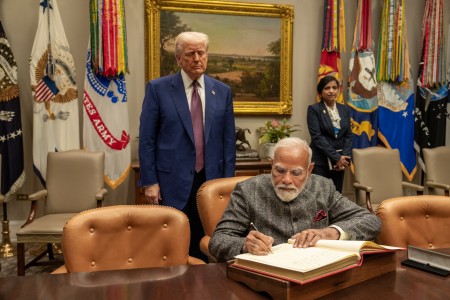
PM Narendra Modi with US President Donald Trump. Image credit White House
By TRH Op-Ed Desk
Geopolitics analyst Manish Anand questions the Modi government’s diplomatic strategy, citing trade tensions, H-1B visa concerns, the treatment of Indian migrants and Washington’s approach to terrorism.
New Delhi, October 11, 2026 — India-US relations are facing a prolonged period of strain, with trade disagreements, immigration restrictions and diverging geopolitical priorities raising questions about the future of the strategic partnership, according to Manish Anand, a geopolitics analyst.
In a monologue for The Raisina Hills, Anand argues that the deterioration in bilateral ties began during the final years of Joe Biden’s presidency and accelerated after Donald Trump returned to the White House. He questions whether New Delhi has been able to translate its diplomatic engagement with Washington into tangible economic and strategic gains.
Anand points to External Affairs Minister S. Jaishankar’s criticism of the US approach to terrorism during his visit to the United States for the United Nations General Assembly. He argues that Washington’s response to terrorism involving India has appeared different from its response when Israel is the victim.
He also raises questions about the pace of progress on a proposed India-US trade agreement, arguing that expectations of a breakthrough have yet to translate into sufficiently substantial results.
China’s Growing Economic and Strategic Leverage
Anand warns that China’s economic strength and control over critical minerals and rare earth supply chains have strengthened its geopolitical leverage. He contends that Beijing has benefited from the changing dynamics of US foreign policy under Trump, while India has struggled to secure comparable strategic concessions.
He also highlights India’s growing trade deficit with China and questions whether New Delhi has been able to advance its economic interests amid continuing tensions with Washington.
On immigration, Anand argues that US restrictions affecting H-1B visa holders, green-card applicants and Indian professionals could have consequences for India’s economy. Indian technology workers, healthcare professionals and other skilled migrants contribute to the US economy while sending remittances to India.
A sustained disruption in skilled migration and remittance flows, he says, could put pressure on household consumption, foreign-exchange inflows and economic growth.
Questions Over India’s Diplomatic Influence
Anand’s central argument is that India needs to convert its economic importance, skilled workforce and diaspora into greater diplomatic influence. He questions why the country has struggled to secure stronger international support on terrorism and to isolate Pakistan diplomatically.
He also asks whether the Modi government’s high-profile foreign visits and international honours have produced measurable benefits for India’s national interests.
The monologue raises a broader question about India’s strategic autonomy: can New Delhi maintain an independent position amid intensifying competition between Washington, Beijing and Moscow?
Anand argues that the government must demonstrate how its foreign policy advances India’s economic interests, protects its citizens abroad and strengthens the country’s standing on the global stage.
Modi-Trump Talk ‘Deployments of US & Indian militaries in Indo-Pacific’
Follow The Raisina Hills on WhatsApp, Instagram, YouTube, Facebook, and LinkedIn




About The Author