Delhi’s Long History of Protest: From the Revolt of 1857 to the SIR Row
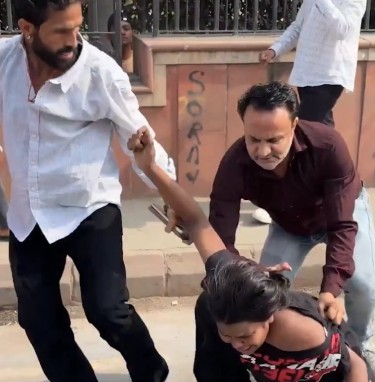
The CJP protest call for October 10 turned out to be another episode of excessive force (Image Apporva Bhardwaj on X)
By ABDESH KUMAR JHA
From the uprising of 1857 to the October 10 protest over electoral roll revisions, Delhi remains the centre of a continuing debate over authority, public order and democratic freedoms.
New Delhi, October 10, 2026 —In his book The Indian War of Independence, 1857 (first published in 1909), Veer Savarkar, in the chapter “The Fight in Delhi”, described why the city mattered so much to the rebels. On 11 May 1857, sepoys from Meerut entered Delhi and declared their allegiance to Bahadur Shah Zafar. It was a strategic choice, but also a symbolic one. To hold Delhi was to make a statement that an empire could be challenged from its own centre. 169 years later, on 10 October 2026, Delhi found itself at the centre again, though in a very different India.
The day was marked by a call for protest by the Cockroach Janta Party (CJP), demanding the resignation of Chief Election Commissioner Gyanesh Kumar over alleged irregularities in the Special Intensive Revision (SIR) of electoral rolls. The party raised questions about the integrity of the process; the Election Commission has maintained that such revisions are a routine part of verifying electoral rolls.
What followed was felt by the city more than by institutions. 50 plus Metro stations saw gates closed, several train services were cancelled, and security arrangements altered the rhythm of daily life. For many Delhiites, the political debate translated into very personal questions: how to get to work, how to get home, how to keep an appointment.
This tension between maintaining public order and protecting the right to peaceful assembly is not new to Delhi.
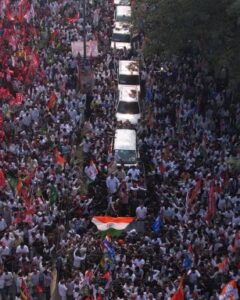
In 2011, Jantar Mantar and Ramlila Maidan became shorthand for a nationwide conversation on corruption during the India Against Corruption movement. In December 2012, after the Nirbhaya case, it was Delhi’s streets that carried a nation’s grief and anger over women’s safety.
In 2019-20, Shaheen Bagh turned a neighbourhood sit-in into a national discussion on citizenship and constitutional values. In 2020-21, it was Delhi’s borders – “Singhu, Tikri, Ghazipur” – that became home for months to farmers protesting the three farm laws, a protest that ended after the government repealed the laws.
These were very different movements, with different people, different demands and different outcomes. They cannot and should not be clubbed into one story. What they share is location. Delhi’s public spaces – its maidans, its borders, its metro stations – have a way of turning a local gathering into a national conversation.
To compare 1857 with 2026 would be historically incorrect. One was a revolt against colonial rule, the other is a protest within a constitutional democracy where courts, elections and a free press exist to mediate disagreements. The contexts are fundamentally different.
What links them is simpler: Delhi’s enduring role as the stage where questions of legitimacy, authority and public sentiment meet.
For any administration, the responsibility to maintain law and order is real. For any citizen in a democracy, the rights to peaceful assembly and freedom of expression are equally real. The challenge is not to choose one over the other, but to keep them in proportion.
A closed metro gate may look like a line on a security plan. On the ground, it can be a missed exam, a lost day’s wage, a child waiting longer for a parent to come home. A protest may look like a traffic advisory. On the ground, it can be a group of citizens trying to be heard on an issue they feel strongly about.
Delhi has outlived empires and seen a republic take shape. Its importance has never come only from the power exercised inside its buildings, but also from the questions raised outside them.
The lesson of its long history is not that every protest is right or every restriction is wrong. It is that a capital city has to keep negotiating – patiently, proportionately, humanely – the space between order and freedom.
That negotiation has been Delhi’s story since 1857. It continues to be.
(Author is an Assistant Professor, VIPS, GGSIPU. This is an opinion piece. Views expressed are the author’s own.)
Follow The Raisina Hills on WhatsApp, Instagram, YouTube, Facebook, and LinkedIn




About The Author