From Slogans to Memes: How India’s New Protest Culture Is Taking on Modi

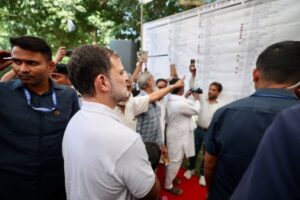
Rahul Gandhi was detained for second day in a row as he led protests against ECI's SIR (Image INC India)
By TRH Political Desk
From “vote chori” slogans to parody videos, songs, costumes and viral gestures, India’s recent protests are creating a new visual and digital vocabulary of political dissent.
New Delhi, October 8, 2026 — India’s recent protests have produced something beyond the familiar vocabulary of political demonstrations. Alongside slogans and placards, the streets have become stages for songs, memes, parody videos, costumes, gestures and a new generation of protest faces.
The change has been particularly visible in the youth-led protests associated with the Cockroach Janta Party (CJP) and AISA. What began around education-related grievances developed into a wider form of political expression. If the CJP pulled young protesters to unleash humour, activists associated with the student unions mainstreamed political slogans and gestures. At Chhatrasal stadium, Congress general secretary Priyanka Gandhi Vadra joined INDIA bloc MPs in repeating gesture of a student activist who went viral with her swings of arms, suggestive of a child.
If Abhijeet Dipke stunned observers by mobilising the youth in a large number at Jantar Mantar, AISA president Neha Bora seems to have carried the political banner of protests against Modi to all parts of the country. Others like Saloni of AISA in Prayagraj and Neha Singh Rathore have lent their weight to further mobilise the youth.
The result is a protest culture in which a slogan can become a meme, a gesture can become a reel and a street confrontation can become digital content within hours. Even the Delhi Police put together key moments to promote the humane touch, as the agency in a reel showed “motherly” touch of the women police personnel who among other sympathetic acts for the protestors covered the exposed body part of Bora.
Songs from films including Rang De Basanti, Rockstar, DUS and Swadesh, along with Michael Jackson’s They Don’t Care About Us, have been used as part of the protest soundtrack.
Protesters even appeared in Spider-Man masks and Batman costumes, while placards incorporated internet culture and satire. Videos of protesters running from police barricades were edited using references to games such as Subway Surfers, reported Al Jazeera.
The ongoing protests against Chief Election Commissioner Gyanesh Kumar represent a notable shift in the mechanics of political dissent. Earlier generations of protesters relied heavily on speeches, pamphlets, banners and mass meetings. The new generation can communicate through a 20-second reel, a meme or an instantly recognisable gesture.
The political significance of this new protest vocabulary, however, cannot be measured simply by the number of memes or viral videos. Its importance lies in its ability to bring politics into the everyday digital lives of younger Indians.
The youth protestors have unleashed powerful slogans such as “Ek Kachori, Do Samosa” to rally support for their causes.
Political imagery seems dictating terms of political contests. Digital language of short videos, humour and visual symbolism appears to have almost eclipsed speeches.
Dissent is now expressed through songs, mimicry, and images showing defiance.
Rahul Gandhi, INDIA bloc MPs stopped en route to Jantar Mantar, turn the road into a protest site
Follow The Raisina Hills on WhatsApp, Instagram, YouTube, Facebook, and LinkedIn




About The Author