India’s Aircraft Manufacturing Push Faces Skilled Talent, Precision Engineering Challenge
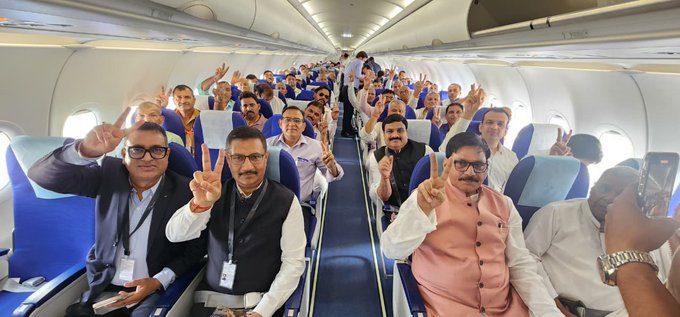
Passengers inside the terminal of Noida International Airport on opening day as IndiGo operates the first commercial flights from Jewar Airport. (Image X.com)
By SANJAY SINGH
India is eyeing a major opportunity in aircraft manufacturing as global orders cross 1,600, but shortages of specialised talent, advanced materials and precision manufacturing capabilities remain key hurdles.
New Delhi, October 7, 2026 — India’s ambitious push to manufacture civilian aircraft for a rapidly expanding global market is facing a critical shortage of specialised engineering talent, precision manufacturing capabilities and high-quality materials.
The Indian government expects strong demand, with global airline orders crossing 1,600 aircraft. It also anticipates that India could have its first indigenous civilian aircraft within the next two years through a joint venture involving international aerospace agencies. However, building a competitive commercial aircraft manufacturing ecosystem remains a major challenge.
The push to manufacture passenger jets, develop regional transport aircraft and explore joint manufacturing arrangements is being constrained by the shortage of specialised skills and the relatively small domestic aerospace manufacturing ecosystem.
India’s aerospace sector has also struggled with advanced metallurgy and precision machining required for high-performance jet engines. The indigenous Kaveri engine project, for instance, faced decades of delays and performance shortfalls, resulting in continued reliance on imported engines.
Developing a commercial aircraft requires sustained capital investment over decades, advanced manufacturing capabilities and compliance with stringent global safety certifications. India will also have to compete with established global aircraft manufacturers such as Airbus and Boeing. Even China has yet to emerge as a major global competitor to the two dominant commercial aircraft makers.
The government is also creating a Special Purpose Vehicle (SPV) to develop regional transport aircraft. These small- to mid-sized aircraft are intended for short-haul routes connecting smaller cities, remote locations and regional airports, while helping reduce India’s dependence on imported aircraft.
Civil Aviation Minister K. Rammohan Naidu has stressed that while the government can create the right policy framework, greater attention must be paid to the quality of materials and the skilling of workers for high-end manufacturing activities in the aviation sector.
India’s aviation manufacturing opportunity is significant. Airlines have more than 1,600 aircraft on order globally, representing an estimated market opportunity of about $100 billion.
India currently has around 157 to 160 operational and functional airports, according to recent government and aviation data, and is expected to add more than 100 new airports over the next decade.
The country has around 165 airports and a domestic airline fleet of approximately 850 aircraft. The network includes major airports handling international flights, more than 120 operational domestic facilities and civil enclaves at defence airfields.
For India, the challenge is therefore not simply to manufacture aircraft, but to build the engineering skills, materials ecosystem and precision manufacturing base needed to sustain a globally competitive aviation industry.
Follow The Raisina Hills on WhatsApp, Instagram, YouTube, Facebook, and LinkedIn




About The Author