RBI Data Centre in Odisha Raises Alarm Over Water Use and Environmental Impact
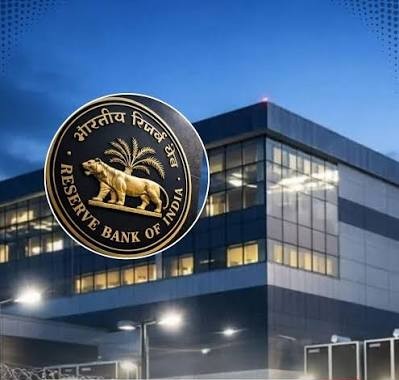
RBI's new disaster recovery data centre near Jatni has triggered questions over water consumption, groundwater extraction and environmental sustainability. (Image PK Panda)
By PRADEEP KUMAR PANDA
The 18.55-acre facility near Jatni is designed as a disaster recovery centre, but Congress leader Panchanan Kanungo has raised concerns over groundwater extraction, electricity consumption and environmental transparency.
Bhubaneswar, November 10, 2026 — The new data centre of the Reserve Bank of India (RBI) has been established at Info Valley-2 near Jatni in Khordha district. Built on about 18.55 acres of land, this greenfield project will function as a disaster recovery backup for the main data centre located in Navi Mumbai.
Constructed to Tier-4 standards, this secure centre has been set up with the objective of protecting the important payment and settlement systems of the financial system.
However, serious concerns have been raised about its environmental impact, particularly the possible negative effects on water, air and the overall environment. Questions have been raised by the Congress as well as opposition parties and local aware circles on how the development of digital infrastructure is putting local natural resources at risk.
The biggest environmental challenge of data centres is water use. Continuous running of servers generates a large amount of heat. Cooling systems are required to control this heat. If traditional evaporative cooling or cooling towers are used, a very large quantity of fresh water is needed.
In Odisha, Congress leader Panchanan Kanungo has claimed that this single data centre could consume nearly 2 crore litres (20 million litres) of fresh water every day, and that this supply would come from groundwater in Khordha district. This quantity could reach thousands of crores of litres in a year. If this is true, it will seriously lower the local groundwater level.
Khordha district and the surrounding areas are dependent on agriculture. Farmers depend on groundwater and river water. Excessive extraction of groundwater will dry up wells and tube wells, reduce crop production and endanger farmers’ livelihoods.
Drinking water scarcity may also increase. Water scarcity is already being seen in many areas of Odisha. With climate change, irregularity in rainfall is increasing and groundwater recharge is decreasing. In such a situation, if a large data centre continuously extracts groundwater, it will further weaken local water security.
So far, neither the RBI nor the state government has clearly published detailed information on water requirement, sources and recycling arrangements. This lack of clarity itself is a major cause for concern.
Air quality may also be affected. Data centres consume large amounts of electricity. If electricity generation depends on coal or other fossil fuels, carbon emissions increase. Coal-based power generation is widespread in Odisha.
Although this project has about 590 kilowatts of solar capacity and an application has been made for green building standards, it is still not clear how much electricity the entire project will need and from which sources it will come.
If backup diesel generators run, local air pollution may increase. Heat emitted from the servers can raise the temperature of the surrounding area, affecting the local micro-climate. During construction, dust, noise from machinery and vehicle movement damage air quality.
The overall environmental impact is even broader. Use of more than 18 acres of land has changed the local ecosystem. If the area previously had agricultural land or open space, biodiversity would have decreased as a result. Continuous operation of data centres creates heat and noise pollution.
At a time when multiple large data centres and AI parks are being proposed in Odisha, the combined impact of all projects needs to be considered.
However low the water and electricity requirement of one project may appear, when many projects come together the impact multiplies. In the era of climate change, such high energy- and water-consuming projects are testing Odisha’s environmental resilience.
Analysis shows that the water consumption of a data centre depends on the cooling technology. Modern air cooling, liquid cooling or use of recycled water greatly reduces the need for fresh water. But it is not clear which technology has been used in this project.
The figure of 2 crore litres mentioned by the Congress appears excessive for an ordinary data centre and requires detailed verification. Nevertheless, the absence of official clarification has increased these concerns. Farmers, ordinary citizens and environmentalists have the right to know the project’s water and electricity budget, how it will be managed, and how much pressure it will put on local resources.
In this context, transparency and accountability are extremely important. The Environmental Impact Assessment (EIA) report should be made public. Instead of groundwater, treated waste water or recycling systems should be made mandatory as the water source.
Electricity sources should be renewable as far as possible. Genuine employment opportunities for local people and arrangements for the protection of farmers are necessary. It is not right to sacrifice the local environment only on the grounds of national security and financial infrastructure.
Odisha’s future depends on both digital development and environmental protection. Projects like the RBI data centre can be beneficial if they are managed with the right technology, clean water systems and transparency. But the present concerns show that merely inaugurating a project while ignoring water scarcity, pressure on agriculture and environmental burden is not enough.
The government, RBI and local administration should give clear answers to these questions. Otherwise, the cost of the digital future will be damage to local water, air and environment, which in the long run could prove more expensive for Odisha.
Environmental protection is not merely a policy; it is a question of livelihood and the future. Along with supporting projects like the RBI data centre, strictly monitoring their environmental responsibility is the duty of all of us.
(This is an opinion piece. Views expressed are the author’s own.)
Odisha’s Coalition Politics: From Instability to BJP’s Breakthrough
Follow The Raisina Hills on WhatsApp, Instagram, YouTube, Facebook, and LinkedIn




About The Author