Hrishikesh Mukherjee’s Cinema: How ‘Guddi’, ‘Abhimaan’ and ‘Anand’ Defied Bollywood Conventions
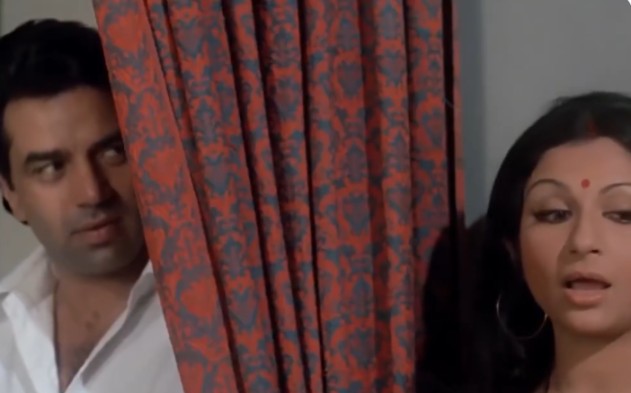
From Jaya Bhaduri’s natural performance in Guddi to the emotional depth of Anand and Abhimaan, Hrishikesh Mukherjee made Hindi cinema about people, relationships and social realities. (Image video grab)
By NIRENDRA DEV
From Jaya Bhaduri’s natural performance in Guddi to the emotional depth of Anand and Abhimaan, Hrishikesh Mukherjee made Hindi cinema about people, relationships and social realities.
New Delhi, October 4, 2026 — Hrishikesh Mukherjee had a distinctive way of telling stories. His films explored human relationships, social divisions, personal conflicts and the contradictions of everyday life. He worked with different plots and an eclectic mix of stars, often producing magical results through a filmmaking style that was both unconventional and refreshingly simple.
What sets Guddi apart is Hrishida’s characterisation of Jaya Bhaduri in the title role. Released in 1971, the film introduced audiences to a young actress whose girl-next-door appearance and natural performance offered a refreshing alternative to the conventional image of a Hindi film heroine.
The film revolves around a schoolgirl obsessed with the superstar Dharmendra. In an inspired casting decision, Mukherjee persuaded Dharmendra to play himself, allowing the film to examine the star system and the gap between screen glamour and real life. The film also featured the celebrated actor Utpal Dutt.
At one point, Dharmendra remarks that he has been hearing Rajesh Khanna’s name these days. The line carried a touch of reality, as Khanna’s popularity was soaring. Dharmendra’s self-deprecating portrayal added another layer to the film’s commentary on celebrity culture.
In another memorable sequence, Dharmendra takes Guddi to an old film studio where classic movies had once been made. The studio now appears neglected, offering a poignant reminder that even the biggest stars and the most celebrated institutions may eventually fade from public memory.
‘Abhimaan’: When professional success challenges male ego
Released in 1973, Abhimaan, starring real-life couple Amitabh Bachchan and Jaya Bachchan, explored the tensions that emerge when a husband struggles with his wife’s greater professional success.
Jaya plays Uma, a talented singer whose career flourishes while her husband Subir, played by Amitabh, finds himself increasingly overshadowed. The resulting conflict exposes the fragility of male pride and the strain that professional rivalry can place on a marriage.
The film invited comparisons with the couple’s own careers. At that stage, Jaya had already established herself as a successful actress, while Amitabh was still consolidating his position as a major star. Such parallels helped give the film an added dimension, although its story remains a work of fiction.
Jaya won the Filmfare Award for Best Actress for her performance. The film remains one of Mukherjee’s most memorable explorations of relationships and wounded egos.
‘Anupama’ and ‘Satyakam’: Relationships, integrity and moral conflict
Mukherjee’s range extended well beyond comedy and the film industry’s star culture.
Released in 1966, Anupama, starring Dharmendra, Sharmila Tagore and Shashikala, explored the fragile relationship between a father and his daughter. The film received critical acclaim and earned several Filmfare Award nominations.
Satyakam, released in 1969, is often regarded as one of Dharmendra’s finest performances. Based on a Bengali story, the film also featured Sharmila Tagore, Sanjeev Kumar and Ashok Kumar.
Mukherjee considered Satyakam his favourite film. Dharmendra played Satyapriya, a man determined to uphold honesty and principle in a society where corruption and compromise are widespread. His refusal to abandon his ideals comes at a heavy personal cost, culminating in his death.
The film remains a powerful statement on the difficulty of preserving moral integrity in a compromised world.
‘Anand’: Rajesh Khanna and Amitabh Bachchan’s memorable partnership
Released in 1971, Anand brought together Rajesh Khanna and Amitabh Bachchan in a story about friendship, mortality and the meaning of life.
Khanna played Anand, a cheerful and talkative man suffering from a terminal illness. His performance gave the film its emotional centre, while Amitabh portrayed Dr Bhaskar, a serious physician who struggles with his inability to save his friend.
The film marked an important moment in Amitabh’s career, showcasing an intense and restrained performance that contrasted with Khanna’s exuberance.
One of its most enduring lines, delivered by Khanna, captures the film’s philosophy: “Babumoshai, zindagi badi honi chahiye, lambi nahi.”
Life, the film suggests, should be measured by its meaning and the deeds that define it, not merely by its duration.
Romance, despite Khanna’s reputation as one of Hindi cinema’s biggest romantic stars, was not always central to his roles in Mukherjee’s films. In Anand, the emotional bond between Anand and Dr Bhaskar takes precedence over a conventional romantic storyline.
The same emphasis on friendship appears in Bawarchi and Namak Haraam, although the latter also features a romantic pairing with Rekha.
‘Namak Haraam’: A political message beneath the drama
Released in 1973, Namak Haraam reunited Rajesh Khanna and Amitabh Bachchan in a story about friendship, class conflict and industrial relations.
The film contains a sharp critique of the divide-and-rule tactics used to prevent workers from uniting. Vicky’s industrialist father warns against allowing factory workers to recognise their common interests as Indians, arguing that divisions based on regional identity help preserve the power of the wealthy.
The dialogue invokes the legacy of British colonial rule and exposes how divisions among workers can serve the interests of those who control wealth and industry.
Despite its political message, the film also examines the personal cost of ideological conflict and the breakdown of friendship. Its central relationship remains the emotional anchor of the narrative.
Netflix’s Best Shot Yet at a Best Picture Oscar Has a Name: ‘La Bola Negra’
Rekha, Parveen Babi and Mukherjee’s unconventional casting
Mukherjee was equally adept at moving actors away from their familiar screen images.
In Rang Birangi, Parveen Babi appeared as Nirmala, a sari-wearing, dutiful wife neglected by her workaholic husband, played by Amol Palekar. The casting offered a different perspective on an actress often associated with glamour.
Released in 1980, Khubsoorat, starring Rekha, Rakesh Roshan and Ashok Kumar, explored the conflict between discipline and freedom within family life. Rekha’s portrayal of an exuberant young woman earned her the Filmfare Award for Best Actress, while the film won the Filmfare Award for Best Film.
Mukherjee used comedy not merely for entertainment but to question rigid social expectations and show how affection and understanding could coexist with discipline.
From ‘Anari’ to ‘Gol Maal’: A filmmaker of remarkable range
Mukherjee’s body of work included films across generations and genres.
Released in 1959, Anari, starring Raj Kapoor, Nutan, Motilal and Lalita Pawar, was another successful project. Raj Kapoor won the Filmfare Award for Best Actor, while Lalita Pawar won Best Supporting Actress.
In 1979, Mukherjee delivered Gol Maal, starring Amol Palekar and Utpal Dutt. The comedy, built around mistaken identities and the tension between individual freedom and conventional expectations, remains one of the enduring favourites of Hindi cinema.
His achievements were not confined to directing. After arriving in Bombay in the 1950s, Mukherjee worked with Bimal Roy as an editor and screenplay writer on acclaimed films including Do Bigha Zamin, Parineeta and Madhumati.
He also played an important role in shaping the screenplay of Do Bigha Zamin, drawing on Salil Chowdhury’s story about a rickshaw puller. Balraj Sahni delivered a memorable performance as Shambhu, a peasant struggling to preserve his land and livelihood.
The enduring appeal of Hrishikesh Mukherjee
Mukherjee’s cinema was distinctive because it could accommodate stars without allowing stardom to overwhelm the story. His films moved effortlessly between humour and tragedy, personal relationships and social criticism, idealism and everyday compromise.
In Guddi, he questioned the fascination with celebrity through the innocent eyes of a schoolgirl. In Abhimaan, he examined insecurity within marriage. In Anand, he explored mortality and friendship, while Satyakam confronted the cost of unwavering honesty.
That range, combined with his instinct for casting and characterisation, explains why his films continue to resonate with audiences. His cinema found extraordinary meaning in ordinary lives, making him one of Hindi cinema’s most enduring storytellers.
Lalremsiami’s Winning Goal Ends India’s 44-Year Wait for Asian Games Hockey Gold
Follow The Raisina Hills on WhatsApp, Instagram, YouTube, Facebook, and LinkedIn




About The Author