“Can We Explain Ourselves?” France’s School Revolt Tests Macron’s Government
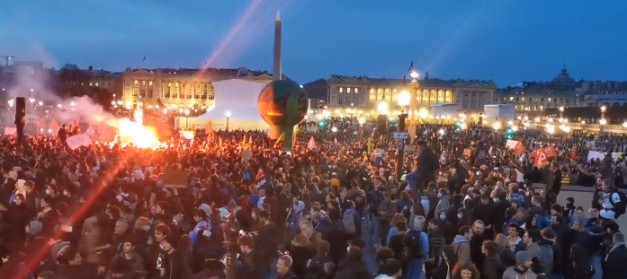
400 schools closed. Nearly 2,000 detained. A minister’s “action plan.” France’s student revolt is a test of how the state listens. (Image video grab)
By TRH World Desk
400 schools closed. Nearly 2,000 detained. A minister’s “action plan.” France’s student revolt is a test of how the state listens.
New Delhi, October 4, 2026 — France’s high-school protests began as a grievance about classrooms and have become a test of how the state treats its youngest dissenters. The government is now managing two stories at once: a legitimate demand for better schools, and a public-order problem it fears will last through the weekend.
French public broadcaster franceinfo reported that the movement is now being met with a concession. After a day of talks with teachers, students and parents on Friday, Education Minister Édouard Geffray promised an “action plan” to speed up teacher replacements, prioritizing exam classes. That is a concrete answer to a concrete complaint. Students have been protesting overcrowded classrooms, teacher shortages and crumbling facilities.
It is also an early sign the protest has leverage. Franceinfo quoted Geffray saying 735 establishments were affected by disruptions, 30 percent fewer than the day before. Meanwhile, France 24 reported that some 400 schools were closed on Friday. The two figures measure different things, closures versus disruptions, and the gap between them shows how difficult it is to size a movement that is changing by the hour.
The trouble is that the protest’s moral clarity has blurred. The interior ministry reported more than 1,900 people detained, most of them students, and hundreds of police injured. France 24 added that at least 65 staff members, including 40 principals, have been injured. Those numbers cannot be waved away. Principals assaulted at school gates are not a footnote.
Yet the government’s framing is revealing. Geffray called the movement “legitimate at the outset,” while the Interior Ministry said the unrest no longer had anything to do with the legitimate expression of student demands. Justice Minister Gérald Darmanin went further, saying the country had moved from student protests to a question of public order. That is a rhetorical shift from listening to policing, and it risks hardening positions among teenagers aged 15 to 18.
One placard captured the mood: “Can we explain ourselves without being teargassed?” It is a fair question, and the state should answer it.
The timing is awkward for Paris. The unrest lands as the government prepares tough 2027 budget negotiations amid division and economic turmoil. A country seeking fiscal adjustment is being asked to spend more on schools. Some members of La France Insoumise have publicly backed the protests, which gives the government a ready argument that the movement is being politicized, and gives the opposition a youth cause.
Student unions are not stepping back. Franceinfo reported that the Union syndicale lycéenne is calling for the mobilization to continue, with a major national day of action on Tuesday. The next test is whether Tuesday’s “act three” stays peaceful. After meeting the minister, student representatives called for non-violent protests to continue.
Paris has an opening. The most durable way to end the blockades is to deliver visible results in classrooms, while holding those responsible for violence to account, without treating every student as a rioter. Teenagers who are told to wait, and then tear-gassed, rarely become patient adults.
Follow The Raisina Hills on WhatsApp, Instagram, YouTube, Facebook, and LinkedIn




About The Author