‘Going Further’ by Ted Cruz Makes the Case for Clarence Thomas — But Is It a Tribute?
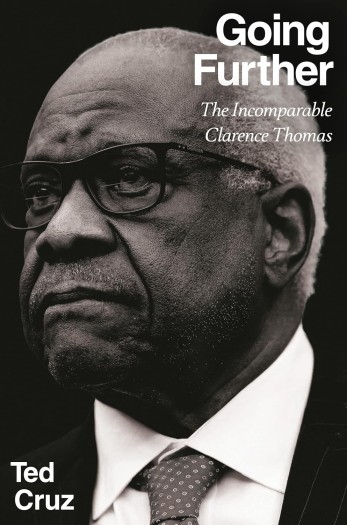
Book Review: ‘Going Further’ by Ted Cruz Makes the Case for Clarence Thomas — But Critics Are Split on Whether It’s a Case or a Tribute (Image Book Cover)
By TRH Book Desk
Sen. Ted Cruz’s fifth book draws on nine hours of personal interviews with Justice Clarence Thomas to argue he’s the Supreme Court’s most principled originalist. Reviewers agree it’s a genuine defense — they disagree sharply on whether it’s also a serious biography.
New Delhi, September 8, 2026 — Sen. Ted Cruz’s “Going Further: The Incomparable Clarence Thomas,” published August 25 by Sentinel, Penguin Random House’s conservative imprint, arrived as an instant No. 1 New York Times bestseller and one of the more closely watched political books of the season — not least because its author has long been mentioned as a potential future Supreme Court nominee himself.
The book traces Justice Clarence Thomas’s life from his upbringing in segregated Georgia through his current role as the Supreme Court’s senior justice and most consistently conservative vote. According to the publisher’s own description, Cruz draws on his own Supreme Court clerkship for Chief Justice William Rehnquist, his years as a Supreme Court advocate, and what the book describes as a “decades-long friendship” with Thomas, including nine hours of exclusive one-on-one interviews with the justice conducted specifically for the project.
NPR’s Steve Inskeep, interviewing Cruz about the book on Morning Edition, summarized its arc as detailing Thomas’s path “from his rise from poverty to his move to the political right,” including his time in the Reagan administration and as head of the Equal Employment Opportunity Commission, before his elevation to the Court in 1991. In that interview, Cruz made his central thesis explicit: “There has never been a Supreme Court justice more willing to go back to the original Constitution, go back to the original understanding and to overturn precedent,” he told NPR.
A Favourable Read From the Right
National Review treated the book as a serious, persuasive character study, framing its core argument as centering on Thomas’s “remarkable willingness to stand alone.”
The review credited Cruz with making the case that character, faith, and independence from elite approval — rather than any single judicial philosophy alone — are what have made Thomas “an unusually principled Supreme Court justice,” positioning the book as much a defence of Thomas’s integrity as an account of his jurisprudence.
Cruz directly defended Thomas’s dissents from mainstream conservative positions where relevant, including recalling that decades before joining the bench, Thomas objected to Bob Jones University’s ban on interracial dating — an example Cruz uses to argue Thomas’s independence cuts in multiple directions, not simply toward predictable conservative outcomes.
How WhatsApp, YouTube and X Are Changing Indian Politics Beyond Election Day
A Sharper Read From the Center
Not every review has been so favourably disposed. Texas Monthly was more sceptical, both of the book’s rigour and its independence from its subject.
The outlet argued Cruz “didn’t work up much of a sweat researching” the biography, and drew a pointed comparison to Thomas’s own 2007 memoir, describing Cruz’s book as “remarkably similar to Clarence Thomas’s book about Clarence Thomas” — a critique aimed less at the book’s prose than at how closely its narrative and interpretive choices track Thomas’s own account of his life rather than offering independent scrutiny.
The Book’s Own Best Anecdotes
Even critics have found some of the book’s specific reporting compelling on its own terms. NPR highlighted one exchange the book recounts between Thomas and the late Justice Antonin Scalia, from a period when Thomas was pushing to overrule precedents he believed were wrongly decided: Scalia reportedly told him, “Clarence, you’re tilting at windmills,” to which Thomas replied, “Nino, windmills are dangerous.”
It’s the kind of granular, insider anecdote that reviewers across the ideological spectrum have pointed to as evidence of the genuine access Cruz’s friendship with Thomas provided — even as they disagree about what that access was ultimately used to produce.
Verdict
“Going Further” is, by every account, an unambiguous work of advocacy — Cruz doesn’t pretend otherwise, and neither do his reviewers. Where critics diverge is on whether that advocacy, paired with genuinely unusual access to its subject, adds up to a compelling character study or a missed opportunity for a more searching biography.
Readers already sympathetic to Thomas’s judicial philosophy are likely to find the book’s central portrait — of a justice defined by independence, endurance, and fidelity to constitutional text over precedent — persuasive and richly detailed.
Readers looking for a more independent accounting of Thomas’s more contested moments, from Anita Hill to the Harlan Crow disclosures, may find the book’s consistent resolution of those questions in Thomas’s favour less a biography than an extended, well-sourced brief for the defence.
Follow The Raisina Hills on WhatsApp, Instagram, YouTube, Facebook, and LinkedIn




About The Author