Hegseth Forces Out Army Chief in Sweeping One-Day Purge
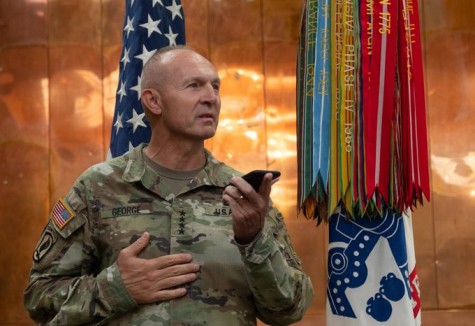
US Army Chief of Staff, General Randy George (Image X.com)
General Randy George — 44 years of service, Combat Infantryman Badge earned twice, praised by Medal of Honor recipients — has been removed immediately. Pam Bondi is out as attorney general. Veterans and analysts are asking who, and what, comes next.
By TRH World Desk
New Delhi, April 3, 2026 — In a single day of sweeping leadership removals, the Trump administration has forced out both the nation’s top law enforcement officer and its highest-ranking army general. Attorney General Pam Bondi is departing for the private sector. General Randy A. George, the 41st Chief of Staff of the United States Army, has been asked by Defence Secretary Pete Hegseth to step down and retire with immediate effect.
The official statement from the Department — notably referred to in the release as “the Department of War,” reverting to the pre-1947 nomenclature — confirmed the departure in measured terms. “General Randy A. George will be retiring from his position as the 41st Chief of Staff of the Army effective immediately. The Department of War is grateful for General George’s decades of service to our nation. We wish him well in his retirement.”
The clinical language of the statement stands in sharp contrast to the record of the man it describes.
Who General George is
General Randy George served 44 years in the United States Army. He earned the Combat Infantryman Badge twice — once as a junior officer and once as a senior officer, across two separate wartime periods. He commanded combat troops at every level of the chain of command and served five total years in combat zones.
He was enlisted before commissioning as an officer — a background that, veterans say, gave him an understanding of what service looks like from the ground up. He is widely described within military circles as a general officer who genuinely cared about the soldiers under his command, not merely the institution’s image.
“General Randy George is one of the greatest leaders around,” said Eli Cuevas, a veteran, writing on X, adding: “He truly cares about the soldiers. He was also enlisted before going officer. He gets it. I have talked with soldiers from different branches of the military and they praise him for his leadership. Multiple Medal of Honour recipients praise him for his help during deployments.”
Cuevas was unsparing about the decision itself. “This is one of the dumbest moves possible. The army leadership at the very top right at this moment is the individuals we need — the leadership the soldiers and American people deserve. These are the guys I would follow into combat in a heartbeat.”
Why Hegseth moved against him
No official reason has been given. The stated rationale circulating in commentary — that George was nominated under a previous president and therefore represents a different institutional orientation — has drawn sharp criticism.
Charlotte Clymer, author and commentator, wrote on X: “General Randy George served 44 years in the U.S. Army. He earned the Combat Infantryman Badge in two separate wartime periods.” He commanded combat troops at every level, Clymer said, adding: “None of it matters to Hegseth. He’s willing to tarnish a widely-respected general officer — known for his professionalism — just for the show of it. This administration does not care about our military.”
Lars Christensen, an analyst, offered a more alarming read of the pattern. “One must fear that the general has contradicted Hegseth, and that Hegseth wants someone who follows orders — even when those orders are war crimes,” he wrote on X. He added that he feared Trump was “not capable of ending this without looking like a complete loser, and that he will therefore simply make it more and more extreme. One can only imagine where that might lead.”
The broader context: a Pentagon in motion
George’s removal is not an isolated event. It is part of what CBS News describes as a broader Pentagon overhaul as the administration reshapes military leadership during an active conflict — the ongoing U.S. military engagement in Iran.
The simultaneous removal of the Attorney General and the Army Chief of Staff in a single evening, with the country at war, raises institutional questions that go beyond the individuals involved. Who replaces George, under what selection criteria, and with what stated expectations of the role will be among the most consequential personnel decisions of the current moment.
The removal of officers who were appointed under previous administrations — regardless of their operational record — signals a preference for political alignment over institutional continuity at the top of the military command structure. That signal will be read, and acted upon, by every officer currently serving below the Chief of Staff level.
The soldiers who praised George for his leadership are still serving. The question of who leads them now, and to what end, remains open.
Pam Bondi Fired Before Trump Speech; Epstein Files Loom Large
Follow The Raisina Hills on WhatsApp, Instagram, YouTube, Facebook, and LinkedIn




About The Author