‘Trump Signature Is Worthless’: Iran Scholar on Hormuz Power
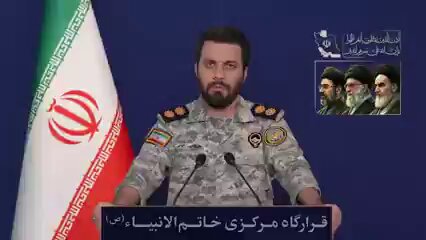
Iran military spokesperson speaks on Thursday (Image X.com)
Professor Mohammad Marandi says Iran has fundamentally changed its calculus on the Strait of Hormuz — not as a bargaining chip, but as a long-term instrument to prevent Gulf states from ever again serving as launchpads against it.
By TRH World Desk
New Delhi, April 2, 2026 — In a wide-ranging interview with Al Mayadeen, Mohammad Marandi — Professor of English Literature and Orientalism at the University of Tehran and one of Iran’s most prominent English-language analysts — offered the clearest articulation yet of how Tehran views the post-conflict order it intends to impose on the Gulf region.
The core argument: Iran is done accepting paper guarantees, done treating the Strait of Hormuz as a crisis lever, and done absorbing the costs of Gulf monarchies hosting American military infrastructure. What comes next, Marandi said, will be structured around facts on the ground — not diplomatic assurances.
ON THE STRAIT OF HORMUZ: A PERMANENT SHIFT, NOT A THREAT
Marandi was explicit that Iran’s changed posture toward the Strait is not a negotiating position. It is, in his framing, a strategic recalibration with two distinct objectives.
“Iran will, from now on, treat the Strait of Hormuz differently,” he said, adding: “For two reasons.”
The first is material: reparations. Marandi argued that the Gulf monarchies — Saudi Arabia, the UAE, Bahrain, and Kuwait — which host American military bases have “caused great harm to the Iranian people and continue to cause great harm.” He said those states will be expected to pay for that harm after the war, and that control over Hormuz gives Iran the leverage to make that expectation credible.
The second reason is structural: ensuring the geography of the Gulf cannot be weaponised against Iran again. “The Strait of Hormuz is a key tool for the Iranians to make sure that Saudi Arabia, the Emirates, Bahrain, and Kuwait never again become platforms for aggression against Iran,” he said.
He was careful to define what Iran is and is not seeking. “Iran doesn’t care if these countries have excellent relations with the United States, doesn’t care if they do business with the United States, doesn’t care if they have cultural relations with the United States,” Marandi said. The line, in his account, is unambiguous: “They can no longer be a platform for military aggression against Iran.”
ON AMERICAN ASSURANCES: PAPER IS NOT ENOUGH
Marandi dismissed the possibility that a diplomatic agreement with the United States — in any conventional form — could satisfy Iranian security requirements at this moment.
“The Iranians cannot accept any assurances from the United States on a piece of paper,” he said, adding: “A Trump signature is worthless.”
He argued that Iran’s distrust of Washington is not emotional or ideological but rational, grounded in a documented record of American commitments that were subsequently abandoned. The only pathway to a durable arrangement, in his view, is change that is visible, verifiable, and physical.
“The only thing that can bring about peace is for the facts on the ground to change,” he said, adding: “And the Strait of Hormuz is a good tool — it’s a key tool — for the Iranians to make sure of that.”
WHAT MARANDI’S FRAMING MEANS FOR THE REGION
Marandi’s analysis is significant not because it represents Iranian state policy — he speaks as an analyst, not an official — but because he has consistently articulated positions that reflect mainstream Iranian strategic thinking in terms accessible to Western audiences. His framing of Hormuz as a reparations mechanism and a permanent security guarantee, rather than a temporary pressure point, suggests Tehran’s post-conflict demands will go substantially beyond the nuclear file.
For Gulf states, the implications are considerable. The suggestion that they will be held collectively accountable — economically and strategically — for hosting American forces during the conflict represents a claim that, if Iran pursues it, would restructure the security architecture of the entire Gulf Cooperation Council.
For Washington, the “worthless signature” formulation forecloses the kind of quick diplomatic off-ramp that American administrations have historically relied upon. If Tehran genuinely requires changes on the ground rather than written commitments, any deal will need to be accompanied by visible, verifiable withdrawals or repositioning of forces — a far higher bar than a signed framework.
The war, Marandi implied, will end. What Iran intends to ensure is that the conditions that enabled it cannot be reassembled.
Trump Iran Speech: ‘Mission Nearly Complete Signals Escalation’
Follow The Raisina Hills on WhatsApp, Instagram, YouTube, Facebook, and LinkedIn




About The Author