From Multan to Padma Shri: Dr. Lajwanti’s Six-Generation Phulkari Legacy
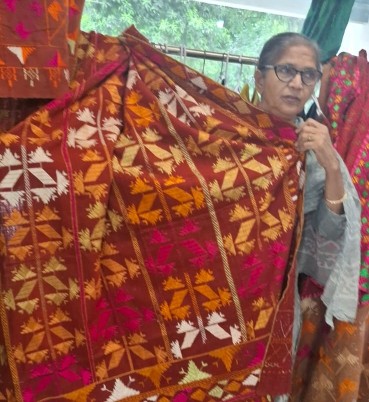
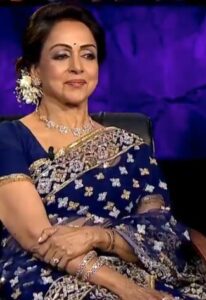
Padma Shri awardee Dr. Lajwanti traces her journey from Partition-era displacement to preserving Punjab’s Phulkari heritage. (Image Bhawna Malik)
By BHAWNA MALIK
From the pain of Partition to preserving India’s textile heritage, the Phulkari maestro shares her extraordinary artistic journey.
New Delhi, August 18, 2026 — Some stories are stitched not just with thread, but with courage, memory and resilience. The life of Padma Shri awardee Dr. Lajwanti is one such inspiring journey, where every embroidered motif reflects survival, cultural pride and women’s empowerment.
Born into a family displaced during the Partition of India in 1947, Dr. Lajwanti inherited not material wealth but a priceless artistic legacy. As her family rebuilt life from scratch, Phulkari—the vibrant embroidery tradition of Punjab—became far more than a craft. It became an identity, a source of livelihood and a symbol of hope.
“I learnt this art from my maternal grandmother when I was just six years old. I belong to the sixth generation carrying forward this tradition. Our family not only practised Phulkari embroidery but also wove cloth in Multan before Partition,” she recalls.
After migrating to India, the family struggled to rebuild their lives. Encouragement came from an unexpected quarter.
“Former President Giani Zail Singh’s sister met my elders and urged them to continue this art. Gradually people began appreciating our work. Working women started buying our creations, and we began exhibiting them at various fairs and exhibitions,” she says.
What began as a childhood lesson gradually evolved into a lifelong mission. Her dedication to preserving and promoting Phulkari eventually earned her one of India’s highest civilian honours—the Padma Shri, presented by former President Dr. Shankar Dayal Sharma.
Yet, despite national recognition, Dr. Lajwanti remains convinced that traditional crafts can survive only when they are passed on to younger generations.
Today, much of her time is devoted to designing and training young girls and women. For her students, learning Phulkari is about far more than embroidery—it’s about confidence, financial independence and reconnecting with their cultural roots.
“I always tell women and girls not to keep waiting for jobs. Learn a skill, discover your inner potential and become financially independent,” she says.
She personally designs every creation while teaching both traditional techniques and modern aesthetics. Her daughter, Kiran, is among the many students carrying forward the family legacy.
One of Dr. Lajwanti’s greatest achievements has been successfully adapting Phulkari for contemporary lifestyles without compromising its authenticity.
Rather than limiting the embroidery to traditional Punjabi attire, she has introduced it on sarees, stoles, jackets, kurtas and contemporary garments, making the craft relevant for today’s generation.
Among her most admired innovations is the fusion of colourful Punjabi Phulkari with elegant Kerala handloom weaves.
“I wanted to harmoniously blend two beautiful Indian traditions. The vibrant embroidery complements the simplicity of Kerala fabrics beautifully,” she explains.
Sustainability also forms an integral part of her creative philosophy.
“I never waste leftover fabric. We transform even the smallest pieces into wall hangings, coasters, trays and decorative items.”
Every Stitch Tells a Story
In an age dominated by machine-made products and fast fashion, Dr. Lajwanti’s creations celebrate patience, craftsmanship and generations of inherited knowledge.Each handcrafted piece demands extraordinary dedication.
“Depending on the intricacy, one piece may take anywhere from a week to two months. Sarees often require two to three months. Bagh embroidery takes even longer because the designs are never traced—they are embroidered directly onto the fabric.”
Today, designers and boutique owners regularly purchase her creations, which are later sold at premium prices. Her work is showcased at Delhi Haat, government-organised festivals, Diwali melas and prestigious craft exhibitions across the country.
For Dr. Lajwanti, the greatest reward is not the Padma Shri but seeing younger generations embrace an art form that has survived centuries of change.
Her legacy lives in every artisan she trains, every garment she transforms and every stitch that keeps Punjab’s rich textile heritage alive.
Her journey reminds us that while history may divide people through borders, art possesses the timeless power to unite cultures, generations and hearts.
Stitching a New Future: How Binal Is Reviving Bengal’s Kantha Craft
Follow The Raisina Hills on WhatsApp, Instagram, YouTube, Facebook, and LinkedIn




About The Author