Jantar Mantar, PTI Politics and Delhi’s Jugaadu Game: ND Has Come a Long Way

As Delhi designates Ramlila Ground, CBD Ground and Burari Ground for protests, Jantar Mantar's long run as the capital's protest address may be ending. (Image: AI Sketch)
By NIRENDRA DEV
An October 11 order designates Ramlila Ground, CBD Ground and Burari Ground for demonstrations as the CJP’s standoff with Delhi Police puts protest permissions under scrutiny.
New Delhi, October 12, 2026 — One major fallout of the 2026 season of protests may be a change in Delhi’s protest geography. Narendra Modi-led government has designated three alternative venues for demonstrations, potentially ending Jantar Mantar’s long-standing role as the preferred destination for protesters in the national capital.
From Jantar Mantar dharnas to freelance status, and now residing in Ghaziabad, ND (as the author is known among his friends) has indeed come a long way. Quote, unquote!
If I opt to go personal yet again, and write in the first person, I must begin with my favourite statement about being a victim of Delhi’s jugaadu politics in journalism — at the Press Trust of India (PTI).
The government’s standing order dated October 11, 2026, designates Ramlila Ground in Old Delhi, CBD Ground in East Delhi and Burari Ground in North Delhi as alternative protest venues. The three locations are approximately 3 km, 13.5 km and 44 km away from Jantar Mantar in central Delhi, respectively.
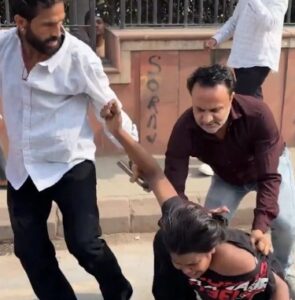
The move comes amid a standoff between the Cockroach Janata Party (CJP) and Delhi Police over permission to hold a peaceful protest at Jantar Mantar. CJP leaders walked out of Parliament Street police station on Monday, reiterating their demand for a date for the protest and seeking an explanation for the denial of permission.
The latest development follows the Supreme Court’s October 9 observations that Delhi should consider a larger alternative protest site equipped with basic facilities, including toilets, drinking water, medical assistance and emergency access.
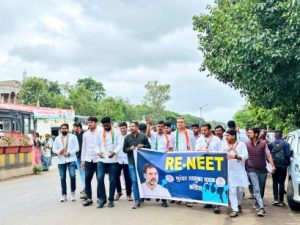
For decades, Jantar Mantar, a stone’s throw from Parliament and close to the headquarters of PTI, the United News of India (UNI) and the Indian Newspaper Society (INS), has hosted demonstrations by farmers, trade unions, political parties, students, civil-society groups and individuals pursuing personal causes.
The venue has also witnessed moments of tragedy. On April 22, 2015, 40-year-old farmer Gajendra Singh Kalyanwat from Rajasthan’s Dausa district died by suicide after hanging himself from a tree during an Aam Aadmi Party rally against land acquisition.
In October 2017, the National Green Tribunal took note of complaints by Jantar Mantar Road residents about continuous demonstrations, noise and air pollution, sanitation problems and disruption to everyday life. Its order was subsequently challenged in the Supreme Court by the Mazdoor Kisan Shakti Sangathan and other appellants, including organisations representing farmers and ex-servicemen and an individual protester.
Not every demonstration was large or politically consequential. Sometimes, a group of barely 20 people would march around raising slogans such as “Bal Thackeray hosh mein aao”. The spectacle could occasionally look comical, too.
When Jantar Mantar Became ND’s Beat
On the personal front, when I was attached to the Reporting Unit at PTI headquarters, I took assignments at Jantar Mantar as both a challenge and an opportunity.
Most Delhi colleagues and bosses were impressed by my Hindi. Perhaps they were willing to overlook what I considered my two weaknesses: being a Bengali and having studied and worked in the Northeast.
And so the arrangement began.
“Jantar Mantar hai toh ND ko bhej do.”
The name ND stuck. At times, a few Intelligence Bureau officials, now retired, would affectionately address me by that name.
The venue was not far away. But Delhi’s summer made things difficult for someone who dreaded the heat, heatwaves and the prospect of finding a comfortable place for lunch in such inhospitable weather. A banana often came to the rescue.
We met friends there, and some of those friendships have endured.
Nevertheless, the challenge was fun — at least initially. Gradually, however, I began to realise that Delhi’s jugaadu game was also at work.
In PTI’s internal politics, assignments to Jantar Mantar could feel like a form of punishment. The perceived reason? “He acts over-smart.”
That was one factor, at least as I saw it.
Soon, PTI boss M.K. Razdan began saying at meetings: “ND is a man for all seasons.”
That was quite enough. The industry of professional jealousy was apparently alive and well in an organisation where, in my assessment, mediocrity sometimes found its champions.
Razdan sahab, or MKR, was himself a workaholic and was not, in my view, the problem per se. But he was surrounded by people eager to cultivate his favour.
Most colleagues were simply doing their jobs. The late Sujit Chatterjee, the son of a respected senior journalist, was among those I remember as a ready competitor in an atmosphere shaped by Delhi’s insecurities.
There were other characters, too — a few on the Congress beat and some from what I privately thought of as the LLD club. The familiar refrain was that the world was a difficult place and everyone seemed to be watching everyone else.
Then there was the character who reminded me of the “Angrez ke zamaane ke jailor” — someone who declined to use computers.
Eventually, female colleagues began joking: “Are you looking for ND? He must be at Jantar Mantar.”
From Jantar Mantar to Burari?
The October 11 order gives this old newsroom joke a new twist.
Imagine another ND — or Ruata, my former PTI colleague from Aizawl — arriving in Delhi to work at PTI. Would the new recruit now be sent to Burari Ground instead?
What a pity!
The reference to Ruata, Vanlalruata, now associated with the Times of India’s Aizawl bureau, brings back another lighter moment.
A Delhi woman colleague, who would later become Mrs Kaul, once asked him: “Young boy, can you do this copy?”
My friend’s Hmar spirit immediately rose to the occasion.
“Young lady, I am not a boy. I have a daughter of your age,” he retorted.
That was Ruata for you.
When Reporting Became a Test of Loyalties
Another memory concerns a story I had filed about women Naga insurgents.
A woman on the Delhi Desk, whose outlook I associated with the narrow confines of Punjabi Bagh, told me that the next time I met the Naga women insurgents, I should photograph them and ask a few “uncomfortable questions”.
She then delivered her verdict: “You are glorifying Naga insurgency.”
I remember the episode as an example of how reporting from the Northeast could be judged through the assumptions of people far removed from the region.
Back in Nagaland, I was regarded as a plain manu — an ordinary man. Some even suspected that PTI was a government-funded enterprise, reflecting the perception that the news agency was somehow a sarkari affair.
Life had come full circle, I thought.
I kept quiet for a while. Eventually, I had to point out that the insurgent women were not my girlfriends.
Ruata, of course, congratulated me. His verdict was characteristically generous: “Tonight’s dinner is in Mizoram House.”
And that, in its own way, was Delhi journalism — assignments, rivalries, misunderstandings, friendships and stories that survived long after the day’s reporting was done.
Now, as the government designates Ramlila Ground, CBD Ground and Burari Ground as alternative venues, the geography of protest in Delhi may change. Whether these locations offer protesters the accessibility and facilities they need remains to be seen.
For those of us who spent years covering demonstrations at Jantar Mantar, the change is more than an administrative decision. It marks the possible end of a familiar chapter in Delhi’s political and journalistic life.
From Jantar Mantar dharnas to freelance status, and now Ghaziabad — ND has indeed come a long way.
Delhi Police Action Raises Alarms Over Democracy and Civil Liberties
Follow The Raisina Hills on WhatsApp, Instagram, YouTube, Facebook, and LinkedIn




About The Author