‘Angh’: Nagaland’s Konyak Story Wins TIFF Platform Prize, Opens Oscar Route
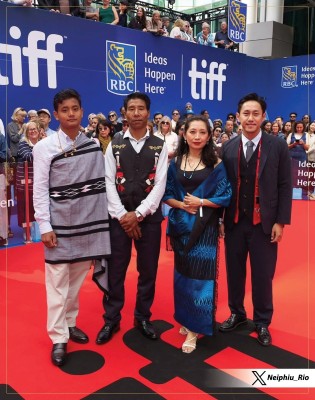
Theja Rio’s Angh, rooted in Nagaland’s Konyak community, won the Platform Prize at TIFF 2026. (Image Rio on X)
By NIRENDRA DEV
Theja Rio’s debut feature, set in 1960s Nagaland, becomes eligible for consideration in the 2027 Oscars International Feature Film category after winning at TIFF.
Kohima, September 21, 2026 — Angh, a feature film rooted in the Konyak community of Nagaland and directed by Naga filmmaker Theja Rio, has won the Platform Prize at the 2026 Toronto International Film Festival (TIFF), giving the film a direct pathway to consideration for the 2027 Academy Awards in the International Feature Film category.
The film was the only Indian entry in TIFF’s 12-film Platform Competition this year. The jury cited Angh for its “refreshing perspective, strength of filmmaking, and deeply resonant portrait of a world”, while praising Rio’s vision and filmmaking approach.
The award marks a significant international recognition for a film centred on Nagaland’s Konyak community and its changing social and cultural landscape.
Set in the early 1960s near the Indo-Myanmar border, Angh follows Anghba, the last surviving chief of a deserted village, who remains behind with his ailing wife and young son as traditional ways of life come under pressure.
At the centre of the film is the relationship between Anghba and his son. The arrival of an American missionary, played by Douglas Henshall, becomes part of the transformation taking place around the family.
The film examines the tension between ancestral beliefs and a changing social order, including the impact of Christian missionary activity on local traditions and identity. Its use of the Konyak language and its focus on an Indigenous Naga community give the story a perspective rarely represented in mainstream Indian cinema.
From Nagaland to the international film circuit
For Theja Rio, Angh is his feature directorial debut. The filmmaker has described the project as a deeply personal work rooted in the place, people and culture he grew up around.
“I am aware that it is rare for a debut film to receive this kind of recognition,” Rio said, adding that the film was made “with a lot of love” for his home, people and culture.
He said the father-son relationship at the centre of the film also explores broader themes of letting go, one’s relationship with home and the transient nature of life.
Rio has also dedicated the TIFF recognition to his people in Nagaland.
The film was produced by Nancy Nisa Beso and Theja Rio. Beso described the project as a long collaboration that began with a short film before developing into the feature.
The film’s international and domestic distribution representation is being handled by Jungle Book Studio, which acquired its international sales rights ahead of the TIFF premiere.
A new route to the Oscars
The TIFF award has particular significance because of a change in the Academy’s rules for the 99th Academy Awards.
Under the 2026 rules, a non-English-language feature can qualify for consideration in the International Feature Film category by winning a specified award at a qualifying international festival. The Toronto International Film Festival’s Platform Award is among the awards listed by the Academy for this route.
This means Angh does not have to depend on being India’s official submission to become eligible for Academy consideration.
However, Oscar eligibility is not the same as an Oscar nomination. Angh has secured a pathway into the Academy’s consideration process, but it has not yet been nominated for an Academy Award.
India’s official submission for the 2027 Oscars is the Marathi film Gondhal. Angh therefore enters the Academy process through a separate festival-award route rather than replacing India’s official selection.
The distinction is important as the Academy’s International Feature Film submission deadline for the 99th Oscars is September 30, 2026.
A film about a changing world
The Platform jury’s citation captures the central significance of Angh: a story from a specific Indigenous community has found an international audience through its own cultural setting and language.
The film’s narrative is situated in a period when Nagaland was experiencing major social and religious changes. Rather than presenting those developments only as historical events, Angh approaches them through the relationship between a father and son and the gradual transformation of their community.
For Rio and the film’s producers, the TIFF recognition therefore represents both a film achievement and an opportunity to bring a Naga story to a wider international audience.
Nagaland Chief Minister Neiphiu Rio congratulated Theja Rio and the Angh team, describing the TIFF victory as a significant moment for Nagaland and India and noting the film’s Oscar pathway.
The award also places Angh among the growing number of Indian films using regional languages, communities and histories to find audiences beyond the country’s established cinematic centres.
For Nagaland’s emerging film ecosystem, the TIFF Platform Prize gives one such story an international platform — and, for the first time, a direct route into the Academy’s International Feature Film consideration.
Nagaland’s Next Stage: From Insurgency to Radical Regionalism
Follow The Raisina Hills on WhatsApp, Instagram, YouTube, Facebook, and LinkedIn




About The Author