Why US Kept Indian Officials Away From F-35 Stealth Fighters During Tarang Shakti
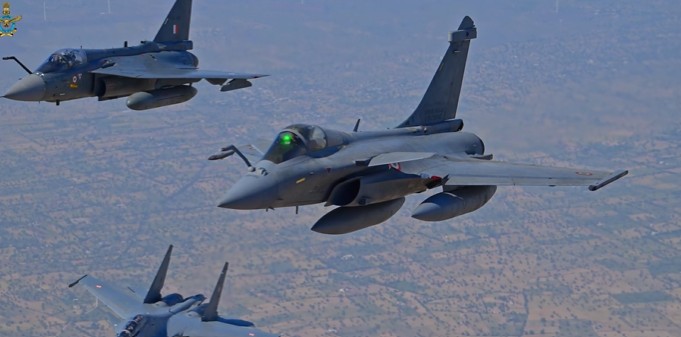
US F-35 Deal With India Faces S-400 Hurdle, Says The National Interest (Image IAF on X)
By TRH World Desk
The National Interest reports that US security restrictions, India’s acquisition of Russian S-400 missile systems and the absence of a formal F-35 sales offer complicate prospects for India’s acquisition of the American fifth-generation fighter.
New Delhi, October 14, 2026 — The United States restricted Indian officials’ access to its F-35 Lightning II stealth fighters during the multinational Tarang Shakti 2026 air exercise, highlighting the security concerns surrounding the transfer of sensitive military technology.
In a report published on October 13, The National Interest, written by Peter Suciu, said six US Air Force F-35 fighters participated in the exercise but were closely guarded at the Jodhpur air base in Rajasthan. The report said Indian Air Force personnel were not permitted to approach the aircraft freely.
Indian Air Force Chief Air Chief Marshal AP Singh raised the issue publicly at the concluding press conference of the exercise, questioning the apparent contradiction between Washington’s interest in selling the aircraft and its restrictions on access.
“Your people don’t even let us go near the aircraft, and you are talking about selling it to us,” Singh told reporters.
Singh also confirmed that the US had made no formal offer to sell the F-35 to India. US Pacific Air Forces commander General Kevin Schneider said decisions concerning potential foreign sales were beyond his authority.
According to The National Interest, India’s acquisition of Russia’s S-400 Triumf air defence system represents a major obstacle to a potential F-35 deal. Washington has raised concerns about operating the Russian system alongside the American stealth fighter, arguing that it could compromise sensitive aircraft technology.
Turkey was removed from the F-35 programme after acquiring the S-400 system, providing a precedent for the restrictions India could face.
The report also noted that F-35 exports operate through the US government’s Foreign Military Sales framework, rather than through direct private-sector marketing by manufacturer Lockheed Martin.
Meanwhile, Singh confirmed that Russia had offered its Su-57 fifth-generation fighter to India, although no decision had been taken on evaluating the aircraft.
India is also pursuing its indigenous Advanced Medium Combat Aircraft (AMCA) programme as part of its long-term effort to develop a domestic fifth-generation stealth fighter.
The episode underscores the challenges India faces in balancing access to advanced foreign military platforms with strategic autonomy and domestic defence manufacturing.
India Buys Javelin Missiles From US: Is Modi-Trump Defence Partnership Entering a New Phase?
Follow The Raisina Hills on WhatsApp, Instagram, YouTube, Facebook, and LinkedIn




About The Author