‘The Difficult Bride’ Review: A Bangladeshi Feminist Folk Horror Makes History at Venice
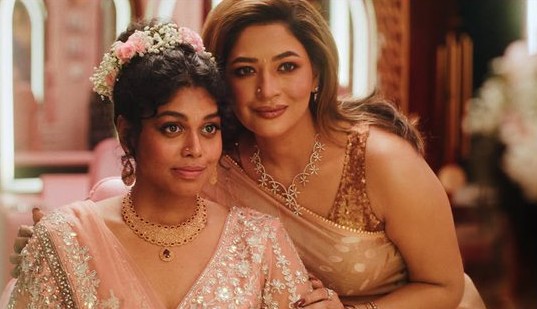
‘The Difficult Bride’ Review: Bangladesh’s Venice Breakthrough (Image X.com)
By TRH Entertainment Desk
Rubaiyat Hossain’s 21-years-in-the-making supernatural drama turns a childhood urban legend into a visceral, snake-and-lizard-filled meditation on beauty, bodily autonomy, and bridal dread — and becomes the first Bangladeshi feature ever selected for the Venice Film Festival in the process.
Mumbai, September 9, 2026 — Set almost entirely within Mayfair, a fictionalized version of a real, long-shuttered Dhaka beauty salon, “The Difficult Bride” follows Zaineen (played by Zaineen Chowdhury Karim, a Smith College graduate making her lead acting debut), a bride-to-be who arrives days before her wedding to undergo traditional beauty rituals.
According to the film’s official synopsis distributed via the Venice Biennale, as her preparations progress, Zaineen finds herself “drawn into an unsettling and mysterious world shaped by beauty, faith, memory and fear,” with her body beginning to “revolt against bridal rituals in poetic and grotesque ways.”
IndieWire describes the film leaning hard into genre territory to tell that story, characterizing it as taking beloved South Asian wedding-film tropes — the ones audiences know from “Monsoon Wedding” or Netflix’s “Indian Matchmaking” — and inverting them into “feminist folk horror.”
The film’s origins trace back to an urban legend Hossain heard as a seven-year-old, visiting the real Mayfair salon with her mother. “There was a bride who died there,” Hossain told Variety in an interview ahead of the premiere.
“Everyone knew this story from our generation, and I remember being seven, and even at that time, I had visualized this story. It was in sepia for some reason, I don’t know, but I completely had the visuals in my head, and it’s something that always stayed with me.”
IndieWire adds the specific detail that in the legend, the bride died because a snake had been hidden inside her ornate flowered hair bun — an image with an obvious, unsettling metaphorical charge around beauty, femininity, and desire that the finished film builds much of its visual language around.
That commitment to unsettling imagery extends to the film’s production choices. IndieWire reported that with interiors largely shot inside Hossain’s own house in Dhaka, the film is filled with striking shots of real animals — “lizards galore, snakes, monkeys, and mosquitoes” — with only one shot in the entire film relying on visual effects, according to Hossain.
A Film Two Decades in the Making
What’s striking about “The Difficult Bride” as a festival entry is just how long its road to the screen has been. Hossain first attempted the material as a short film back in 2006 before shelving it, revisiting and rewriting the story repeatedly over the next two decades.
“I kept revisiting and rewriting this story over the last 21 years,” Hossain said, in comments reported by Variety at the time the film’s cast was unveiled.
“This film lived with me for half my life. To finally make it — with these actors, this team, at this moment — feels like a quiet miracle.”
That long gestation shows up in the film’s craft pedigree as much as its themes. The Difficult Bride was shot by Portuguese cinematographer Leonor Teles, a Golden Bear-winning filmmaker in her own right, whom Hossain credited with bringing “courage, intuition, sensitivity and an emotional attentiveness that enriched the film’s world without ever imposing on it.”
The Politics Underneath the Horror
Hossain, previously known for women-centered dramas including “Made in Bangladesh” and “Under Construction,” has described “The Difficult Bride” as a deliberate shift in focus toward upper-class Bangladeshi women’s experience, after earlier films examined middle-class and working-class women’s lives respectively.
“Each film comes from a different social reality, but together they attempt to reflect the complexity and diversity of Bangladeshi society,” she told The Daily Star ahead of the premiere.
The film also carries traces of Bangladesh’s recent political turbulence, though Hossain resists a directly topical reading. Variety reported the Dhaka backdrop includes scenes of women being surveilled and policed for their clothing and behaviour, filtered through a supporting character played by Rikita Nondine Shimu.
“I wouldn’t say the film is set around the time of July [2024],” Hossain told Variety, referring to Bangladesh’s political unrest that year.
“I tried to create like a reality of Dhaka where there is political violence outside, there is a lot of violence against women.”
That approach — grounding a supernatural genre film in a specific, unresolved social reality without making it a direct allegory for any single event — appears to be central to what Hossain is attempting tonally.
Beyond the film’s individual merits, “The Difficult Bride” carries genuine historical weight simply by being at Venice at all. It is the first Bangladeshi feature film ever selected for the festival, screening in the Orizzonti (Horizons) competition — a milestone that outlets covering Bangladeshi cinema have treated as significant in its own right, independent of how the film itself is ultimately received critically.
The film also emerged from an unusually international, and unusually competitive, funding pipeline. It received support from Italy’s Fondazione Prada Film Fund, which selected just 14 projects from more than 1,200 submissions worldwide for its inaugural round — and “The Difficult Bride” was reportedly the only one of those selected films to receive funding specifically at the post-production stage, according to Venice Biennale materials. The production itself is a five-country co-production, spanning France, Bangladesh, Portugal, Germany, and Norway.
‘Furies’ Review: George Clooney-Backed Lebanese Heist Drama Is Furious, Kinetic Filmmaking
Follow The Raisina Hills on WhatsApp, Instagram, YouTube, Facebook, and LinkedIn




About The Author