Tata Board Crisis: Tata Sons, Tata Trusts and the Battle for Control
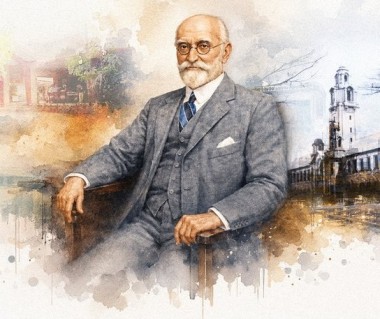
The Tata Sons board crisis has brought Chandrasekaran’s reappointment, Tata Trusts’ control, RBI listing rules and shareholder rights into a major corporate governance battle. (Image Tata Trusts on X)
By TRH Op-Ed Desk
Chandrasekaran’s reappointment despite Tata Trusts’ opposition has opened an unprecedented corporate governance battle over who ultimately controls Tata Sons—and what happens to the Tata model
New Delhi, September 23, 2026 — The Tata Group has entered an extraordinary boardroom battle, one that goes well beyond the question of whether N. Chandrasekaran should continue as chairman.
At stake are shareholder rights, the authority of the Tata Trusts, the independence of the Tata Sons board, the RBI’s regulatory framework and the future architecture of one of India’s most influential business groups.
On September 17, the Tata Sons board approved a fresh five-year term for Chandrasekaran, even though he had announced in August that he would not seek reappointment when his existing tenure ends on February 20, 2027. Tata Trusts Chairman Noel Tata opposed the resolution. The Trusts subsequently described the resolution as legally void, arguing that the Articles of Association require affirmative support from the majority of Tata Trusts’ nominee directors.
That creates the central question in the crisis: can the board of Tata Sons override the position of the shareholder that owns about 66% of the company?
The answer is now likely to involve lawyers, shareholders and potentially the courts.
The dispute is particularly striking because Tata Sons is not an ordinary holding company. The Tata Trusts have historically exercised influence through their majority ownership while the operating companies have been run through professional management and independent boards. The present confrontation is testing how that carefully constructed balance works when the majority shareholder and the Tata Sons board disagree over the chairman.
The listing question makes the conflict even more consequential.
The RBI has classified Tata Sons as an upper-layer non-banking financial company, a regulatory status that carries a requirement to list. Tata Sons had sought to surrender its NBFC registration rather than pursue a listing, but the RBI rejected that approach on September 11. Tata Sons has consequently moved toward complying with the regulatory framework.
Tata Trusts, however, says listing is not the only possible solution. It has urged Tata Sons to examine alternatives and pointed out that the board had unanimously decided in March 2024, under the guidance of the late Ratan Tata, that Tata Sons should remain unlisted.
A public listing could fundamentally change the economics and governance of Tata Sons. It could bring greater disclosure and market scrutiny, but it would also expose the holding company to the dynamics of public shareholders and market valuations.
There is another immediate complication: the Shapoorji Pallonji Group, which owns about 18.4% of Tata Sons, has proposed monetising part of its stake for at least ₹25,000 crore. Tata Trusts has placed the proposal before the Tata Sons board.
The debate has consequently become a contest over the future structure of Tata Sons itself.
Senior journalist MK Venu, writing on X, asked whether a professional executive chairman of a large corporate group could ordinarily seek to extend a tenure against the wishes of a majority promoter shareholder. He described the Tata episode as a warning for other business houses and potential investors. Those are his views, not an established finding about the dispute.
Commentator S. Murlidharan agreed with Venu and focused on the regulatory history behind the listing issue. Senior lawyer Abhishek Singhvi, meanwhile, argued on X that shareholder and ownership rights cannot simply be nullified and highlighted the historic relationship between Tata Trusts and Tata Sons.
The other side of the argument is that a large and systemically important corporate group must comply with applicable regulatory requirements and maintain effective corporate governance. The listing debate therefore cannot be reduced simply to a clash between a promoter and a professional manager.
What makes the Tata crisis significant is precisely this collision of principles.
Who has the final say over Tata Sons? How should its Articles of Association be interpreted? Can regulatory requirements force a change in a structure that shareholders have historically preserved? And can a professional board assert greater autonomy from its controlling shareholder?
These questions now extend beyond Chandrasekaran’s tenure.
They go to the heart of the Tata model itself.
Follow The Raisina Hills on WhatsApp, Instagram, YouTube, Facebook, and LinkedIn




About The Author