Supreme Court Questions Bengal SIR Category as Delhi Audit Flags Wrong Voter Deletions
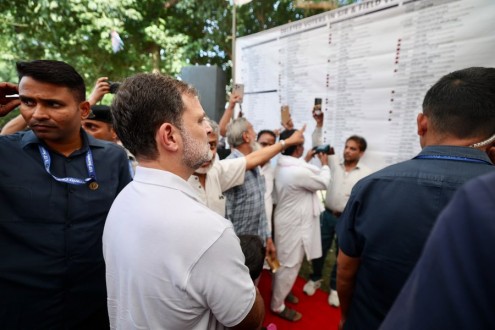
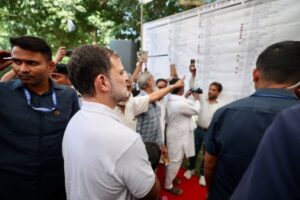
LoP Rahul Gandhi during a public hearing on SIR of the ECI in New Delhi (Image Rahul on X)
By TRH Political Desk
The Supreme Court says it has yet to decide the legality of the Election Commission’s Logical Discrepancy category, while a civil society audit in Delhi alleges that 416 of 1,236 verified voters were wrongly removed.
New Delhi, October 28, 2026 — The Supreme Court on Wednesday questioned the basis for classifying voters under the “Logical Discrepancy” category. The apex court asked how electors already included in the 2003 electoral roll could have their entries reopened during the ongoing revision.
Justice Joymalya Bagchi, sitting on a Bench headed by Chief Justice of India Surya Kant and also comprising Justice V. Mohana, emphasised that the court had permitted the category in West Bengal only as an interim arrangement.
“We have not finally adjudicated on the legality of Logical Discrepancy,” Justice Bagchi said, according to LiveLaw.
The Bench also clarified that its earlier judgment on the Bihar SIR exercise could not be treated as an endorsement of the category, which was not used in Bihar.
Logical discrepancy category stirred a major row as it became reportedly a basis for the exclusion of millions of voters across the country. This category included allegedly triggers such as difference in age between father and sons or daughters and others. In many cases, voters found their names removed from the electoral rolls allegedly for translation mistakes.
Millions of the voters in West Bengal found their names struck off from the electoral rolls ahead of the Assembly elections in which Trinamool Congress was voted out. The TMC alleged that the party lost the elections because of the special intensive revision of the Election Commission of India.
During the hearing of petitions concerning Delhi’s SIR, advocate Prashant Bhushan submitted that 19.34 lakh voters had been marked under the Logical Discrepancy category. He questioned the absence of a clear definition of the term. The Election Commission’s counsel, senior advocate Dama Seshadri Naidu, told the court that 95% of the affected cases had been restored, per the legal portal.
The judicial scrutiny coincided with a public hearing in Trilokpuri, East Delhi, on Tuesday, attended by Leader of Opposition Rahul Gandhi and other opposition leaders. Organised by civil society groups, the hearing examined alleged wrongful deletions from electoral rolls during the SIR process.
According to an audit presented by the organisers, volunteers verified 1,236 voters marked for removal across four polling booths. Of these, 416, or 33.7%, were allegedly wrongly removed, per media reports. The organisers acknowledged that the exercise was a targeted audit rather than a random sample and that hundreds of cases remained unverified.
Rahul Gandhi alleged that the revision was depriving ordinary citizens of their voting rights and demanded accountability from the Election Commission. The findings presented at the hearing, however, represent the organisers’ audit and are not a nationwide assessment of deletion errors.
The Supreme Court’s observations have placed the classification process under renewed scrutiny. The Congress has planned a moot court on October 31 ahead of the November 1 rally at the Ramlila Ground on carrying out a symbolic impeachment of Chief Election Commissioner Gyanesh Kumar.
With the legality of the category still pending adjudication, the proceedings could have wider implications for voter verification and the safeguards available to electors whose names are removed from the rolls.
SIR Row, Gyanesh Kumar Resignation Demands: ECI Orders ECINET Review
Follow The Raisina Hills on WhatsApp, Instagram, YouTube, Facebook, and LinkedIn




About The Author