Kharg Island’s Oil Flowing: Sending Marines Would Be ‘Madness’
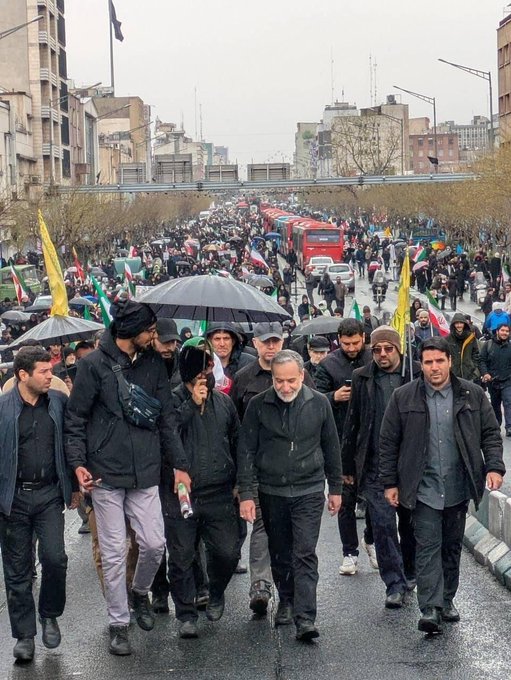
Iran's Foreign Minister Seyed Abbas Araghchi during International Quds Day walk (Image X.com)
Tanker Trackers Say Iran’s 34-Million-Barrel Storage Is Likely Intact While Military Experts Warn Trump’s Hormuz Plan Is Catastrophically Under-Resourced
By TRH World Desk
New Delhi, March 14, 2026 — As global markets digested the shock of the US strike on Kharg Island, two voices cut through the noise on Friday with assessments that should unsettle both the White House and the trading floor.
First, the oil reality. Shipping intelligence account Tanker Trackers, one of the most closely followed sources for real-time petroleum flow data, urged calm — and caution about premature conclusions.
“It’s got a military presence like everything else in Iran,” they wrote on X. “That’s what was struck. They’ll most likely get replaced ASAP from the mainland.” Critically, Tanker Trackers confirmed that Kharg Island’s 55 crude oil storage tanks, capable of holding over 34 million barrels, were most likely unscathed. A VLCC supertanker had spent 48 hours loading 2 million barrels there on the very day of the strike. Smaller tankers were also berthed on the island’s east side.
The account noted that Kharg had been “loading tankers non-stop since the war broke out two weeks ago,” and warned followers not to be misled by satellite images showing fire on the island — daily gas flaring there is routine and verifiable through NASA’s FIRMS mapping tool.
The strategic picture is sobering. According to Tanker Trackers’ own data, Kharg accounted for 96% of Iran’s crude oil exports in 2025 — approximately 1.538 million barrels per day. Yet history offers a precedent for resilience: when Saddam Hussein repeatedly bombed the island forty years ago and destroyed multiple storage tanks, Kharg still managed to export over 1.5 million barrels per day.
The oil infrastructure, in short, appears to have survived. The military escalation, however, is only beginning.
On the question of Marines seizing Hormuz islands, former US Navy intelligence officer Malcolm Nance was unsparing. Trump’s reported plan to deploy approximately 2,500 Marines to seize strategic islands in the Strait of Hormuz is not just insufficient — it is, Nance argued, a recipe for catastrophe.
“Middle East Force commanders gamed this out 40 years ago and estimated we’d need 6,000 Marines plus all equipment spread across multiple islands,” Nance wrote on X, outlining a complex island-by-island seizure plan spanning Larak, Hormuz, Qeshm, Hengam, and beyond.
The operational obstacles are severe. The Marine Expeditionary Unit is two weeks away at minimum. Resupply would depend on UAE and Qatari bases — which have already come under attack and may refuse cooperation. Assault craft would have to navigate waters potentially laced with undetected mines, Iranian submarine drones, suicide boats, and Shahed drone swarms, all under direct observation from Iranian mountain positions.
“We don’t have enough tracked amphibious armour, LCU landing craft or LCAC-100 hovercraft to bring in the right size force to the beach,” Nance warned, “and that force would be bombarded by suicide drones day and night.”
His conclusion was blunt: “All of this is a STUPID concept that appears to be a hasty clean-up for lack of planning. This should have been in place a month ago.”
With Iran’s oil flowing, its military regrouping, and America’s military options more constrained than the public posture suggests, the gap between Trump’s rhetorical dominance and operational reality on the ground is widening — fast.
Follow The Raisina Hills on WhatsApp, Instagram, YouTube, Facebook, and LinkedIn




About The Author