Big Fat Indian Weddings: Dowry, Debt and the Rising Cost of Saying ‘I Do’
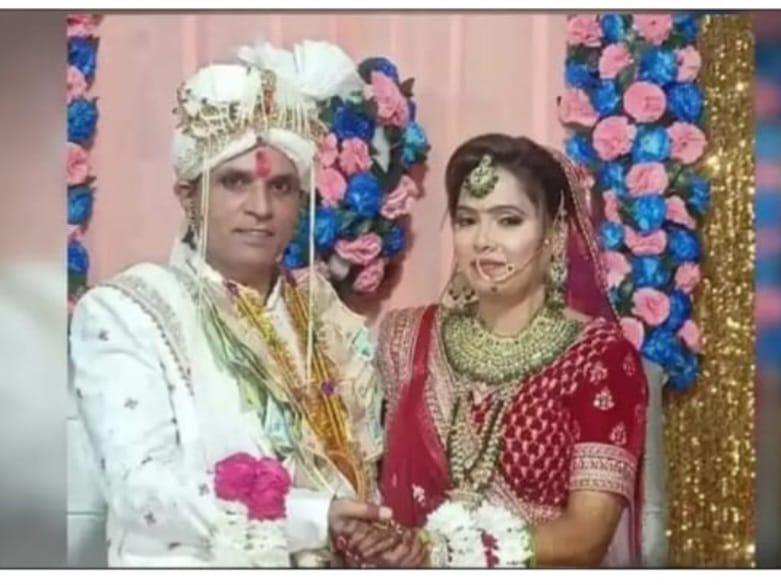
A marriage in India in which the woman died by suicide six months after she was married. (Image Bhawna Malik)
By BHAWNA MALIK
India’s booming wedding economy is fuelling extravagant celebrations, but rising debt, hidden dowry expectations and concerns over compatibility are forcing families and young couples to rethink what marriage really means.
New Delhi, August 2026 — As India’s wedding industry races past ₹10 lakh Crore, weddings are becoming grander than ever before. Yet behind the dazzling lights, designer outfits and lavish banquets lies a disturbing reality of mounting debt, disguised dowry demands, emotional incompatibility and growing anxiety over the very institution of marriage. Recent tragedies have only intensified the debate, compelling society to ask whether marriages today are being built on relationships—or on transactions.
When the Wedding Ends, Reality Begins
India has always celebrated marriage as one of life’s most sacred institutions. More than the union of two individuals, a wedding has traditionally represented the coming together of two families, shared values and lifelong companionship. Rituals, blessings and community participation have long reflected the belief that marriage is not merely a legal contract but an emotional and cultural commitment.
Yet, in recent months, a series of disturbing incidents has shaken that belief. The tragic death of Twisha and the high-profile cases involving Sonam Raghuvanshi and Riya Ketan have once again brought the institution of marriage under intense public scrutiny. While each case is distinct and remains subject to legal investigation, together they have triggered uncomfortable conversations across households. Parents are asking questions they rarely asked a decade ago. Young men and women are reconsidering how well they truly know the person they intend to marry. Families are wondering whether grand celebrations can hide deep emotional incompatibility.
These incidents have not merely made headlines; they have exposed the widening gap between the image of a perfect wedding and the reality of married life. Increasingly, counsellors point out that while families spend months selecting jewellery, venues and guest lists, they often spend very little time discussing compatibility, mental health, financial expectations or personal values. Conversations that should happen before marriage are frequently postponed until after the wedding—sometimes with devastating consequences.
A Billion-Dollar Industry Built on Dreams
The irony is striking. At a time when marriages themselves are facing new challenges, India’s wedding industry has never been bigger. Estimated to be worth nearly US$130 billion (over ₹10 lakh crore) annually, the Indian wedding market has emerged as one of the country’s largest consumer industries. Nearly one crore weddings take place every year, supporting a vast network of wedding planners, banquet halls, caterers, photographers, decorators, jewellery brands, designers, travel companies and event managers. For thousands of businesses, the wedding season is the most profitable period of the year.
According to trade estimates, a substantial share of this business is generated during the brief winter wedding season alone, when thousands of ceremonies are held on auspicious dates. The wedding economy has become an important contributor to employment, but it has also transformed marriage into one of India’s biggest lifestyle industries.
Darshan Sharma , a former match maker states that no discussion begins without money. “ Budget kitna hai larki walon ka” ( what is the wedding budget of the girl’s parents)
“Business families have different expectations and NRI grooms parents think as if they own the world. Girls are always treated as objects” Sharma agrees.
From Sacred Ritual to Social Performance
Indian weddings were once remembered for family traditions, simple rituals and emotional warmth. Today, many have evolved into elaborate productions where spectacle often overshadows sentiment.
Destination weddings, celebrity-inspired décor, choreographed dance performances, luxury invitations and professionally curated social media content have become symbols of prestige. Every ceremony is designed to impress not only guests but also an online audience.
Instagram reels, cinematic pre-wedding shoots and viral wedding videos have further fuelled this culture of comparison. Couples often feel compelled to recreate trends popularised by celebrities and influencers, while families worry that a modest celebration may be perceived as a reflection of their financial or social standing.
The pressure to appear successful has quietly replaced the joy of celebrating together. Weddings are increasingly becoming public performances where appearances matter more than authenticity.
The Cost of Impressing Society
Perhaps nowhere is this transformation more visible than at the dining table.Walk into any luxury banquet and guests are welcomed by rows of live counters offering cuisines from across the world. Italian pasta, Japanese sushi, Mediterranean salads, Mughlai delicacies, regional Indian specialities and dessert islands featuring dozens of sweets compete for attention.
Menus boasting 80 to 100 dishes are no longer exceptional. Yet, despite the enormous expenditure, guests consume only a fraction of what is served. The remaining food often goes to waste, highlighting the contradiction between extravagant celebration and responsible consumption.
Caterers privately acknowledge that many items are added not because guests demand them but because families fear social judgement. The question is rarely, “Will people enjoy the meal?” Instead, it has become, “What will relatives say if we serve less?”
The pressure of “log kya kahenge” continues to dictate decisions.
The same mindset influences every aspect of a wedding—from designer outfits and imported flowers to luxury cars and destination venues. What was once a celebration of relationships has, in many cases, become a competition for social approval.
For many middle-class families, these expectations come at a heavy financial cost. Savings accumulated over decades are exhausted within a few days. Loans are taken, retirement funds are withdrawn and financial security is compromised simply to meet social expectations.
As the wedding industry continues to flourish, an uncomfortable question demands attention: Are Indian weddings becoming richer while marriages themselves become increasingly fragile?
Dowry, Debt and the Emotional Cost of the Big Fat Indian Wedding
Despite decades of education, economic progress and legal safeguards, one of India’s oldest social evils continues to thrive—only in a different form.
Dowry is no longer always demanded openly. Instead, it often arrives wrapped in the language of “expectations”, “family traditions” and “social status”. A luxury car, a lavish destination wedding, premium furniture, expensive jewellery, funding for a business venture or even the bride’s salary are increasingly viewed as unwritten obligations rather than illegal demands.
For many families, these expectations become impossible to refuse. Saying “no” risks damaging a relationship painstakingly built over months, while agreeing often means stretching finances beyond their limits. The result is that marriage gradually shifts from being a partnership to becoming a financial negotiation.
Many educated brides enter marriage believing that professional qualifications and financial independence will ensure equality. Yet reality often proves otherwise. Degrees may open doors to careers, but they do not automatically dismantle patriarchal attitudes. In several urban households, emotional abuse begins subtly. A bride is criticised for “bringing too little”, her parents are humiliated over gifts, and comparisons with other daughters-in-law become routine. Over time, these taunts can escalate into sustained psychological abuse.
When Adjustment Becomes Silence
Perhaps the most disturbing aspect of marital abuse is that it rarely begins with violence. It starts with compromise.
A newly married woman is told to “adjust”. Parents encourage patience, hoping differences will eventually disappear. Society continues to glorify endurance as a virtue, particularly for women, while expecting them to preserve the marriage at any cost.
Unfortunately, by the time emotional harassment turns into physical violence, many women have become isolated. Fear of social stigma, concern for their parents’ reputation and uncertainty about their future often prevent them from seeking help.
Thousands of women continue to suffer behind closed doors because walking out of an abusive marriage is still considered more shameful than remaining in one. Financial independence certainly offers strength, but emotional conditioning often silences even highly educated women.
Tears of the Forgotten: India’s Elderly at Life’s Crossroads
The Grim Reality of Dowry Deaths
India’s progress in education and economic growth stands in stark contrast to the persistence of dowry-related violence.
According to the National Crime Records Bureau (NCRB), more than 6,000 dowry deaths are reported every year—an alarming reminder that despite stronger laws, the practice continues to claim lives. These victims are no longer confined to rural or economically weaker sections. Increasingly, they include engineers, doctors, teachers, software professionals and other educated women who entered marriage with dreams of building equal partnerships.
Each newspaper report represents far more than a statistic. Behind every headline lies a family whose hopes have been shattered and a woman whose aspirations were extinguished by greed disguised as tradition.
The alleged case of Delhi resident Geeta Rajput, who was found dead within months of her marriage amid allegations of dowry harassment, serves as yet another reminder that such tragedies continue to unfold even in urban, educated families. Investigations into such cases follow the legal process, but they reinforce an uncomfortable truth: social progress remains incomplete when daughters continue to pay the price for material expectations.
While the law prohibits dowry, society often rewards extravagance.
Parents frequently admit that they spend beyond their means not because they wish to, but because they fear being judged. Weddings have become public demonstrations of success where venue size, jewellery, designer outfits, guest lists and menu variety are silently compared.
Personal experiences shared by families illustrate this pressure. One mother recalls reluctantly agreeing to a destination wedding despite financial constraints because the groom’s family insisted upon it. Another father describes how discussions around marriage gradually shifted towards fixed deposits, gifts and property rather than compatibility and shared values.
In some instances, demands extend even further. Parents speak of prospective grooms expecting future inheritances, access to the bride’s salary or control over family assets—expectations that many describe as “hidden dowry”. Such experiences have left several families questioning whether marriage negotiations are increasingly being influenced by financial considerations rather than emotional compatibility.
Preparing for the Wedding, Not the Marriage
Ironically, families often spend months planning every detail of the ceremony but devote very little time to preparing couples for married life.
Marriage counsellor Garima Mehta argues that “Conversations about finances, careers, emotional expectations, household responsibilities, mental health and personal values are far more important than selecting floral themes or designer outfits. Yet these discussions are frequently overlooked”.
Social media has further transformed weddings into carefully curated performances. Couples rehearse choreographed entries, photographers direct intimate rituals and every moment is designed for the camera. The pursuit of the “perfect wedding album” sometimes overshadows the deeper purpose of marriage itself.
Increasingly, experts believe that pre-marital counselling should become as common as wedding planning. A successful marriage depends not on the grandeur of the celebration but on communication, trust, mutual respect and emotional maturity. Those qualities cannot be purchased, photographed or displayed on social media—they must be nurtured long after the wedding festivities end.
When Weddings Become a Financial Burden
For millions of India’s salaried families, weddings are no longer just joyous family occasions—they have become expensive financial projects that demand years of planning, sacrifice and anxiety.
The pressure begins long before a wedding date is fixed. Parents start saving for their children’s marriages almost from the day they are born, often compromising on vacations, healthcare, investments and even retirement planning. With rising inflation and the soaring cost of banquet halls, designer clothing, jewellery, photography, entertainment and destination venues, even financially secure families find themselves struggling to keep pace with social expectations.
Unlike business families, salaried households depend on fixed monthly incomes. Every additional wedding expense directly affects their long-term financial security. Many exhaust provident funds, liquidate fixed deposits or take personal loans simply to ensure that the ceremony meets society’s expectations. What should be one of life’s happiest occasions often leaves families burdened with debt that takes years to repay.
When Property Becomes Part of the Marriage Proposal
Another disturbing trend is the increasing importance being given to property and financial assets during marriage negotiations.
Parents who have spent decades building homes and savings often find themselves facing uncomfortable questions from prospective in-laws—not about their daughter’s education, aspirations or personality, but about family wealth, inheritances and ownership of property.
Harjeet Sethi (name changed) a retired bank manager, father of two accomplished daughters, recalls how marriage discussions repeatedly revolved around assets rather than relationships. “During one proposed alliance, the groom allegedly insisted that the family transfer property through a Will before marriage. He further expected the bride to surrender her entire salary after marriage, retaining only a small allowance for personal expenses”. The proposal ended immediately after the family refused these conditions.
His younger daughter encountered similar questions regarding fixed deposits and her future share in parental property. Rather than compromise their daughters’ dignity, the parents encouraged both women to remain financially independent, believing that self-respect is more valuable than securing a marriage at any cost.
Such experiences reflect a worrying shift where marriage negotiations increasingly resemble financial transactions. Property, investments and earning capacity are quietly becoming part of compatibility discussions, reducing relationships to calculations of economic gain.
A New Generation Is Asking Different Questions
Fortunately, there are signs that attitudes are beginning to change.Many young Indians are questioning the culture of extravagant weddings. Faced with rising housing costs, uncertain employment, education loans and the desire for financial independence, couples are increasingly opting for intimate ceremonies or simple court marriages instead of lavish celebrations.
For them, financial stability matters more than social approval. Rather than spending lakhs on a single evening, many prefer investing in a home, building savings, travelling together or creating a secure future.
This changing mindset reflects a broader shift in priorities. Young couples increasingly recognise that a successful marriage depends not on designer décor or social media applause but on communication, mutual respect, emotional maturity and shared responsibility.
At the same time, some individuals have begun questioning the institution of marriage altogether. Personal experiences of conflict within families, prolonged legal disputes and emotional trauma have discouraged many from viewing marriage as life’s only destination.
Sweety Anand (name changed) says witnessing the turmoil following her sister’s marriage profoundly affected her own outlook. Despite a lavish wedding, prolonged disputes and litigation between the two families left deep emotional scars. The experience ultimately convinced her to remain single rather than enter a relationship built on uncertainty and conflict. Her story reflects a growing section of urban Indians who believe personal peace is more valuable than social conformity.
Marriage Needs Preparation, Not Performance
Experts believe the solution lies not in abandoning traditions but in redefining them.Families must begin preparing couples for married life with the same seriousness with which they plan wedding celebrations. Pre-marital counselling, open discussions on finances, mental health, careers, gender roles, household responsibilities and family expectations should become an integral part of the process.
Schools, colleges and communities also have a role to play by encouraging conversations around gender equality, financial abuse and healthy relationships. Young men must reject dowry not as a legal obligation but as a matter of personal integrity. Parents, too, need to stop treating sons as financial investments and daughters as liabilities whose worth is measured through gifts and wealth.
Most importantly, society must stop glorifying extravagance. A wedding should celebrate love, not display wealth. It should unite families, not push them into debt or emotional distress.
Beyond the Glitter Lies the Real Meaning of Marriage
India’s wedding industry will undoubtedly continue to flourish. It generates employment, sustains countless businesses and remains deeply rooted in the country’s cultural fabric. Celebration itself is not the problem. The concern arises when the celebration becomes more important than the relationship it is meant to honour.
The recent debates surrounding marriage are not simply about isolated criminal cases or rising wedding costs. They raise larger questions about changing social values. Are we investing more in the wedding than in the marriage? Have appearances replaced authenticity? Are families placing greater emphasis on status than on compatibility?
Perhaps the future of Indian weddings lies in finding a balance—preserving cultural warmth while rejecting unnecessary extravagance and financial excess.
The success of a marriage cannot be measured by the number of guests, the grandeur of the venue or the variety of dishes served at the banquet. It is measured by trust, mutual respect, compassion and the willingness of two individuals to build a life together through every challenge.
As more young Indians choose simplicity over spectacle and companionship over competition, the institution of marriage may yet reclaim its true purpose. The real legacy of a wedding should not be the photographs that go viral or the money that was spent, but the strength of the relationship that begins after the last guest has gone home.
In the end, every family planning a wedding must ask itself one simple question: Should a marriage be remembered for the grandeur of the celebration—or for the love, dignity and partnership that endure long after the lights have faded?
- India’s wedding industry is estimated to be worth $ 130 billionsUSD, ten lakh crores to 11 lakh crores of rupees annually, making it one of the biggest sectors after food and retail as 34% of India’s population falls within the marriageable age range (20 – 39) years.
- Reports from financial institutions like INDmoney and investment firms like Jefferies break down the enormous scale of this industry – India hosts roughly 10 million weddings annually.
- A data by Confederation of All India Traders (CAIT) brings out a fact that a massive chunk of the yearly business happens during the 45 day winter wedding season alone. The spending touches over Rs 6.5 Lakh Crore
- 74% of Indian families take on debt to fund a wedding. WeddingWire report India’s 2024
- KPMG’s Consumer report flagged India’s wedding Industry as one of the few sectors where spending consistently outspaces income growth.
- The average Indian wedding costs Rs 25 to 30 lakh in 2024, up from RS 12 Lakh in 2018 and Rs 5 Lakh in 200
554 Men, 6 Months: The Hidden Marital Crisis Facing Indian Husbands
Follow The Raisina Hills on WhatsApp, Instagram, YouTube, Facebook, and LinkedIn




About The Author