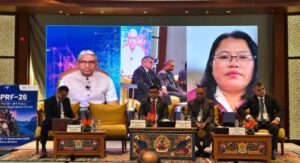
Reservation Policy Has Become “Dynastic,” Says Political Analyst, Calling for Overdue Review
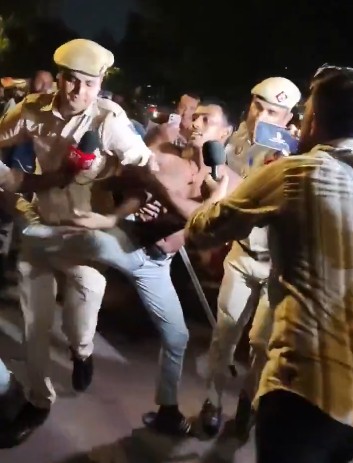
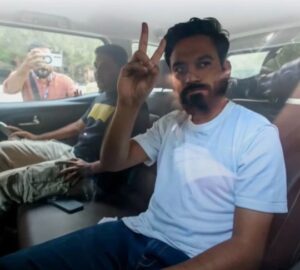
Anti-reservation protest at Jantar Mantar in New Delhi (Image video grab)
By TRH Op-Ed Desk
Political commentator Manish Anand argues India’s decades-old quota system has concentrated benefits within a narrow set of families and communities — and that no government has dared to review it.
New Delhi, August 22, 2026 — India’s reservation system has drifted so far from its original intent that its benefits now cluster within a small set of families rather than spreading across disadvantaged communities broadly, political analyst Manish Anand argued in a recent commentary for The Raisina Hills.
The Core Argument: A Policy Frozen in Time
Anand’s central claim is structural: reservation, he says, has run for decades without a single formal review, audit, or white paper — regardless of which party has held power. He noted that the same families who first accessed quota benefits now see their children and grandchildren continuing to draw on them, while other eligible communities, particularly in states like Jharkhand, Chhattisgarh, and Telangana, remain largely outside the system’s reach even when they belong to the same broader caste categories.
According to Anand, this isn’t a policy failure the government is unaware of — it’s one it’s unwilling to confront. “Sarkar ko sabhi cheezein maloom hai, lekin sarkar bhi rajneeti se chalti hai,” he said, arguing that no political party — Congress or BJP alike — has been willing to risk the backlash that reviewing reservation policy would provoke among Scheduled Caste and OBC voters.
The Bhagwat Comparison
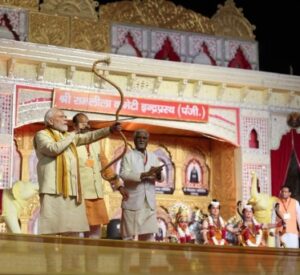
Anand drew a pointed parallel between RSS chief Mohan Bhagwat’s past remarks — that those who have already benefited from reservation should voluntarily step aside for others — and the Modi government’s 2015 “Give It Up” campaign urging LPG subsidy recipients to forgo their benefits. Anand argued the comparison exposes a double standard: unlike LPG subsidies, where the government eventually restructured eligibility into formal policy after the voluntary campaign fell short, no similar policy shift has followed on reservation, leaving Bhagwat’s appeal as rhetoric rather than reform.
Youth Frustration and the Creamy Layer Gap
Anand pointed to protests at Delhi’s Jantar Mantar against unreformed reservation policy as evidence of rising frustration, particularly among younger Indians — a movement he said mainstream media largely ignored. He argued the resentment is compounded by an uneven “creamy layer” system: while OBC reservation nominally excludes wealthier beneficiaries through a creamy layer cap, Anand contends that cap has been set so high that roughly 99% of OBC beneficiaries still qualify, while Scheduled Castes and Scheduled Tribes have no creamy layer exclusion at all.
No Debate in Parliament
Anand also argued that reservation has effectively never been debated in India’s Parliament, despite the institution’s role as a forum for exactly these kinds of contested policy questions. He attributed this to India’s whip system, which he said turns individual MPs into party loyalists unable to raise sensitive issues independently — leaving reservation policy, in his words, without meaningful scrutiny from the very body meant to represent the public on it.
(This commentary is based on remarks by political analyst Manish Anand for The Raisina Hills and reflects his personal analysis and opinion.)
Follow The Raisina Hills on WhatsApp, Instagram, YouTube, Facebook, and LinkedIn




About The Author