Israeli Election Verdict: Eisenkot Says Voters Rejected Netanyahu, Calls for Broad National Coalition
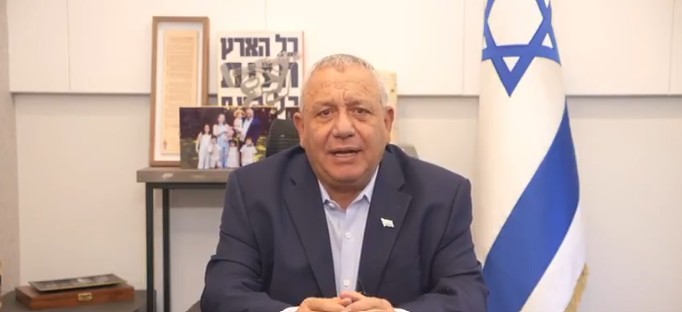
Israel Opposition leader Gadi Eisenkot reacts to allegations of Israeli PM Benjamin Netanyahu on allegations of poll manipulations. (Image video grab)
By TRH World Desk
Israeli opposition leader Gadi Eisenkot says voters have delivered a decisive mandate against Benjamin Netanyahu’s government, calling for a broad-based coalition, accountability for the October 7 failure and an end to Israel’s prolonged political divisions.
New Delhi, November 1, 2026 — Israeli opposition leader Gadi Eisenkot has declared that the election results represent a decisive rejection of Benjamin Netanyahu’s government, arguing that a majority of Israeli citizens voted for political change and a different direction for the country.
In a statement posted on X after the conclusion of the vote count, Eisenkot said the government associated with the October 7 security failure had been rejected by a margin exceeding half a million votes. He maintained that the verdict reflected a majority among Israeli citizens as well as the serving Zionist public.
Describing the elections as the most consequential in Israel’s history, Eisenkot said the results were clear despite attempts to cast doubt on the outcome. He promised to end what he called Netanyahu’s culture of lies and political polarisation, insisting that Israel must move beyond the division between competing political camps.
The immediate challenge, however, is translating the electoral verdict into a functioning parliamentary majority and a new government.
Eisenkot said he would work towards establishing a broad Zionist and state-oriented coalition, guided by four principles: recognition of Israel as a Jewish, democratic, liberal and egalitarian state; commitment to the Declaration of Independence; mandatory military, national or civilian service for all citizens; and recognition of Hamas as a terrorist organisation, alongside the objective of ending its military and political power in Gaza.
His proposed political agenda also includes establishing a state commission of inquiry into the October 7 failure, advancing universal service obligations, strengthening the Israel Defence Forces and repealing the controversial constitutional overhaul laws.
Significantly, Eisenkot sought to emphasise the authority of parliament in the government formation process. He said the Knesset gives confidence to the government, not the other way around, arguing that every parliamentarian accepting his four principles could become a potential coalition partner.
The message is also directed at preventing another prolonged political crisis. Eisenkot said the high voter turnout and the country’s security and economic challenges made another election undesirable. The responsibility now, he argued, rests with elected representatives to implement the public mandate without external interference or manipulation.
On security, Eisenkot struck a cautious note. He acknowledged that the war against Israel’s enemies was not over and that its objectives remained unfulfilled. However, until a new government is sworn in, he would support military action only against direct and immediate threats that could not wait.
The political significance of his statement extends beyond the immediate question of government formation. It presents the election as a referendum on Netanyahu’s leadership after October 7, the question of national accountability and the future direction of Israeli democracy.
Israel Final Results: 53-48-19, Probe Clouds Coalition Talks
Follow The Raisina Hills on WhatsApp, Instagram, YouTube, Facebook, and LinkedIn




About The Author