FCRA Rules 2026: The Battle Over India’s Charitable Trusts

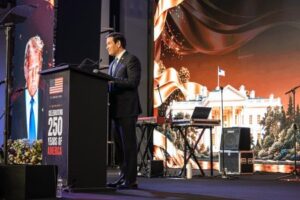
Union Minister for Home Affairs Amit Shah in Kolkata (Image BJP on X)
By P. SESH KUMAR
The Union Home Ministry’s FCRA Rules 2026 mark the most significant tightening of India’s foreign-funding framework since 2020. Here’s what the new regulations mean for NGOs, religious institutions and civil society.
New Delhi, June 26, 2026 — On June 22, 2026, the Union Ministry of Home Affairs quietly rewrote the rules governing foreign funding in India. Though it drew little public attention, the amended Foreign Contribution (Regulation) Rules, 2026, fundamentally reshape the operating environment for every NGO, not-for-profit organization, religious institution and charitable trust receiving foreign funds.
The new framework replaces a relatively broad registration regime with tighter, purpose-specific controls, stricter disclosure requirements and an explicit ban on using foreign contributions for religious conversion. Coupled with a pending amendment that would allow the government to take control of the assets of de-registered organizations, the changes represent the most sweeping tightening of India’s foreign-funding regime since the FCRA overhaul in 2020.
From Broad License to Granular Leash
For years, an FCRA certificate behaved like a passport – once stamped, an organisation could carry foreign donations across the map of its objects with relative freedom. That era is over. With effect from 22 June 2026, the certificate becomes a visa: it now specifies which purposes and which States or Union Territories an organisation is allowed to operate in, drawn from a closed, government-notified Schedule of permissible activities sorted into five buckets- religious, cultural, economic, educational, and social.
The mechanics are exacting. New applicants must pick their purposes off the menu and name their geographies. Every association registered before the amendment must, within one year, file the freshly minted Form FC-6F declaring its purposes and operational States, or risk its registration lapsing into irrelevance. Want to add a purpose, drop a State, or expand across a border? That now requires prior approval-again through the ubiquitous Form FC-6F, with a fee and a governing-body resolution, and the government may grant or refuse it “after such inquiry as it considers necessary”. A fresh tariff appears: roughly Rs 300 for each additional purpose and each additional State or UT, so a genuinely national, multi-sector charity pays to be itself.
The leash tightens further down the chain. The definition of “key functionary” (the “Chief Functionary”) balloons to cover directors, partners, trustees, office-bearers and, in a catch-all flourish, anyone “responsible for the management or affairs” of the body. Foreign nationals other than persons of Indian origin are, as a rule, barred from these roles unless the Centre specifically blesses an exception- a quiet guillotine for institutions that have leaned on overseas expertise for decades. Money cannot move until at least 75% of a previous tranche is spent, with field verification permitted before the next instalment is released through the new Form FC-3BB. A “proper activity” floor demands that at least Rs 10 lakh of foreign contribution be utilised over the preceding two financial years to justify continued registration. And a Detailed Activity Report must now ride alongside the FC-4 annual return, supplemented by disclosures of social-media handles, publications, and the donor-advised funds or intermediary vehicles through which money arrives.
The single most charged line in the new Schedule is what it leaves out. Faith-based activity is welcomed – temple and church maintenance, scripture digitisation, pilgrim amenities, religious education, heritage preservation, interfaith dialogue – but proselytisation, the use of foreign funds for religious conversion, is explicitly excluded. That is not a footnote. That is the political heart of the reform.
The Rationale: Sovereignty, Suspicion, and a Doubling River of Money
The government’s case writes itself, and it is not a frivolous one. Foreign donations into India have swollen over the last decade-and-a-half, and with the inflow came genuine instances of diversion, opaque sub-granting, and money whose ultimate use no one could trace. The state’s argument, pressed and won in court before, is that foreign contribution is qualitatively different from domestic giving because it carries the latent capacity to bend a country’s socio-economic and political fabric- and that, in a confident republic, such inflows “ought to be at the minimum level, if not completely eschewed.” Roughly 20,000 organisations have had registrations cancelled or suspended over the past decade for reasons ranging from unfiled returns to alleged misuse, which the Centre offers as proof both of a real problem and of even-handed enforcement.
On conversion, ministers have been candid that the mischief in their sights is the use of overseas money for “forced religious conversion and personal gain,” even as they insist the rules touch funding, not faith, and bar no religion as such. The transparency framing is coherent on its own terms: name your purpose, name your turf, prove you actually spent the money on what you promised, and disclose where it came from. Read charitably, the 2026 Rules are an audit trail dressed as a registration form.
But the Rules do not travel alone. Shadowing them is the Foreign Contribution (Regulation) Amendment Bill, 2026, introduced in the Lok Sabha in March, which proposes that when an organisation’s registration is cancelled, surrendered, refused renewal, or simply allowed to expire, its foreign contribution and the assets built from it may vest in a government-notified “Designated Authority” empowered to take possession, manage, and- in the public interest -dispose. The trigger, critically, is not a proven case of forced conversion; it is the mere fact of de-registration. That is the provision that has turned a compliance story into a constitutional one, and it is why the Catholic Bishops’ Conference of India has called the package “dangerous and alarming,” why Church-run schools, hospitals and orphanages in Kerala are uneasy, and why even US lawmakers have weighed in.
The Precedents: A Ceiling, and a Crack in It
Anyone planning to fight these rules must reckon with two decisions that pull in opposite directions.
The ceiling is Noel Harper v. Union of India (2022). A three-judge Bench led by Justice A.M. Khanwilkar upheld almost the entirety of the 2020 FCRA amendments- the ban on sub-granting, the single designated SBI account, the slashed administrative-expense cap – holding that there is no fundamental right to receive foreign contribution, that the restrictions were reasonable, and that the constitutionality of a statute cannot be undone by the “specious” plea of individual hardship. The Court read down only the Aadhaar-identification requirement to allow a passport instead. Its rhetorical signature – that a nation’s aspirations “cannot be fulfilled on the hope of foreign donation” – tells challengers exactly how unwelcoming the doctrinal weather is. Critics and commentators have been scathing, arguing the judgment accepted the state’s factual claims at face value while declining to apply the proportionality analysis the case demanded – but scathing commentary is not a binding precedent.
The crack is Indian Social Action Forum (INSAF) v. Union of India (2020). Here a different Bench, while upholding the parent provisions, read down Rules 3(v) and 3(vi) of the 2011 Rules, holding that the phrase “political interests” was vague and susceptible to misuse, and that organisations with no connection to “active politics” or “party politics” could not be branded political merely for pursuing social and economic welfare or for resorting to legitimate dissent like a bandh or hartal. INSAF is the doctrinal lever for genuine institutions: it stands for the proposition that a regulator may not sweep in the lawful many to catch the unlawful few, and that vague, over-broad categories must be narrowed to their legitimate core. Behind both sits the four-pronged proportionality test the Supreme Court has embraced elsewhere – legitimate aim, rational nexus, necessity (least restrictive means), and balance -which Noel Harper is accused of having skipped and which a fresh challenge would foreground.
How Institutions May Knock on the Higher Judiciary’s Door
A trust or institution feeling the squeeze has a familiar route: a writ petition under Article 32 before the Supreme Court or Article 226 before a High Court, challenging specific rules as ultra vires the parent Act and the Constitution. The likely grounds, and their candour, are these.
Article 14 -arbitrariness and excessive delegation. The closed Schedule of “permissible purposes,” the Rs 10-lakh “proper activity” floor, and the discretionary “after such inquiry as it considers necessary” standard for FC-6F approvals invite a manifest-arbitrariness attack and a complaint of unguided executive power. Why Rs 10 lakh and not Rs 5 lakh? Why should a small but scrupulously honest rural trust forfeit its licence for spending too little? An arbitrary threshold that punishes modest, genuine work- rather than misuse-is precisely the kind of disproportionate effect INSAF warns against.
Article 19(1)(c) and 19(1)(g)-association and occupation. Freedom of association is hollow if the associated cannot fund the very activity they associate for, and the likely petition could argue the cumulative weight of purpose-locking, state-locking, per-item fees, and cash-flow throttling crosses from regulation into strangulation. Noel Harper blunts this line, but it does not foreclose a proportionality argument aimed at the new features the 2022 Bench never saw.
Articles 25, 26 and 30-the sharpest blade. This is where the 2026 reform could be most exposed and where the affected institutions’ case could be the strongest. Article 26 guarantees religious denominations the right to manage their own affairs and own and administer property; Article 30 gives religious and linguistic minorities the right to establish and administer educational institutions- a right the Supreme Court has guarded jealously. A regime that lets a “Designated Authority” take over assets, including those of minority-run schools and hospitals built over generations partly from overseas donations, and that singles out conversion-linked faith activity, will be met with the argument that it discriminates against minority institutions and impairs the autonomy the Constitution specifically protects. The state’s likely reply -that it regulates funding, not faith, and bars no religion-will be the central battleground.
Article 21 and the chilling effect. Field verification before fund release, social-media surveillance, and the ever-present threat of de-registration-plus-asset-seizure together create a chilling effect on lawful advocacy and dissent, the petition will say, invoking the dignity and due-process dimensions of Article 21.
The honest forecast: Noel Harper makes a frontal assault an uphill climb, because the Court has already declared that no one has a right to foreign money. But a surgical challenge – targeting vagueness, the asset-vesting trigger, the minority-institution impact, and the absence of a least-restrictive-means analysis, all anchored in INSAF and the proportionality doctrine- has a fighting chance precisely because it asks the Court to narrow, not nullify.
The Cost of Compliance: Where Good Faith Meets Red Tape
Strip away the constitutional drama and a quieter injury remains – the grinding cost of doing everything right. A decades-old trust running a school in one State, a clinic in another, and a relief operation in a third must now file FC-6F, pay per State and per purpose, commission chartered-accountant certifications, build and maintain a Detailed Activity Report apparatus, disclose its social-media presence and donor pipeline, restructure operations to keep utilisation above 75% before each instalment, and brace for field inspections. Each of these is defensible in isolation; together they amount to a standing tax of money, staff hours, and managerial attention that large foundations can absorb and small grassroots bodies cannot.
The 75% utilisation gate is a particular menace to cash-flow discipline, since it can freeze a slow-but-careful programme that has not yet spent down a tranche. The Rs 10-lakh floor inverts the logic of accountability by penalising frugality. The citizenship filter on key functionaries threatens institutions that have relied for fifteen or twenty years on a foreign-origin trustee whose only crime is competence. And the discretionary inquiry attached to FC-6F approvals hands officials a lever that, in the wrong hands, becomes inspector raj- the everyday harassment of repeated queries, withheld approvals, and the implicit message that a registration is a privilege revocable at pleasure. None of this requires bad faith from the drafters to produce bad outcomes on the ground; over-broad rules generate red tape and harassment as a matter of physics, not malice.
The Core Tension: A Cannon to Kill a Mosquito
Here is the crux the reform cannot escape. The government’s avowed quarry is narrow- the handful of outfits allegedly laundering foreign money into forced conversions, political mischief, or anti-state propaganda. But the instrument is a dragnet that falls on everyone. A century-old Jain charitable trust digitising scriptures, a Christian mission school that has educated three generations, a Hindu temple trust maintaining pilgrim shelters, a secular NGO running tribal healthcare- all must now contort themselves to fit a Schedule, prove a spend, and survive an audit designed with a few bad actors in mind. This is the very mischief INSAF identified: you cannot constitutionally drown the lawful many to net the unlawful few, and over-breadth is not cured by good intentions.
Two further frictions sharpen the point. First, the conversion exclusion presumes that “religious activity” and “conversion” are cleanly separable, when in practice the line between sharing a faith and promoting it is genuinely blurry – and blurry lines in penal-adjacent regulation are an invitation to selective enforcement. Second, the asset-vesting power in the companion Bill converts a licensing dispute into an expropriation, so that an organisation that merely forgets to renew on time could lose property built over decades. When the penalty for a paperwork lapse is the same as the penalty for sedition, proportionality has left the building. The state will counter, not unreasonably, that transparency tools are neutral and that the honest have nothing to fear-but the honest, as every compliance officer knows, are exactly the ones who pay the price of rules written for the dishonest.
Raising Guardrails with Paper Fencing
For trustees and management, the near-term path is unglamorous but unavoidable: pull out the existing certificate and map every object and activity against the new Schedule before the one-year FC-6F clock runs out; identify multi-State and multi-purpose exposure and budget for the additional fees; build a standing format for the Detailed Activity Report now rather than scrambling at filing season; audit foreign-contribution utilisation across the last two financial years against the Rs 10-lakh floor and the 75% gate; review the citizenship status of every key functionary; and document a clean, honest paper trail that can survive field verification. Where a foreign-origin office-bearer is indispensable, prepare the exception case early.
For the sector and for policy, the constructive asks are calibration, not capitulation: a turnover-graded compliance regime so small genuine trusts are not crushed by rules meant for large ones; grandfathering for institutions with a clean multi-decade record; a sunset and review clause; an independent appellate authority for FC-6F refusals and de-registrations so discretion is checked; and a much narrower, evidence-led trigger for any asset-vesting power, separated entirely from mere non-renewal. For those who choose to litigate, the lesson of the precedents is to be surgical – wield INSAF, foreground proportionality, centre the Article 30 minority-institution argument, and attack the vagueness and the expropriation rather than the idea of regulation itself.
The deeper challenge is to hold two truths at once: that a sovereign state may legitimately regulate foreign money flowing into its civic and religious life, and that a free society must not let a tool built for a few villains become a yoke on the many who have served it faithfully. Whether the 2026 reform threads that needle- or merely tightens it- will be settled not in a gazette notification but, almost certainly, in a courtroom.
(This is an opinion piece. Views expressed are the author’s own.)
Follow The Raisina Hills on WhatsApp, Instagram, YouTube, Facebook, and LinkedIn




About The Author