India’s Grassroots Audit Crisis: Why the CAG Must Reclaim Oversight

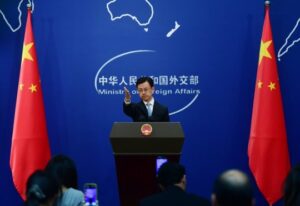
Panchayati Raj Minister Giriraj Singh while briefing achievements of his ministry recently.
By P. SESH KUMAR
Three decades after the 73rd and 74th Constitutional Amendments, India’s local governments handle unprecedented public funds but remain outside a uniform and independent audit framework, creating a serious accountability gap.
New Delhi, June 11, 2026 — The enactment of the 73rd and 74th Constitutional Amendment Acts in 1992 was heralded as a silent revolution, promising to transform India’s democratic landscape by constitutionally entrenching a third tier of governance. These historic amendments inserted Part IX and Part IX-A into the Constitution, establishing a mandatory three-tier structure of panchayats and urban municipalities across the country.
However, three decades after this transformative constitutional promise, the ideal of empowered local self-governments remains heavily compromised by a structural and systemic fiscal deficit. The constitutional design itself establishes a system of guided or dependent fiscal federalism, wherein local bodies function under the tight administrative and legislative hegemony of their respective state governments.
This is because “local government” is placed in the State List under Entry 5 of List II of the Seventh Schedule of the Constitution, the authority to prescribe the maintenance of accounts and the auditing of these institutions is delegated entirely to state legislatures under Articles 243-J and 243-Z of the Constitution. This legislative arrangement has led to a highly fragmented and heterogeneous audit landscape. Instead of direct, centralized oversight by the CAG, the primary audit responsibility for local bodies is typically vested in state-level institutions, such as the DLFA or the Examiner of Local Fund Accounts.
These primary auditing institutions are plagued by deep structural deficiencies. The state departments frequently suffer from a severe shortage of skilled personnel, lack institutional independence from the state administration, operate with outdated accounting procedures, and fail to elicit meaningful responses or corrective actions from state executives. Consequently, massive financial records remain incomplete, and the quality of audits varies wildly across states, leading to an environment of weak internal controls and substantial risk of fund diversion and fraud.
The CAG’s direct audit mandate over these bodies is heavily restricted by the Comptroller and Auditor General’s (Duties, Powers and Conditions of Service) Act, 1971, commonly known as the DPC Act. Under the current statutory framework, the CAG cannot automatically audit the third tier of government as a primary auditor. Instead, the national auditor must rely on specific provisions of the DPC Act, such as Section 14, which permits the audit of bodies substantially financed by government grants, or Section 20(1), which requires a formal, voluntary request from the Governor of a state to entrust the audit of local bodies to the CAG. This multi-layered statutory requirement prevents the CAG from executing a systematic, uniform, and direct financial and compliance audit across all levels of grassroots governance.
The Trillion-Rupee Conduit: Mapping the Fiscal Devolution to Local Bodies
Despite the critical deficiencies in audit coverage and financial accounting, the quantum of public funds channelled to the third tier of government has grown exponentially. This massive flow of financial resources reflects the progressively increasing devolution of funds aimed at local planning, basic service delivery, and grassroots development. The Fifteenth Finance Commission recommended a total allocation of over four hundred thousand crore rupees to local self-governments for the award period spanning 2021-22 to 2025-26, alongside substantial interim allocations.
TABLE 1: FIFTEENTH FINANCE COMMISSION RECOMMENDED ALLOCATIONS
| Funding Category/ Award Component | Allocation Amount (INR in Crore) | Primary Target / Specific Earmarking
|
| Total Local Government Grants (2021-26) | 4,36,361 | Combined rural and urban local bodies and health grants
|
| Rural Local Bodies (RLB) Grants | 2,36,805 | Three-tier panchayats for basic services, water, and sanitation
|
| Urban Local Bodies (ULB) Grants | 1,21,055 | Municipal corporations, municipal councils, and nagar panchayats
|
| Health Grants via Local Governments | 70,051 | Primary healthcare systems and critical local healthcare infrastructure
|
| Interim RLB Allocation (2020-21) | 60,750 | Rural local bodies for the transition/interim fiscal year
|
| Interim ULB Allocation (2020-21) | 29,250 | Urban local bodies for the transition/interim fiscal year
|
| Million-Plus Cities Challenge Fund | 38,196 | Air quality and service level benchmarks in million-plus cities
|
| Non-Million-Plus Cities Tied Grants | 49,716 | Sanitation, solid waste management, drinking water, and recycling
|
| Non-Million-Plus Cities Untied Grants | 33,143 | Discretionary local development under the Twelfth Schedule
|
This massive fiscal devolution is not limited to Central Finance Commission grants. State Finance Commissions, constituted under Article 243-I, also periodically recommend the distribution of state revenues, devolving substantial funds from the Consolidated Fund of each state. Additionally, billions of rupees flow directly to rural panchayats through Centrally Sponsored Schemes, such as the Mahatma Gandhi National Rural Employment Guarantee Scheme and other social welfare programs.
The Sixteenth Finance Commission has proposed further enhancements to this fiscal stream. These include a proposed Rs 10,000 crore ‘Urbanisation Premium’ to assist local bodies in managing the rapid transition of rural census towns into urban municipal areas, as well as the reintroduction of performance-based grants worth Rs 87,000 crore exclusively for Panchayats, directly linked to the annual growth in their own-source revenues.
This continuous, monumental flow of public money represents a significant concentration of fiscal resources at the grassroots level. Yet, without a robust, independent, and uniform public audit mechanism, there is no credible guarantee that these funds are being utilized legally, regularly, or efficiently. The mismatch between the scale of public expenditure and the weakness of the existing audit apparatus underscores the urgent need for structural reform in local government oversight.
How Global Auditors Advise Govts Without Selling Their Souls
The DPC Act Versus the Constitution: The Great Fraternal Debate
The primary legal roadblock preventing the CAG from conducting direct and systematic audits of the third tier of government is the absence of a permanent and uniform mandate in both the Constitution and the DPC Act of 1971. While Articles 149 and 151 of the Indian Constitution define the CAG’s authority to audit the accounts of the Union and the States, they leave the audit of local bodies to the auxiliary provisions of state-level legislations. State legislatures frequently maintain weak accountability frameworks, showing a persistent reluctance to submit their local government transactions to the rigorous scrutiny of the national auditor.
This structural bottleneck has generated an intense debate pitting differing interpretations of the DPC Act against each other. Some have pointed out that the fund flow to rural local bodies is heavily dominated by Centrally Sponsored Schemes, which represent sixty to seventy-five percent of their resources, followed by Central Finance Commission grants at fifteen to twenty percent, and State Finance Commission transfers at eight to twelve percent, while own-source revenues contribute a mere one to five percent. Because of this overwhelming dependence on expenditure drawn from the Consolidated Fund of India and the States, some argue that the mandate under Section 13 of the DPC Act for the audit of expenditure, and the consequent laying of audit reports before the State Legislature under Article 151(2), must be treated as non-negotiable and cannot be legally overlooked.
However, other constitutional purists counter that once these funds are transferred, they legally become the Panchayat’s own funds, separate from the Consolidated Fund of India or the State. Since Panchayats are recognized as self-governing bodies under the Constitution, funds allocated under central or state schemes do not form part of the Consolidated Fund once devolved. Consequently, these purists argue that Article 151 has no direct relevance for rural local bodies, and the CAG can only undertake such audits under Section 14 or Section 20(1) of the DPC Act. This legal boundary restricts the CAG from conducting direct certification audits unless requested by the Governor under strict terms.
Furthermore, this fragmented accounting architecture creates a severe governance issue regarding convergence. Because the accounting authorities for Panchayat funds, central government schemes, and specific programs like MGNREGA or the Member of Parliament Local Area Development Scheme (MPLAD) are entirely separate, there is no unified control. This allows a single Panchayat to show the same public work as performed under different programs, leading to rampant overlapping expenditure and double-dipping. While social audits-pioneered by Kerala and followed by Andhra Pradesh, Telangana, and Meghalaya’s dedicated Social Audit Act-have been proposed as a solution, the lack of systemic financial audit leaves this loophole open.
To resolve this structural deadlock, the National Commission to Review the Working of the Constitution, established in 2000 under the chairmanship of Justice M.N. Venkatachaliah, recommended a formal constitutional amendment. The commission proposed that the Constitution should be amended to explicitly empower the CAG to audit all local bodies, thereby integrating the third tier of governance directly into the national public audit framework. This recommendation aimed to elevate the audit of local bodies to the same level of constitutional independence and legal force as the audit of state and central government departments. The recommendation did not find favour with the Government.
However, the necessity of a constitutional amendment remains a subject of intense legal and political-economic debate. Many public finance scholars and legal experts argue that demanding a constitutional amendment ignores the exceptionally high political transaction costs and administrative delays involved in amending the basic federal framework. Instead, they contend that the same objective can be achieved more rapidly and practically by amending the CAG’s DPC Act of 1971.
Parliament is fully empowered under Article 149 to alter the duties and powers of the CAG in relation to the accounts of the Union, the States, and any other authority or body. By amending the DPC Act to incorporate a statutory mandate that automatically and directly entrusts the audit of all panchayats and municipalities to the CAG, the Union can bypass the slow and politically sensitive process of constitutional amendment. Such a statutory amendment would render the current, cumbersome mechanism of Section 20(1) of the DPC Act obsolete.
From Supervision to Support: A Strategic Retreat or Abdication?
A critical point of contention in the public audit landscape is the visible shift in the CAG’s terminology and operational framework from “Technical Guidance and Supervision” to “Technical Guidance and Support”. This transition represents a significant change in the national auditor’s relationship with the primary state auditing institutions. Under the Eleventh Finance Commission and the Thirteenth Finance Commission, the mandate was explicitly framed as “Technical Guidance and Supervision”.
The original framework recommended that the DLFA in each state should operate under the direct technical and administrative supervision of the CAG, functioning in a manner similar to how the Chief Electoral Officers of the States operate under the control of the Central Election Commission. This framework was designed to give the CAG strong, supervisory teeth over the maintenance of local accounts and primary audits. However, by the time of the Fourteenth Finance Commission, the language was noticeably watered down to “Technical Guidance and Support”.
The operational and legal distinction between “Supervision” and “Support” is profound. Supervision implies a formal hierarchy, direct administrative control, the authority to approve or reject audit plans, and a mandate to actively oversee and direct the operations of the primary state auditor. Support, on the other hand, reframes the CAG’s role as that of an external adviser and facilitator, focusing on standard-setting, prescribing audit methodologies, conducting transaction or supplementary test-checks, and providing capacity building and professional training.
This linguistic and operational shift has sparked a debate over whether the CAG has effectively abdicated its overall constitutional responsibility. Critics of the transition argue that by diluting its mandate to mere support, the CAG has retreated from holding local bodies accountable. This soft approach leaves the trillion-rupee fiscal devolution in the hands of weak, understaffed, and politically dependent state audit departments, which are incapable of enforcing financial discipline. The severe backlog of local accounts and the existence of over thirty-three thousand unanswered audit observations across various states reflect the failure of the support model to enforce genuine grassroots accountability. Table below captures the essence of technical supervision and support dimension.
TABLE 2 : TECHNICAL SUPERVISION VS TECHNICAL SUPPORT
| Dimension of Oversight | Technical Guidance and Supervision (TG&S) | Technical Guidance and Support (TGS)
|
| Primary Philosophy | Hierarchical control and direct administrative oversight | Collaborative advising, training, and voluntary peer support.
|
| Relationship with DLFA | Primary state auditors function under the technical and administrative direction of the CAG. | State DLFA operates independently; the CAG provides guidance upon request or through standard-setting. |
| Control Over Audit Quality | Active, binding supervision of audit standards, plans, and execution. | Secondary role; primary reliance on DLFA with optional test checks by CAG teams.
|
| Reporting Authority | Clear, unified reporting with findings tabled directly before legislative committees. | Fragmented reporting; local body reports often gather dust in state files due to legal ambiguities.
|
Conversely, the CAG and defenders of this shift argue that the transition to support is a strategic and realistic alignment with constitutional boundaries and severe resource constraints. In a federal polity, the CAG cannot legally assume direct administrative control over state-level departments like the DLFA without violating the legislative competence of state assemblies.
Furthermore, the physical and mathematical scale of India’s rural governance makes direct supervision an administrative impossibility for the CAG’s existing manpower. Rather than attempting to micromanage millions of minor transactions, the CAG’s support strategy should aim to multiply its institutional impact by acting as an enabler. By issuing standardized audit frameworks, such as the November 2021 Guidelines for Financial Audit of Panchayati Raj Institutions, and training primary auditors, the CAG could be seeking to elevate the overall maturity and capability of the DLFAs, establishing a standardized public financial management system from the bottom up.
Senior officials within the department admit that the national auditor could have carved out a stronger place for its mandate under the amendments if its regulations had interpreted the constitutional provisions in a broader sense. If the need was felt, the CAG could have formally sought a constitutional amendment. However, a clarity of thought process and the necessary action was ultimately missing, largely due to a lack of consensus within the department itself, which chose the path of least resistance by settling into a secondary, advisory role.
CAG’s Big Reset: AI Audits, Scrutiny and a Push for Accountability
The Constitutional Mandate vs. Institutional Devolution of Funds
A critical dimension of the structural debate lies in the complex intersection between the constitutional mandate of the CAG and the financial anatomy of Panchayati Raj Institutions (PRIs). As briefly discussed, substantial portion of the fund flow to PRIs is heavily dominated by Centrally Sponsored Schemes (60% to 75%) and Central Finance Commission grants (15% to 20%), making a compelling argument that the audit of such massive expenditures from the Consolidated Fund under Section 13 of the DPC Act, 1971, is legally non-negotiable.
However, the counter view would be that when PRIs merely act as implementing agencies for schemes like MNREGA or MPLAD, those finances do not formally merge into the independent “Panchayat Fund.” This is because Article 243J explicitly delegates the maintenance and auditing authority of true PRI accounts to State Legislatures-acting through local DLFAs.
Some would argue that Article 151 and Section 13 of the DPC Act do not directly apply to native panchayat budgets. This operational fragmentation creates significant accounting vulnerabilities; without a unified accounting authority across government schemes and local funds, the risk of convergence issues arises-where the same physical asset or project could potentially be booked under different programs.
To mitigate these gaps, institutional experts point toward robust ‘Social Audits’ as a necessary governance layer, citing states like Keralam, Andhra Pradesh, Telangana, and Meghalaya as pioneers in legislating and enforcing community-led financial oversight.
A Legislative Ghost: Why Local Body Audit Reports Gather Dust
The issue of executive accountability is further complicated by the CAG’s current practice of preparing a single, consolidated audit report for Panchayati Raj Institutions and Urban Local Bodies, irrespective of whether the devolved funds originate from the Centre, the State, or the local bodies’ own revenues. This consolidated approach fails to address the unique administrative realities of different states. For example, in states such as Uttar Pradesh, there are two separate legislative committees specifically designated for PRIs and ULBs, operating in addition to the standard Public Accounts Committee and the Committee on Public Undertakings.
Because reports prepared under Article 151 are traditionally laid before the PAC, the framework for the scrutiny and accountability of local bodies remains highly fragmented and legally unclear for want of clear statutory authority for the presentation of these reports.
This legal ambiguity has led to a bizarre scenario where local audit reports, prepared by the Accountant General and approved by the CAG headquarters, are simply not presented to the State Legislature for decades. While the report of the state-level Director of Local Fund Audit (DLFA) is possible to be actively discussed by the PRI and ULB committees of the state legislature, the technical reports of the federal auditor gather dust in state government files.
This state of affairs is highly incongruent with the constitutional status of the CAG, who holds a rank equivalent to a Supreme Court judge. By allowing its independent findings to remain unexamined by state assemblies, the national auditor’s authority is effectively denigrated. This raises a critical question of executive accountability: are the executives of local bodies ultimately answerable to the State Legislature, or should they be held accountable to the local assemblies of the respective local bodies themselves?
The HR Alibi: Rejecting the Tyranny of Volume
The argument that the CAG should desist from auditing the third tier of government solely due to the massive volume of units and acute human resource constraints must be firmly rejected. Desisting from grassroots auditing on these grounds would effectively abandon trillions of rupees of public expenditure to a governance vacuum, exposing vital development funds to systematic leakage, inefficiency, and corruption.
Instead of retreating, the practical way forward requires the adoption of innovative, hybrid auditing models that leverage both technology and external professional expertise. A highly significant and contemporary precedent (though controversial according to some)was set in June 2025, when the CAG issued a competitive tender to engage private Chartered Accountant and Limited Liability Partnership firms to assist in auditing the financial statements of local, autonomous, and other bodies.
While this move faced political opposition from critics who claimed it diluted the constitutional mandate of the national auditor, the Institute of Chartered Accountants of India vigorously defended the initiative. The ICAI clarified that private CA firms do not operate independently or issue audit opinions on behalf of the CAG. Instead, they work under the direct supervision of the CAG’s Field Audit Officers and designated Senior Audit Officers, acting as strategic partners to execute field-level audits, assist in data collection, and provide domain-specific expertise.
This hybrid model represents a global best practice that allows the supreme audit institution to scale its oversight and overcome severe human resource shortages without compromising its independence or constitutional authority. This collaborative approach can be seamlessly extended to rural panchayats, where groups of village panchayats can be contracted to empanelled CA firms for regular account compilation and primary audits under the strict oversight of the CAG.
Moreover, the challenge of sheer volume can be effectively managed by transitioning from physical, manual audits to technology-enabled, remote audit systems. The launch of digital platforms like the ‘AuditOnline’ application by the Ministry of Panchayati Raj in 2020 has already demonstrated the viability of conducting online, structured audits of panchayat accounts. By integrating these platforms with the ‘eGramSwaraj’ portal, the CAG can establish a virtual, data-driven audit architecture which can be aligned with CAG’s own One IAAD One Audit system (OIOS). This system should enable risk-analysis-based sampling and remote transaction testing, minimizing the need for physical deployment of audit teams and ensuring high-quality audit coverage of even the most remote rural units.
Ultimately, the complete solution to this capacity crisis lies in structurally reorganizing the primary audit apparatus. One way could be by bringing the state-level Directorates of Local Fund Audit (DLFA) directly under the administrative and technical control of the CAG in all states, the national auditor can absorb the primary auditing workforce into its regulatory fold. The rest of the challenges are merely procedural. With AI-driven efficiencies and automated data ingestion, the CAG will possess surplus audit capacity in the coming years, meaning that the age-old excuse of resource constraints for neglecting the third tier of government will no longer hold.
Roadmap to Grassroots Fiscal Discipline and Effective Governance
To convert the current state of local government accounting into a disciplined, transparent, and highly effective system of grassroots governance, a series of coordinated reforms must be implemented immediately. First, the country must adopt a standardized accounting and financial reporting framework. State governments must mandate the use of the ‘Model Accounting System for Panchayati Raj Institutions’, ensuring that all local bodies prepare standardized, time-bound, and audited balance sheets and receipt-and-payment accounts.
To support this transition, state governments must urgently set up permanent State Finance Commission cells, preferably housed within their Finance or Planning Departments, to continuously collect, standardize, and maintain granular, panchayat-level fiscal databases. This data-driven framework will eliminate the fragmented information silos that currently hamper evidence-based resource allocation by successive finance commissions.
Second, the release of fiscal grants must be strictly linked to financial discipline and performance. The Union and State Governments should enforce the Fifteenth Finance Commission’s entry-level conditions, which specify that no local body shall receive grants unless its provisional and audited accounts are made available online in the public domain.
Furthermore, performance-based grants, such as the proposed Rs 87,000 crore rupee allocation, should be utilized as a powerful incentive, awarded only to those panchayats that demonstrate consistent, annual growth in their own-source revenues. This reform will encourage local bodies to actively tap into local taxation powers, such as property and water taxes, reducing their complete dependence on state grants.
Third, the institutional independence and capacity of primary local auditing institutions must be strengthened and protected. The office of the DLFA must be structurally insulated from state administrative interference. This can be achieved by appointing the head of the DLFA from a professional panel formally approved by the CAG.
The CAG, utilizing its newly established International Centre for Audit of Local Governance in Rajkot, Gujarat, should continuously upgrade the technical skills of local fund auditors, ensuring they are well-versed in digital, remote, and technology-assisted audit techniques.
Finally, the democratic accountability loop must be closed through systematic legislative oversight. The state-level audit reports on local bodies prepared by the CAG and DLFAs must not be allowed to gather dust in bureaucratic offices. State assemblies must establish a dedicated legislative committee, structured on the same lines as the Public Accounts Committee, specifically tasked with discussing local audit reports, questioning executive heads, and enforcing swift correction of serious financial irregularities.
By combining these institutional, technological, and legislative reforms, we can bridge the critical third-tier audit deficit, converting local self-governments into transparent, fiscally disciplined, and genuinely self-governing institutions.
(This is an opinion piece. Views expressed are the author’s own.)
Follow The Raisina Hills on WhatsApp, Instagram, YouTube, Facebook, and LinkedIn




About The Author