Former US Peace Negotiator Doubts Immediate Hormuz Deal, Says Trump Seeking Exit from Conflict
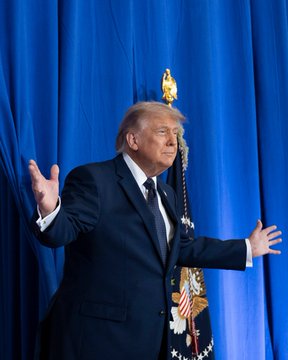
US President Donald Trump speaking during a public appearance as negotiations over a possible Iran deal continue amid tensions over the nuclear programme and Strait of Hormuz. (Image White House)
By TRH World Desk
Former US Middle East peace negotiator Aaron David Miller says a near-term deal to reopen the Strait of Hormuz is unlikely, despite optimism from US Treasury Secretary Scott Bessent. He warns any agreement would reshape Gulf security.
New Delhi, August 5, 2026 — Former US Middle East peace negotiator Aaron David Miller has expressed scepticism over the prospects of an immediate agreement to reopen the Strait of Hormuz. He argued that negotiations between the United States and Iran remain highly complex despite optimistic remarks from US Treasury Secretary Scott Bessent.
Speaking to Al Arabiya English, Miller said he believes a breakthrough is “unlikely” in the immediate future, even as indirect negotiations involving Iranian and Omani officials continue.
His remarks came after Scott Bessent told CNBC that an agreement to reopen the strategically vital waterway could be reached “today or tomorrow.”
“I think it’s unlikely,” Miller said, aading: “There are serious negotiations underway between the Iranians and the Omanis. The issue is whether you can find a balance of interests that would meet Iranian needs and requirements on one hand and American needs and requirements on the other.”
According to Miller, any agreement emerging from the current negotiations would inevitably involve compromises that could be politically difficult for Washington.
He argued that any settlement short of a clear strategic victory would likely be viewed as a setback for the United States, although it could be presented in a manner acceptable to sections of US President Donald Trump’s political base.
“He’s looking for a pathway out of a war that is now well into its sixth month, and he’s basically caught in a box,” Miller said.
The veteran diplomat suggested that the alternatives facing Washington are limited. While military escalation remains possible, he warned that expanding operations to include Iranian energy installations or broader civilian infrastructure would invite retaliation.
“Even if the Americans agreed to that, the Iranians would respond in kind to their points of vulnerability, which is the Gulf states,” he said, adding that such an outcome is unlikely to be the option preferred by Trump.
Instead, Miller said diplomacy remains the more viable path, although it is unlikely to restore the pre-conflict status quo.
He cautioned that any future agreement would fundamentally alter the strategic environment in the Strait of Hormuz, one of the world’s most important maritime energy corridors.
According to Miller, the freedom of navigation that existed before the conflict began would be replaced by a new security arrangement that could impose lasting constraints on commercial shipping.
He said such a transformation would ultimately disadvantage all stakeholders, including Iran over the longer term.
The Strait of Hormuz carries a significant share of global crude oil exports, making developments in the waterway closely watched by energy markets and governments worldwide.
Trump Blasts Iran Over Leaked Deal Terms as Hormuz Diplomacy Unravels
Follow The Raisina Hills on WhatsApp, Instagram, YouTube, Facebook, and LinkedIn




About The Author