Work-Life Balance in India: Why 51% of Workers Are Overworked
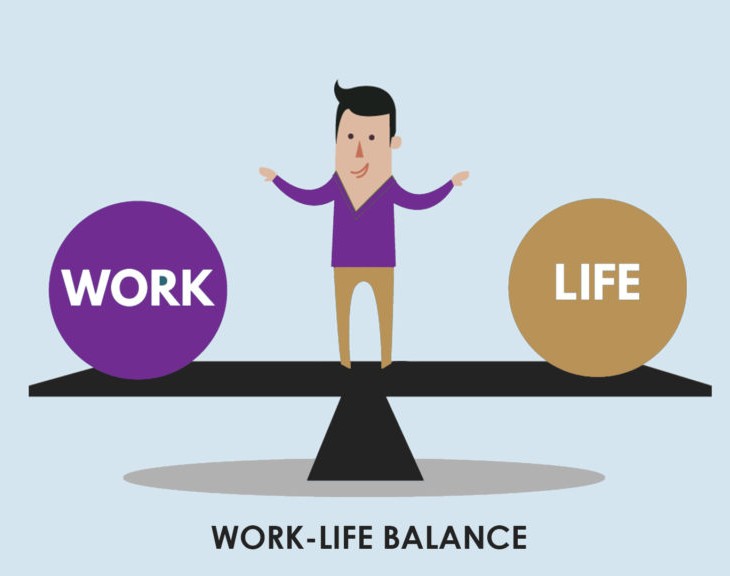
WorkLife-Balance-India.
Indians log 46.7 hours a week on average — but longer hours aren’t producing better outcomes. A data-driven look at burnout, gender gaps, and what India’s workforce urgently needs.
By PRADEEP KUMAR PANDA
Bhubaneswar, March 26, 2026 — Work-life balance (WLB) remains a critical yet elusive goal for India’s workforce amid rapid economic growth and evolving labour market dynamics. Recent empirical evidence on working hours, burnout prevalence, gender disparities, and policy frameworks call for an urgent policy intervention.
Data from the International Labour Organization (ILO), Periodic Labour Force Survey (PLFS) 2023-24, Gallup State of the Global Workplace reports, and industry surveys (2024-2025) reveal that Indians average 46.7 hours per week—among the world’s highest—with over 51% exceeding 49 hours. India ranks 42nd in the 2025 Global Life-Work Balance Index (score 45.81/100), hampered by long hours and limited support systems.
Burnout affects significant portions of the workforce, with only 14% reporting thriving well-being and 30% experiencing daily stress. While female labour force participation has risen to 41.7%, structural barriers persist. Post-COVID hybrid models show promise, yet legal provisions lag.
Work-life balance refers to the equilibrium between professional demands and personal/family responsibilities, encompassing time allocation, stress management, and overall well-being. In India, a nation harnessing its demographic dividend for a $5-trillion economy, WLB assumes heightened significance. Long working hours, cultural expectations of “presenteeism,” and inadequate support infrastructure exacerbate imbalances, particularly in urban and tech sectors.
Scholarly literature frames WLB through role conflict theory (Greenhaus & Beutell, 1985) and conservation of resources theory, positing that excessive work depletes personal resources, leading to burnout and reduced productivity. In India, cultural norms—joint family systems juxtaposed with urban nuclearisation—and globalisation amplify these tensions. Empirical studies consistently link overwork to diminished mental health, lower GDP per hour worked, and talent attrition.
Current Empirical Landscape: Working Hours and Global Positioning India’s workforce logs some of the longest hours globally. ILO and OECD-aligned data indicate an average of 46.7 weekly hours (approximately 2,428 annual hours), exceeding the world average of 41.2 hours and far surpassing benchmarks in high-productivity economies like the Netherlands (31.6-33.7 hours). Over 51% of Indian workers exceed 49 hours weekly, a level surpassed only by a handful of nations such as Bhutan.
Productivity suffers: India’s GDP per working hour hovers at approximately $8.7, among the lowest in BRICS nations, underscoring that longer hours do not equate to higher output. The Economic Survey 2024-25 explicitly cautions that exceeding 60 hours weekly risks adverse health effects, citing WHO/ILO estimates of elevated risks beyond 55 hours and Sapien Labs data showing distressed mental well-being scores for those spending 12+ desk hours daily.
In the 2025 Global Life-Work Balance Index compiled by Remote, India placed 42nd out of 60 major economies (score 45.81), benefiting from generous annual leave but penalised by extended hours, limited sick pay, and healthcare access gaps. Top performers (e.g., New Zealand, score 86.59) feature shorter hours (~33/week) and robust protections.
Odisha’s Farm Sector in Crisis: Cuts, Broken Promises, Distress
Burnout, Stress, and Employee Well-Being Gallup’s 2024-2025 State of the Global Workplace reports paint a stark picture: only 14% of Indian employees report thriving, with 86% struggling or suffering—the lowest thriving rate in South Asia. Daily stress afflicts 30%, daily anger 35% (highest regionally), and nearly 49% actively seek or monitor new opportunities.
Sector-specific data amplify concerns. In IT—employing millions—surveys reveal 50+ average weekly hours, with 72% exceeding the statutory 48-hour limit and 25% surpassing 70 hours. Vertex Group (2025) found 52% of employees across five states attributing burnout to poor WLB; Great Place to Work (2024) reported 29% burnout among IT professionals.
Broader surveys reinforce this: Indeed (2025) noted 78% of Indian workers prioritising family time over advancement, while Randstad Workmonitor 2025 found 52% willing to quit for insufficient flexibility (versus 31% globally). Workplace stress imposes an estimated $14 billion annual economic cost.
Gender Dimensions and Labour Force Participation Female labour force participation rate (FLFPR, usual status, age 15+) reached 41.7% in PLFS 2023-24, up from 37.0% (2022-23) and 23.3% (2017-18). Worker Population Ratio for women stands at 40.3%. Rural gains outpace urban, reflecting self-employment and agricultural shifts, yet overall rates lag global emerging-economy averages.
Women shoulder disproportionate unpaid care work—spending up to 8 times more daily on domestic duties than men—driving exit from formal employment. PLFS and related analyses indicate 44.5% of non-participating women cite childcare/domestic responsibilities (versus <1% of men). Burnout vulnerability is higher; 34% of women leave jobs for WLB issues (versus 4% of men).
Policy Framework and Legal Landscape India’s labour laws provide foundational but uneven protections. The Maternity Benefit (Amendment) Act 2017 entitles women to 26 weeks paid leave for the first two children (12 weeks thereafter), plus optional work-from-home post-leave. Paternity leave remains unmandated in the private sector; central government employees receive only 15 days.
The Factories Act and new Labour Codes cap weekly hours at 48 (with overtime at double wages), yet enforcement gaps persist. Remote/hybrid work lacks comprehensive regulation but is permitted by mutual consent in services. No universal sick leave or minimum wage fully offsets healthcare disparities.
Post-COVID Shifts: Hybrid and Remote Work Adoption The pandemic accelerated flexibility. By 2025, approximately 60% of Indian companies default to hybrid models, with IT/tech leading: ~50% fully on-site, 36% hybrid, and 14% remote. NASSCOM surveys (post-2021) confirm 70%+ of organisations embracing hybrid beyond the pandemic, driven by productivity gains and retention demands.
Employees report higher satisfaction and output in hybrid setups, yet challenges include blurred boundaries and “always-on” culture (88% contacted outside hours).
Causes, Consequences, and International Comparisons Structural factors—competitive service-sector pressures, inadequate infrastructure, and societal norms—drive India’s imbalance. Consequences include productivity losses, talent flight (especially women and youth), and public health burdens. Compared to OECD peers, India’s longer hours yield lower per-hour output; versus peers like China (higher hours but different growth trajectory), India’s gap highlights quality-over-quantity imperatives. The Economic Survey underscores that hostile cultures impede growth ambitions.
Policy Recommendations
- Legislative Strengthening: Mandate minimum paternity/parental leave (e.g., 2-4 weeks paid) and universal sick leave; enforce 48-hour caps with stricter penalties.
- Hybrid Formalisation: National guidelines for remote work, including “right to disconnect” and data privacy.
- Gender-Responsive Measures: Subsidised childcare, flexible hours incentives, and skill programmes targeting women.
- Corporate Accountability: Tax incentives for firms achieving WLB metrics (e.g., via Randstad-style flexibility audits) and mandatory wellness reporting.
- Data-Driven Monitoring: Annual WLB indices via PLFS extensions and ILO collaboration.
India’s WLB crisis—evidenced by protracted hours, pervasive burnout, and gender gaps—threatens its human capital advantage. Yet rising FLFPR, hybrid momentum, and policy awareness signal momentum. Bridging legal realities with empirical imperatives will not only enhance well-being but unlock productivity gains essential for sustainable development. Future research should employ longitudinal designs to track intervention efficacy.
(This is an opinion piece. Views expressed are author’s own.)
CAG’s Entertainment Sector Audit: A Bureaucratic Hygiene-closing
Follow The Raisina Hills on WhatsApp, Instagram, YouTube, Facebook, and LinkedIn




About The Author