Trump Fires Navy Secretary John Phelan Amid Pentagon Rifts
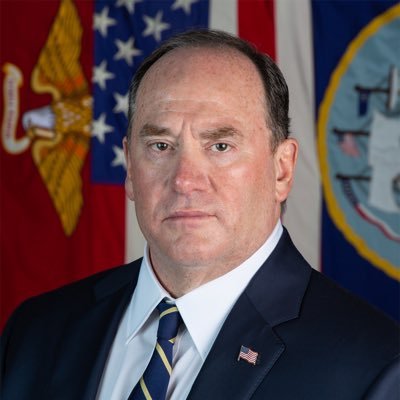
US Navy Secretary John Phelan. (Image X.com)
GOP strategist Amanda Makki says operational control remains with field commanders despite leadership churn
By TRH World Desk
April 24, 2026 — The abrupt removal of US Navy Secretary John Phelan has intensified scrutiny of internal divisions within the Pentagon, with Republican strategist Amanda Makki arguing that the move reflects policy disagreements rather than an immediate operational crisis.
Speaking to Al Arabiya English, Makki sought to separate political leadership tensions from military command realities, even as reports point to friction between senior Pentagon officials, including Defense Secretary Pete Hegseth.
“The Secretary of the Navy is largely responsible for manpower and overall administration,” Makki said, underscoring that operational command in active conflict zones does not rest with the civilian post.
Makki highlighted that current naval operations, particularly in the strategically sensitive Strait of Hormuz, are being directed by field commanders rather than the ousted Navy Secretary.
She pointed to Admiral Brad Cooper, who operates out of United States Central Command in Tampa, Florida, as the key figure overseeing day-to-day naval deployments in the region.
“There is a lot of confusion,” Makki noted, adding that while the Navy Secretary plays a critical strategic and administrative role, “the Navy is being run in that theater by an Admiral based out of Central Command, not the Secretary of the Navy.”
Pentagon infighting signals policy divergence
The timing of Phelan’s dismissal—amid heightened geopolitical tensions—has fueled speculation about internal discord within the Trump administration’s defence establishment.
Makki framed the development as part of broader governance dynamics. “This is what happens in an administration when there are differing opinions,” she said, suggesting that disagreements over priorities and execution are not uncommon at senior levels.
According to her, US President Donald Trump had specific expectations regarding the Navy Secretary’s role, particularly in contributing to broader institutional objectives within the Pentagon.
“President Trump really wanted the building to be a large part of what the Secretary of Navy was doing,” she said, implying that dissatisfaction with performance may have driven the decision.
Wartime optics and strategic messaging
The firing comes at a delicate moment, as US naval assets remain actively deployed in volatile regions. Analysts note that leadership changes during periods of heightened military activity often carry symbolic weight, potentially affecting perceptions of stability and coherence within defence structures.
However, Makki emphasized that operational continuity remains intact, stressing that the chain of command in active theatres is insulated from political reshuffles in Washington.
While the removal of a senior civilian leader like Phelan raises questions about internal cohesion, the distinction between administrative oversight and battlefield command appears central to understanding the immediate impact.
The episode ultimately underscores a familiar tension in Washington: the intersection of politics, policy, and military execution—particularly during periods of global uncertainty.
‘Unravelling Consensus’: US Public Opinion on Israel Shifting
Follow The Raisina Hills on WhatsApp, Instagram, YouTube, Facebook, and LinkedIn




About The Author