Prannoy Roy Questions SIR Voter Deletions, Flags Gender and Religious Disparities in Bengal
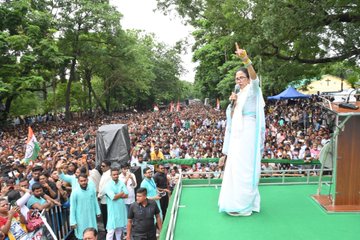
TMC leader and former West Bengal CM Mamata Banerjee addressed a public meeting in Kolkata. (Image TMC on X)
By KUMAR VIKRAM
The DeKoder analysis says women accounted for 62% of deleted voter names and Muslim voters faced a 52% higher deletion rate than non-Muslims, raising questions about the electoral roll revision process.
New Delhi, October 9, 2026 — Prannoy Roy of DeKoder has raised serious questions about the Election Commission of India’s Special Intensive Revision (SIR) of electoral rolls, arguing that the scale and pattern of voter deletions in West Bengal warrant greater scrutiny and a public explanation.
In an analysis drawing on Election Commission data and research by journalists and academics, Roy examined the relationship between voter deletions and electoral outcomes in West Bengal. He said the findings raised concerns about the accuracy of electoral rolls and the ability of eligible citizens to exercise their right to vote.
Roy described SIR as one of the largest and most complex exercises undertaken by India’s election authorities, arguing that it required careful planning and adequate time. He questioned the pace of its implementation, particularly in the months preceding state elections, and said the process had generated doubts about its design and execution.
The analysis referred to investigative reporting by The Indian Express and research published by other news organisations, including The Telegraph, The Print, The Wire, Scroll and The Reporters’ Collective.
SIR deletions and electoral outcomes
Roy’s analysis examined the relationship between voter deletions and changes in the vote shares of the Bharatiya Janata Party (BJP) and the Trinamool Congress (TMC) across West Bengal constituencies.
According to the figures presented in the DeKoder, the BJP’s vote share increased by around eight percentage points, while the TMC’s declined by approximately seven percentage points.
Roy said constituencies with higher SIR deletion rates also recorded larger swings against the TMC.
In the 25 constituencies with the highest deletion rates, the swing against the TMC was nearly 10.5%, compared with about 5.3% in the 25 constituencies with the lowest deletion rates.
He argued that the pattern showed an association between higher deletion rates and larger electoral swings towards the BJP. However, the relationship alone does not establish that voter deletions caused the electoral outcome or that the process was deliberately designed to benefit a particular party.
Women accounted for 62% of deleted names
A central concern in Roy’s analysis was the gender distribution of voter deletions.
He said women accounted for 62% of all deleted names in West Bengal, compared with 38% for men, despite the state’s electorate having a broadly balanced gender ratio.
Roy argued that the imbalance could have electoral implications because women have historically shown stronger support for the TMC than for the BJP in several studies cited in the analysis.
He noted that the difference in support between women voters for the two parties had, in some earlier assessments, been as high as 13 percentage points.
The figures raise questions about whether the revision process adequately accounted for eligible women voters whose names may have been removed because of documentation problems, changes of residence or other administrative issues.
West Bengal Budget Under Pressure: The ‘Double Engine’ Promise Faces a Fiscal Test
Muslim voter deletions raise further questions
Roy also highlighted what he described as a disparity in deletions involving Muslim voters.
According to his calculations, approximately 30 lakh Muslim voter names were deleted, compared with an estimated 19.8 lakh had Muslim voters experienced the same deletion rate as non-Muslims.
The difference, he said, represented a deletion rate approximately 52% higher for Muslim voters than for non-Muslims.
Roy argued that this disparity required a detailed explanation from the Election Commission, particularly given the historical voting patterns of Muslim electors in West Bengal.
His analysis also examined constituencies with substantial Muslim populations, reporting a relationship between higher Muslim voter presence, larger deletion figures and electoral swings against the TMC.
The findings are presented as an analysis of aggregate electoral data. They do not, by themselves, establish the individual religious identity of every deleted voter or prove discriminatory intent in the revision process.
Calls for transparency and safeguards
Roy said the Election Commission should publicly explain the gender and religious disparities identified in the analysis before allowing the exercise to proceed further without addressing the concerns.
He also cited former Chief Election Commissioner S. Y. Quraishi’s call for a clear explanation of the process.
The Election Commission has maintained that SIR is intended to ensure accurate electoral rolls by identifying eligible electors and removing ineligible or duplicate entries. Its stated procedures include physical verification, publication of revised rolls and opportunities to submit claims and objections. The central issue raised by critics is whether these safeguards are sufficient to prevent eligible voters from being wrongly excluded.
The consequences of disputed deletions have also been reflected in the appeals process. In September, the Election Commission informed the Supreme Court that more than 22 lakh voters whose names had been deleted in West Bengal had appealed for reinstatement.
Roy said the analysis had broader implications for states scheduled to undergo electoral roll revision ahead of future elections. He argued that updating voter lists was necessary but questioned the manner in which the current exercise had been designed and implemented.
In conclusion, Roy called for greater transparency over the deletions and their potential electoral consequences, saying his experience of studying Indian elections over four decades had left him particularly concerned about the process.
Follow The Raisina Hills on WhatsApp, Instagram, YouTube, Facebook, and LinkedIn




About The Author