Leap India IPO: A Forensic Look Behind the ₹2,480-Cr Issue
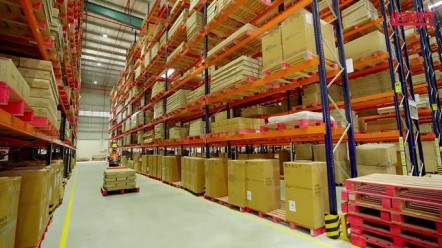
Leap India IPO in spotlight over valuation and OFS (Image Sector Research on X)
By S. JHA
Leap India IPO: A Forensic Read of the ₹2,480-Crore Offer. Growth Story, Priced for Perfection. Premium valuation. Monopoly business. But proceeds largely going into pocket of an existing shareholder, not into company’s balance sheet.
Mumbai, August 9, 2026 — Leap India Limited’s ₹2,480-crore initial public offering opened on August 7 and closes August 11, riding one of the more unusual pitches in this year’s IPO calendar: a business with, in the company’s own telling, no direct listed peer in India. But strip away the “first-mover, virtual monopoly” framing that has dominated early coverage, and the red-herring prospectus tells a more layered story — one where existing investors are cashing out far more than the company is raising, and where growth has come with cash-flow trade-offs analysts are only now starting to flag.
The Structure: Who’s Actually Getting the Money
The headline number is ₹2,480 crore. What often gets glossed over is how that sum splits. Regulatory filings show the issue comprises a fresh issue of 3.02 crore shares worth ₹480 crore and an offer for sale of 12.58 crore shares worth ₹2,000 crore — meaning roughly 81% of the money raised in this IPO flows not into the company’s balance sheet, but into the pockets of existing shareholders selling down.
The seller list clarifies who benefits most. Disclosures show promoter entity Vertical Holdings II Pte Ltd is offloading 125.7 million shares worth around ₹1,998.62 crore, while KIA EBT Scheme 3 is separately offering 86,603 shares worth ₹1.38 crore.
In other words, almost the entire offer-for-sale component is a single promoter entity’s exit, not a broad-based shareholder liquidity event. Company records list Sunu Mathew and Vertical Holdings II Pte Ltd as the promoters with promoter holding currently at 95.42%, a stake that will fall post-listing as this and other shares change hands.
Where the Fresh Money Actually Goes
Of the far smaller fresh-issue component, the company has been explicit that most of it isn’t funding expansion. Filings state the funds raised from the fresh issue will primarily be used for repayment of debt and general corporate purposes. Independent market analysis puts a number on this: roughly ₹360 crore of IPO proceeds are earmarked to repay debt, out of what one veteran commentator pegged at net debt of around ₹900 crore going into the listing.
That debt load, on closer inspection, carries a specific vulnerability. Company disclosures show aggregate outstanding borrowings of ₹1,023.20 crore as of June 30, 2026, made up of ₹973.14 crore in long-term borrowings and ₹50.06 crore in short-term borrowings.
Critically, ₹742.31 crore of the long-term borrowings — the bulk of it — is in the form of term loans carrying variable, rather than fixed, interest rates, leaving the company’s interest costs directly exposed to any future rate cycle.
The RHP also flags a liquidity wrinkle: certain of the company’s cash credit and bank overdraft facilities are repayable on demand, meaning lenders could recall them at short notice, creating potential liquidity pressure.
The Receivables Trend Nobody’s Headline Is Leading With
A quieter but arguably more telling data point sits in the working-capital numbers. Company financials show trade receivables climbing from ₹143.62 crore in Fiscal 2024 to ₹199.15 crore in Fiscal 2025, and further to ₹262.32 crore in Fiscal 2026 — nearly doubling in two years. As a share of revenue, that’s 39.35% in FY24, 42.69% in FY25 and 35.96% in FY26 of revenue from operations, a persistently high ratio for an asset-rental business that depends on timely cash collection to service its debt.
The company’s own explanation, buried in its risk factors, points to acquisition integration rather than organic customer strain: the RHP attributes the build-up to the SKAN Marine and CHEP India acquisitions, noting that integrating newly acquired customers and aligning their contractual commercial terms required additional time and contributed to delays in collections. That’s a plausible, one-time explanation — but it’s also the kind of disclosure a forensic reader flags to watch in post-listing quarters: does the receivables ratio normalise, or does it stay structurally elevated as a “new normal” for a company that has grown partly through M&A.
GMM Pfaudler Shares Jump 14% After Q1 FY27 Profit Nearly Doubles
Litigation on the Record
Leap India’s litigation footprint is limited, but not zero, and one detail is worth noting for what it says about counterparty risk in this line of business. RHP disclosures list an arbitration petition filed in December 2019 against Radhakrishna Foodland Private Limited seeking recovery of ₹39.73 million in dues related to pallet hire and supply services, currently pending evidence recording before an arbitrator, alongside an insolvency application filed in March 2023 against Rivigo Services Private Limited as an operational creditor for ₹14.39 million in unpaid dues under the Insolvency and Bankruptcy Code, pending before NCLT Chandigarh.
Both cases stem from the same underlying business risk the receivables trend hints at: getting paid on time by the clients who rent Leap’s pallets and equipment. The broader risk disclosure is franker still, noting that the company, its director, promoter, and members of senior management are involved in outstanding litigation, and any adverse outcome could adversely affect its reputation, business, financial condition, cash flows and results of operations.
Not every market voice treats this as a live concern. In televised comments ahead of the listing, veteran analyst Anil Singhvi said the company has no material litigation against it, is cash flow positive, and has a strong financial track record — a more benign reading that focuses on the absence of any litigation large enough to be classed “material” under SEBI disclosure norms, rather than the existence of the two matters listed above.
Why Are Gold and Silver Rising? All Eyes on US Jobs Report and Fed Rate Path
The Valuation Question: Priced Like There’s No Competition — Because There Isn’t
The case for Leap India’s rich pricing rests almost entirely on scarcity. Analysts covering the issue point out there are no listed Indian companies directly comparable to Leap, making it a rare listed opportunity in pallet-and-container pooling — a business model closer to global players than to any domestic peer.
That scarcity is precisely why the valuation multiple has drawn scrutiny. Singhvi’s own assessment put the IPO’s post-issue price-to-earnings multiple at around 111 times, which he called expensive, even as he noted the EV/EBITDA multiple of around 20 times looked more reasonable.
Other reviewers frame the trade-off starkly. One independent research note concluded that the valuation looks demanding when viewed only through the P/E ratio, but becomes easier to justify once cash generation, market leadership, growth potential and the lack of listed peers are factored in — essentially asking investors to pay up for a monopoly premium rather than for current earnings.
A separate assessment was blunter about the risk of that bet, describing the issue as exorbitantly priced based on recent financial data, with the company extracting a higher premium on the back of its near-monopolistic business model, and recommending it only for well-informed, cash-surplus investors willing to take on risk, with others advised to stay away.
Grey Market Momentum — A Signal, Not a Verdict
Ahead of listing, unofficial grey-market activity has swung sharply upward. Tracking shows the grey market premium was quoted at ₹4 on August 3 and ₹3 over the following two sessions, before jumping to ₹19.5 on August 6 and holding there into the issue’s opening day — at the upper price band, that implies a potential listing gain of about 12.26%. As with any IPO, that number is a sentiment gauge, not a valuation tool: the same coverage cautions that GMP is based on unofficial market activity and should not be considered a reliable indicator of actual listing performance.
The Bottom Line for a Forensic Reader
Leap India’s business case is genuinely differentiated — a pan-India asset-pooling network serving over 1,000 clients with no direct listed comparable, doubling its customer base in three fiscals.
But a forensic read of the RHP surfaces a structure that skews heavily toward promoter liquidity rather than growth capital, a debt book concentrated in variable-rate term loans, a receivables trend growing faster than management has fully explained away, and a valuation that assumes the monopoly holds and margins don’t compress.
None of these are disqualifying on their own — but together they are exactly the details a prospective investor should weigh well beyond the grey-market premium before the August 11 close.
(This article is a factual analysis based on publicly filed disclosures, brokerage commentary and market data cited throughout. It is not investment advice; GMP figures are unofficial and unregulated. Investors should read the full Red Herring Prospectus and consult a registered financial advisor before applying.)
Milky Mist Dairy Food IPO Opens August 11: Here’s Everything Investors Need to Know
Follow The Raisina Hills on WhatsApp, Instagram, YouTube, Facebook, and LinkedIn




About The Author