Kidfluencers Boom in India: Fame, Fortune and the Hidden Cost
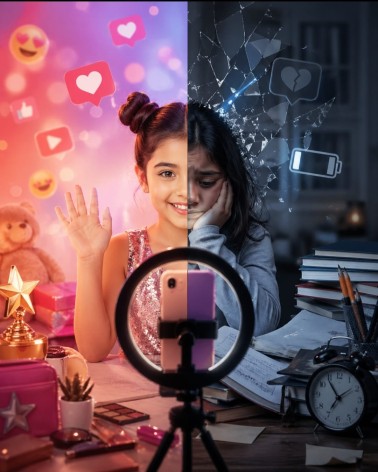
India’s kidfluencer boom is transforming digital marketing. (Image Bhawna Malik)
From Instagram reels to brand deals, child influencers are reshaping marketing while raising concerns over ethics and pressure
By BHAWNA MALIK
New Delhi, April 25, 2026 — “Show more excitement and hug your mamma a little longer.”
This is a routine instruction for six-year-old Rahul (name changed) whenever he sits down to shoot an Instagram reel. Rahul and his white Labrador are popular faces for a dog food brand, and his Sundays are often spent filming content.
Meera (name changed), another young creator, showcases dresses through her reels and earns lakhs annually through brand promotions. They are not just children — they are part of a fast-growing tribe of kidfluencers.
Even newborns are entering this digital race, with their expressions — and even potty training moments — shared online, drawing millions of views.
The rise of kidfluencers — children creating content and promoting brands on social media — has quietly become one of the fastest-growing segments of the digital economy. What began as toy unboxings and dance videos has evolved into a structured, monetised industry with global reach and high financial stakes.
Globally, the influencer marketing industry is valued at over $8 billion and is projected to cross $24 billion. Top kidfluencers are estimated to earn as much as ₹214 crore annually.
India mirrors this surge. By 2025, over 83,000 child influencers (under 16) were active on Instagram, marking a 41% annual growth. These creators often deliver strong engagement — averaging over 1.2 lakh reach — making them highly attractive to brands. Micro-influencers dominate, proving influence is no longer limited to celebrities.
The Nomad Who Left Silicon Valley for Goats, Art and Conscience
For brands, the appeal is clear: relatability. A child demonstrating a product often feels more authentic than a celebrity endorsement. Categories like toys, ed-tech, kidswear, and family travel are increasingly tapping into this space. The “dual audience” effect — appealing to both children and parents — makes kidfluencers especially powerful in shaping household decisions.
Yet, the boom comes with concerns. Legal frameworks around child labour, consent, and earnings remain underdeveloped. Laws like India’s Digital Personal Data Protection Act aim to regulate children’s online presence, but enforcement is still evolving.
Psychologists warn of deeper risks. Constant exposure to likes, comments, and public validation can shape a child’s self-worth. “There is a risk of children equating popularity with personal value,” says single parent Simran Narula, whose six-year-old daughter now imitates her favourite influencers.
Behind the cheerful reels lies a structured ecosystem — often managed by parents handling scripts, shoots, edits, and brand deals. But this commercialisation raises difficult questions: Who owns the earnings? How much agency does the child truly have?
“Children’s digital footprints are being created before they can understand the consequences,” says educationist Dr. C.B. Mishra, warning of potential academic and psychological impacts.
The kidfluencer economy sits at a complex intersection of childhood and commerce. While it offers creativity and opportunity, it also raises pressing concerns about privacy, pressure, and exploitation.
The challenge ahead is balance — ensuring that in the race for likes and brand deals, the child does not get lost behind the content.
Follow The Raisina Hills on WhatsApp, Instagram, YouTube, Facebook, and LinkedIn




About The Author