Rajnath Singh’s DRDO Missile Tech Move: 8 Defence Stocks That Could Benefit and Why
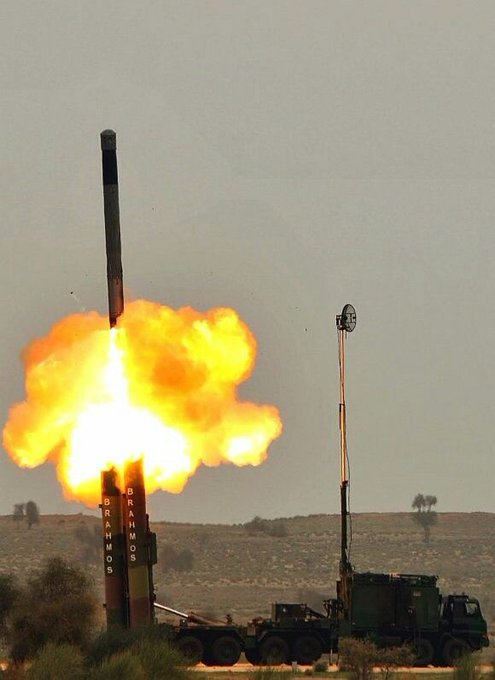
BrahMos Missile test firing (Image credit X.com)
By S. JHA
Defence Minister Rajnath Singh’s approval to transfer DRDO-developed conventional missile technologies to Indian industry could boost domestic missile production, defence electronics and the wider MSME supply chain, putting BDL, BEL, Solar Industries, Astra Microwave, L&T and other defence stocks in focus.
Mumbai, August 25, 2026 — Defence stocks are likely to remain in focus after Defence Minister Rajnath Singh approved the transfer of Defence Research and Development Organisation (DRDO)-developed technologies for all conventional missile systems to Indian industry for domestic production.
The move is aimed at taking missile systems from the development stage to industrial-scale production, increasing domestic value addition and reducing India’s dependence on defence imports. The Ministry of Defence said the initiative would also create opportunities for Indian MSMEs and technology partners to participate in the missile supply chain.
The announcement is particularly significant for companies involved in missile manufacturing, defence electronics, propulsion, warheads, systems integration and precision components.
However, investors should distinguish between companies that could directly manufacture missile systems and those that may benefit indirectly through the broader supply chain. The technology transfer will be subject to qualifications, certifications, regulatory approvals and, in some cases, competitive bidding. Business Standard reported that private Indian firms could compete to become development-cum-production partners and undertake systems integration with DRDO.
Which Defence Stocks Could Benefit?
- Bharat Dynamics — Direct Missile Manufacturing Play
Bharat Dynamics Limited is among the most obvious stocks to watch because missile production is at the core of its business.
BDL has established capabilities in manufacturing and integrating missiles and related weapon systems for the Indian armed forces. Greater localisation of conventional missile production could potentially expand the addressable market for domestic missile manufacturers.
The key caveat is that the latest policy is designed to broaden industry participation, including private companies. Therefore, the announcement could eventually increase competition within the domestic missile manufacturing ecosystem rather than benefit BDL exclusively.
Why it benefits: Core missile manufacturing exposure, established defence production infrastructure and potential participation in larger indigenous missile-production programmes.
Will the US Debt Crisis Impact Indian Markets? Here’s What the Numbers Already Show
- Bharat Electronics — Defence Electronics and Systems
Bharat Electronics Limited could benefit through the electronics-intensive portion of missile systems.
Modern missiles require sophisticated guidance, navigation, radar, communication, electronic warfare and control systems. BEL’s established defence-electronics capabilities make it a potential beneficiary as missile production scales up domestically.
The benefit is therefore likely to come not simply from missile volumes but from higher domestic content in missile electronics and associated systems.
Why it benefits: Defence electronics, radar, communication systems and systems-integration capabilities.
- Solar Industries India — Warheads, Propulsion and Energetics
Solar Industries India is another important stock to watch because its defence business includes ammunition, warheads, propulsion and other energetics-related products.
A shift towards larger-scale indigenous missile manufacturing could create opportunities across the missile supply chain, including propulsion and warhead components.
The company has also been expanding its presence in defence manufacturing, making the DRDO technology-transfer initiative strategically relevant to its long-term growth opportunity.
Why it benefits: Exposure to defence explosives, energetics, warheads and propulsion-related manufacturing.
- Larsen & Toubro — Systems Integration and Defence Manufacturing
Larsen & Toubro could benefit from the government’s increasing reliance on private-sector defence manufacturing.
L&T has substantial engineering, manufacturing and systems-integration capabilities across India’s defence ecosystem. If conventional missile programmes move towards large-scale industrial production, companies with sophisticated manufacturing and integration capabilities could compete for production partnerships.
The latest decision is particularly relevant because the government wants to move beyond DRDO’s role as a developer and bring industrial partners into production.
Why it benefits: Engineering scale, precision manufacturing, systems integration and established defence programmes.
- Astra Microwave Products — Missile Electronics and Radar
Astra Microwave Products could be a significant indirect beneficiary because of its exposure to radar, radio-frequency and microwave electronics used in defence systems.
Business Standard reported that the Astra beyond-visual-range air-to-air missile was among the conventional missile systems considered likely candidates for private-sector technology licensing.
That makes Astra Microwave particularly interesting for investors looking for a missile-electronics rather than missile-platform play.
The stock was also in focus separately on August 25 after Antique Stock Broking initiated coverage with a Buy rating and a ₹2,000 target, citing the defence-electronics upcycle, a strong order book and the company’s move towards complete systems.
Why it benefits: RF and microwave electronics, radar-related technologies and potential exposure to missile programmes.
- Data Patterns — Defence Electronics and Avionics
Data Patterns India is another defence-electronics company that could benefit as missile production becomes increasingly localised.
Missile systems require sophisticated electronics, avionics, testing systems and embedded technologies. Data Patterns’ exposure to indigenous defence electronics gives it potential participation in the expanding supply chain.
Why it benefits: Defence electronics, avionics, electronic systems and indigenous technology development.
- Paras Defence — Optics and Electronic Systems
Paras Defence and Space Technologies could benefit indirectly through specialised components and electro-optical systems.
The company supplies optical and electro-optical systems to Indian defence customers, including DRDO-related programmes. Reuters reported last week that Paras Defence expects its exports to more than double in FY27 amid increased global demand for defence engineering products.
Why it benefits: Optics, electro-optics and specialised defence components that can form part of larger weapon systems.
- Bharat Forge — Private-Sector Defence Manufacturing
Bharat Forge is another stock that could benefit from the broader shift towards private-sector defence manufacturing.
Through its defence operations, the Kalyani Group has built capabilities in artillery, armoured systems and other defence platforms. An expansion of domestic defence production could create additional opportunities for large private manufacturers with established engineering and systems-integration capabilities.
Why it benefits: Large-scale engineering, defence manufacturing and private-sector participation in strategic platforms.
From DRDO Laboratory to Factory Floor
The most important aspect of the announcement may not be the immediate impact on any single stock.
It is the change in India’s defence-production model.
For decades, DRDO’s principal role was to develop technologies that were subsequently produced through government-owned defence companies or other designated manufacturers. The new approach seeks to move technologies more rapidly from laboratories into industrial production by giving domestic industry a larger role.
The Ministry of Defence said the initiative is intended to enhance operational capability, reduce import dependence and increase domestic value addition. It also specifically highlighted opportunities for MSMEs and other technology partners.
That could create a multiplier effect across the defence ecosystem.
A missile order does not benefit only the company assembling the final system. It can generate demand for:
- Radar and RF electronics
- Guidance and navigation systems
- Propulsion
- Warheads and explosives
- Precision-machined components
- Sensors and electro-optics
- Embedded electronics
- Testing equipment
- Cables and connectors
- Specialised materials
- Software and control systems
Astra, BDL, BEL and Solar: Different Ways to Play the Theme
From an investor perspective, the defence-stock universe can therefore be divided into different categories.
BDL offers relatively direct exposure to missile manufacturing.
BEL offers exposure to the electronics and systems side of defence.
Solar Industries provides exposure to explosives, warheads and propulsion-related defence manufacturing.
Astra Microwave, Data Patterns and Paras Defence provide more specialised exposure to electronics, RF, avionics and electro-optical systems.
L&T and Bharat Forge offer broader private-sector defence manufacturing and systems-integration exposure.
The announcement does not mean that all these companies will receive DRDO technology or missile orders. The government has made clear that production will be subject to qualifications, certifications and regulatory requirements, while competitive bidding could determine which firms become manufacturing partners.
Key Cues to Watch Out
The next major trigger will be the identification of specific missile systems and the companies selected as development-cum-production partners.
Business Standard reported that conventional systems such as the Astra air-to-air missile and Pralay surface-to-surface quasi-ballistic missile were among the likely candidates for technology licensing, while strategic nuclear systems such as the Agni series are understood to be outside the scope of the initiative.
Therefore, the August 25 announcement should be viewed primarily as a long-term structural positive for India’s defence manufacturing ecosystem, rather than as an immediate earnings trigger for every defence stock.
For investors, the companies with the strongest combination of missile exposure, technological capability, manufacturing capacity, order-book visibility and proven execution could emerge as the bigger beneficiaries.
Defence Stocks to Keep on the Radar
| Stock | Potential benefit | Nature of exposure
| Bharat Dynamics | High | Missile manufacturing |
| Bharat Electronics | High | Defence electronics and systems |
| Solar Industries | High | Warheads, explosives and propulsion |
| Astra Microwave | High | Missile/RF electronics
| L&T | Moderate-High | Systems integration and manufacturing |
| Data Patterns | Moderate-High | Avionics and defence electronics |
| Paras Defence | Moderate | Optics and electro-optics |
| Bharat Forge | Moderate | Private-sector defence manufacturing |
Investment caution: A policy announcement can improve the industry’s long-term opportunity without translating immediately into revenue or profit for individual companies. Investors should wait for actual technology licences, tenders, development-cum-production partnerships and order wins before assigning company-specific earnings benefits.
The broader message, however, is clear: India’s missile ecosystem is moving another step from indigenous technology development towards indigenous mass production. The companies capable of absorbing that technology and converting it into scalable production could be among the key beneficiaries of the next phase of India’s defence-manufacturing cycle.
(Disclaimer: This article is for informational purposes. No advice is here made.)
Hy-Tech Engineers IPO Opens Strong: GMP, Subscription and Key Risks Explained
Follow The Raisina Hills on WhatsApp, Instagram, YouTube, Facebook, and LinkedIn




About The Author