Social Justice by Letterhead: Four Organisations, One Message and India’s Selective Outrage Machine
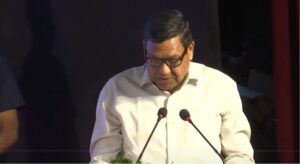
BJP's Dushyant Gautam faces political heat after his appointment as Sikkim Governor. (Image INC India)
By AMIT KUMAR
BJP-circulated PTI report questions Congress’s intervention in Ankita Bhandari case, raising an awkward question: who gets to decide when outrage is politically convenient?
New Delhi, October 16, 2026 — Indian politics has discovered a remarkable new instrument of constitutional morality: the identical open letter. Four organisations have reportedly written separately to the Congress leadership, carrying the same message about selective social justice. The BJP, meanwhile, has circulated the PTI report in social groups, giving the argument a wider political audience.
The arrangement is almost a masterclass in political efficiency. Four letterheads, one script, several quotations from Babasaheb Ambedkar and a question designed to put Congress on the defensive. In an age of expensive political communication, coordinated indignation appears to offer excellent economies of scale.
The organisations — the SAIL SC & ST Employees Federation, NBCC SC/ST Employees Welfare Association, Dr B R Ambedkar Volleyball Club and SC Hakkula Porata Sangam — have accused Congress of political opportunism over its intervention in the Ankita Bhandari murder case.
Their central argument is that social justice cannot be invoked selectively to embarrass political opponents.
It is a perfectly respectable principle. The interesting part begins when one asks whether the principle is being applied universally, or whether the demand for universal consistency has itself become another instrument of political point-scoring.
After all, political parties have a curious relationship with inconvenient questions. They generally prefer that constitutional morality be examined under a microscope when their opponents are involved and through a telescope when their own political circumstances become uncomfortable.
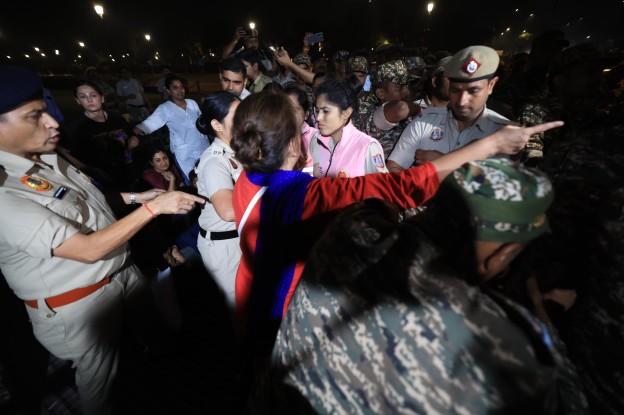
Rahul Gandhi met Ankita Bhandari’s parents at India Gate on Wednesday and sought justice for their daughter, who was murdered in Uttarakhand in September 2022. The four organisations objected to what they described as Congress’s selective invocation of social justice.
One can almost hear the imaginary parliamentary footnote: justice is welcome, provided the opposition does not receive any political mileage from demanding it.
That, of course, would be an absurd standard. A murder investigation does not acquire less legitimacy because a political leader joins a protest. Nor does the participation of an opposition leader establish that the intervention is free from political calculation. Both propositions can be true simultaneously: politicians may have electoral motives, and the demand for accountability may still be entirely legitimate.
The more uncomfortable question is whether the demand for consistency is being directed equally at everyone.
BJP leader Dushyant Kumar Gautam, recently appointed governor of Sikkim, has faced allegations that he was the unidentified VIP allegedly seeking favours from Bhandari before her murder. The allegation has not been established as fact. Bhandari’s parents have demanded that his governorship be put on hold until the ongoing CBI investigation is completed.
Gautam belongs to the Jatav community, a Scheduled Caste, as highlighted in the open letters and also by the BJP. His caste identity is relevant to the debate as presented by the organisations, but it neither proves nor disproves any allegation. The same standard of evidence and accountability must apply irrespective of caste, party or constitutional office.
And here lies the real test of the letters’ argument. If social justice cannot be a partisan instrument, neither can the demand for social justice be subjected to a partisan permission slip.
Ambedkar’s legacy is too consequential to be reduced to a competition over who quotes the Constitution most frequently. It demands equal standards, independent scrutiny and accountability that does not change according to the colour of the ruling party.
The four organisations are entitled to question Congress. Congress is entitled to answer. The BJP is entitled to circulate the report. Citizens are entitled to ask whether the same insistence on consistency will be applied to every party and every case.
But the murder of a young woman is not merely a convenient backdrop for a political argument. The investigation must stand on its evidence, not on the identity of those demanding justice.
That the CBI as recently as this month met Ankita’s father raises a question on seriousness of the probe. That no phone records of Pulkit Arya, serving life-sentence, the resort manager, have yet been retrieved also raises questions.
India’s political establishment has perfected the art of asking whether its opponents are being selective. The more difficult exercise is to examine its own selectivity.
Perhaps the next innovation in political communication should be four separate letters asking every political party the same question, with the same wording, regardless of who stands to gain.
Until then, constitutional morality remains a curious commodity in Indian politics: everyone demands that it be universal, provided the scrutiny begins with somebody else.
Ankita Bhandari’s Parents Detained at 4 AM; Congress Targets Modi Over Dushyant Gautam
Follow The Raisina Hills on WhatsApp, Instagram, YouTube, Facebook, and LinkedIn




About The Author