Dinesh Trivedi Meets Bangladesh PM: A Mild Knock on Frozen Ties

Dinesh Trivedi Meets Bangladesh PM Tarique Rahman in Dhaka. (Image India's High Commission in Dhaka on X)
By MANISH ANAND
India’s High Commissioner in Dhaka Dinesh Trivedi’s meeting with Bangladesh PM Tarique Rahman came amid five red flags and clear signs that bilateral relations are on downward spiral.
New Delhi, August 11, 2026 — India’s High Commissioner in Dhaka Dinesh Trivedi called on Bangladesh Prime Minister Tarique Rahman on Monday — after over two months of his appointment for key post. On the same day, Trivedi also called on Bangladesh Home Minister Salahuddin Ahmed. Reports said that India’s intelligence officials will be in Dhaka on Tuesday to meet their counterparts.
Trivedi, a Bengali-speaking politician from West Bengal, holds the Cabinet rank. That he’s a veteran politician with an astute political training signal New Delhi’s interests in resetting ties with Dhaka.
But Rahman gave time to Trivedi after a gap of two months of the Indian High Commissioner arriving in Dhaka. This shows the priority of Rahman in his foreign policy.
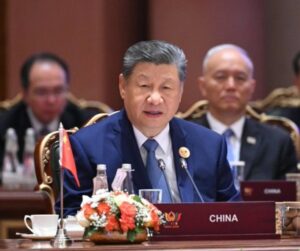
The Bangladesh Prime Minister has visited China. His predecessor Muhammad Yunus, Chief Advisor to the erstwhile Interim Government of Bangladesh, had also made Beijing his first foreign destination.
Rahman is yet to visit New Delhi. Yunus never visited India in his capacity as the Chief Advisor. Prime Minister Narendra Modi had indeed met Yunus. That was on the sidelines of an ASEAN Summit.
Bangladesh has sent out the message that India “needs to create a conducive atmosphere” in bilateral relations. That was stated after Trivedi called on Rahman.
On personal chemistry, Rahman accorded cordial reception to the Indian High Commissioner. He was received warmly. They chatted with shared bonhomie.
His bilateral delegation level talks with Bangladesh Prime Minister signify India’s criticality for Dhaka. Bangladesh is surrounded by India on three sides. On the other side, Bangladesh opens to sea, which also comes under the Indian influence.
Yet Bangladesh has chosen to stand up to India. Rahman’s first visit to China after becoming the Prime Minister was his first act of defiance of Indian primacy in the matters of South Asia. His endorsement of China’s engagement in port and river projects — too close to India to New Delhi’s comforts — was his raising of second red flag for Dhaka’s largest neighbour. Rahman showed third defiance by making Trivedi wait for two months for an appointment with him.
Geopolitical observers claim that the Bangladesh Prime Minister has shown his priority list in foreign policy — China, the U.S., India, Turkey, and so on. This is an unofficial priority list. If true, this makes top red flag for India.
For decades, the U.S. banked on India for South Asian stability by delinking Pakistan from the orbit. Now the U.S. is seeking a position of an equal stakeholder, as China raises South Asian profile.
India for decades employed economic tools to assert the South Asian leadership. That template is now challenged by deep pockets of Beijing and Washington. Trivedi alone may not arrest the drift. India may need to reinvent its South Asian template.
(This is an opinion piece. Views expressed are the author’s own.)
India-Bangladesh Relations Need a Reset Beyond Sheikh Hasina
Follow The Raisina Hills on WhatsApp, Instagram, YouTube, Facebook, and LinkedIn




About The Author