Dhanraj Nathwani’s Rajya Sabha Ticket: Manish Anand Questions Money Power in Politics
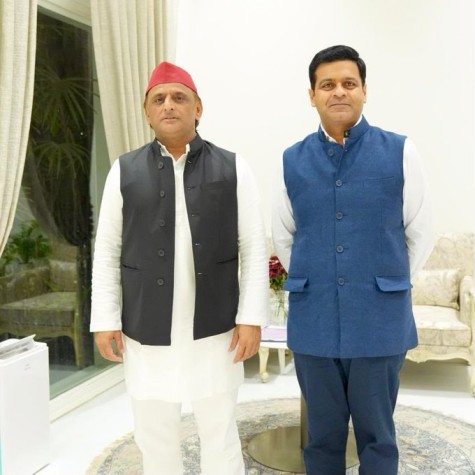
Reliance executive Dhanraj Parimal Nathwani filed nominations for Rajya Sabha biennial elections (Image Nathwani on X)
By TRH Op-Ed Desk
Manish Anand, a political analyst, argues that the Samajwadi Party’s choice of Reliance executive Dhanraj Parimal Nathwani highlights concerns about corporate influence, wealth and Parliament’s role in representing ordinary citizens.
New Delhi, October 3, 2026 — The Samajwadi Party’s nomination of Dhanraj Parimal Nathwani for the Rajya Sabha from Uttar Pradesh has reignited a debate over the influence of wealth and corporate connections in Indian politics.
In a monologue for The Raisina Hills, political analyst Manish Anand questioned the choice by Samajwadi Party chief Akhilesh Yadav, arguing that it raised questions about the party’s socialist credentials and its commitment to representing ordinary citizens.
Dhanraj Nathwani, a senior Reliance Industries executive and son of Rajya Sabha MP Parimal Nathwani, was named alongside veteran Samajwadi Party leader Ram Gopal Yadav for the October 16 Rajya Sabha elections.
“Indian politics appears, in many ways, to be under the influence of industrialists and money power,” Anand argued, questioning why political parties across the ideological spectrum nominate wealthy individuals to the Upper House.
He also referred to Parimal Nathwani’s June 2026 victory in the Jharkhand Rajya Sabha election, where the NDA-backed Independent defeated Congress candidate Pranav Jha amid cross-voting. While the election witnessed cross-voting, the secret ballot makes it difficult to establish the identity of individual legislators who may have voted across party lines.
Anand extended his criticism beyond the Samajwadi Party, arguing that the nomination of wealthy candidates by different political parties raises questions about access to Parliament and the representation of ordinary citizens.
He pointed to everyday concerns such as crowded trains, expensive air travel, road accidents, school fees and healthcare costs, asking why these issues do not receive sustained parliamentary debate.
“Who will raise the voice of the people if political parties are influenced by money power?” was the central question running through his commentary.
Anand also questioned whether the entry of the Aam Aadmi Party into politics had delivered the alternative political model it once promised, arguing that the nomination of wealthy candidates to the Rajya Sabha had raised similar concerns.
The broader issue, he maintained, is whether Parliament can adequately represent ordinary citizens when wealth and corporate influence appear to play a significant role in political recruitment.
The nomination of Dhanraj Nathwani has therefore become a point of debate over political representation, party ideology and the relationship between business and public life.
(Views expressed are those of Manish Anand.)
Follow The Raisina Hills on WhatsApp, Instagram, YouTube, Facebook, and LinkedIn




About The Author