Dak Ghar Niryat Kendra: A Quiet Export Revolution or Just Good Publicity?
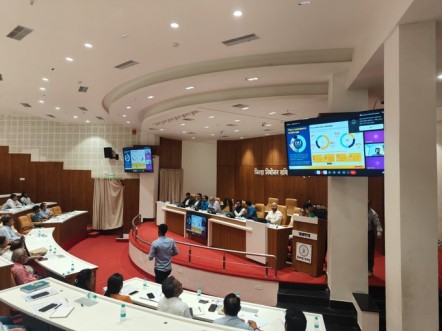
India Post Export promotion camp in Jalgaon in Maharashtra. (image DGFT on X)
By P. SESH KUMAR
Dak Ghar Niryat Kendra has created a nationwide postal export network, but cumulative shipments of 12.31 lakh worth ₹287 crore raise questions about utilisation, repeat exporters, export realisation and whether access has translated into genuine export capability.
New Delhi, August 28, 2026 — A widely circulated social media post celebrates the Dak Ghar Niryat Kendra (DNK) as the quiet revolution nobody noticed: 1,000-plus post office export counters, a village artisan shipping to 228 countries, and–since January 2026–Duty Drawback, RoDTEP and RoSCTL finally extended to the postal channel. Checked against the record, the scaffolding of the claim holds. The Postal Export (Electronic Declaration and Processing) Regulations were notified on 9 December 2022; 1,013 Kendras stand across 762 districts; the Central Board of Indirect Taxes and Customs (CBIC) did extend the three rebate schemes to electronically filed postal exports with effect from 15 January 2026.
What the post omits is the arithmetic. Three years of that network have carried 12.31 lakh consignments worth about Rs 287 crore–an average of Rs 2,331 a parcel, roughly one parcel per Kendra per day, and less than one-hundredth of one per cent of India’s annual merchandise exports. The “228 countries” figure traces to a single divisional press conference in Mangaluru; the Department’s own product sheets show tracked, e-commerce-grade service reaching a far smaller number. And the post is silent on the fortnight in August 2025 when the entire postal channel to the United States–the market that matters most to small e-commerce sellers–simply closed.
The Post That Went Viral
It is a good post. That must be said at the outset, because the temptation of the retired auditor is to reach first for the red pencil and only later for the applause. The writer has found something genuinely underreported, described it in the register of the kitchen table rather than the gazette, and resisted the usual crescendo. A woman weaving in a small town, shipping to Germany from the counter where her grandmother bought money orders –that is a better sentence than anything in the Foreign Trade Policy, and it is not untrue.
What it is, however, is unaudited. And an unaudited good news story has a way of hardening into a settled fact, then into a policy assumption, and finally into a reason not to look. So let us look.
What the Record Actually Says
The regulatory birth certificate is real and it is dated. Notification No. 104/2022-Customs (N.T.) of 9 December 2022 brought the Postal Export (Electronic Declaration and Processing) Regulations, 2022 into force, and Circular No. 25/2022-Customs of the same day set out the Postal Bill of Export Automated System, with an exporter portal at the now-familiar dnk.cept.gov.in and a mirrored login for Customs officers. So the post’s “launched only in December 2022” is fair, with one caveat: what was launched was the automation, not the entitlement. Export by post is as old as the Post Office itself, and the Postal Bill of Export existed on paper long before it existed on a screen. What December 2022 did was replace a form nobody could complete with a workflow a first-timer could survive.
The build-out is traceable in a paper trail that is, for once, unusually tidy. The Department of Posts authorised 122 booking offices in February 2023, another 715 in July 2023, and 170 more by November 2023, which the Board itself totted up to 1,007 after netting out duplicates and omissions. By the time the Minister of State for Communications answered a Lok Sabha question on 4 December 2024, the count stood at 1,013, spread across every State and Union Territory–93 in Uttar Pradesh, 76 in Karnataka, 64 each in Maharashtra and Tamil Nadu, and precisely one each in Sikkim and Lakshadweep. The Department’s own year-end review for 2025 places those 1,013 Kendras across 762 districts, with 122 in the North Eastern Region, and describes the transformation as one from twenty Foreign Post Offices to a thousand-odd district-level counters.
The January 2026 announcement is also real, and it is the most consequential thing in the whole story. Notification No. 07/2026-Customs (N.T.) and Circular No. 01/2026-Customs, both of 15 January 2026, amended the 2022 Regulations, substituted the electronic Postal Bill of Export forms, and made Duty Drawback, RoDTEP and RoSCTL claimable on postal exports filed electronically. The Ministry of Finance called it a level playing field, and for once the phrase is not merely ministerial. So the load-bearing claims in the viral post survive verification. It is the load they are asked to bear that is the problem.
The Arithmetic Nobody Posted
The Department’s year-end review for 2025 is candid in a way that press releases rarely are, and it supplies the two numbers that settle the argument: the Dak Ghar Niryat Kendra (DNK) network has facilitated over 12.31 lakh export shipments with an export value of approximately Rs 287 crore. Both are cumulative– “as of date,” which is to say roughly three years.
When we divide, the romance thins. Twelve lakh consignments across a thousand-odd counters over three years is about 1,215 parcels per Kendra, or thirty-four a month, or a little over one a day. The Kendra in Sikkim, being the only one, presumably does better; the Kendra in a district where nobody has ever heard of it does worse, because averages are cruel that way. Two hundred and eighty-seven crore rupees across 1,013 counters is Rs 28.3 lakh per counter cumulatively–under Rs 80,000 of export value per counter per month.
The average consignment works out at Rs 2,331. That is the single most eloquent number in the file, because it validates the post’s emotional claim and demolishes its economic one in the same breath. The writer said the system was built for the Rs 2,000 handicraft order. He was right. That is exactly what is moving through it. What is not moving through it is anything larger.
And the aggregate deserves one comparison, made carefully. India’s merchandise exports run to roughly Rs 37 lakh crore in a single year. Three years of the entire DNK network amount to about Rs 287 crore. That is under one-hundredth of one per cent–something in the order of one rupee in every twelve thousand, and the comparison flatters the Kendras, since one side of it is cumulative and the other annual. Set beside the cumulative USD 13 billion that a single private marketplace reports having exported out of India by the end of 2024, the postal channel is not a rival; it is a rounding error with a very good story attached.
None of which makes it a failure. It makes it a pilot that has been described as an achievement.
Two Hundred and Twenty-Eight, and the Forty-One
The headline number deserves its own paragraph, because it is the hook on which the entire post hangs and it rests on a single source. The figure of 228 countries appears in a Deccan Herald report of a press conference in Mangaluru, where the Senior Superintendent of Post Offices announced three new DNKs and said products could be exported to 228 countries by air parcel, speed post and the International Tracked Packet Service. It is a divisional officer’s figure, quoted once, in one newspaper. It is not implausible–postal destination lists do count territories, dependencies and special administrative regions, exactly as the post’s postscript explains– but it is not a departmental publication either, and it should be read as such.
Departmental material tells a more textured story. A Department of Posts workshop presentation on the DNKs, circulating in the public domain, sets out coverage product by product: Express Mail Service to 106 countries, air parcel and registered post to 213, and the International Tracked Packet Service to a much smaller list. The Lok Sabha answer of December 2024 puts that list at 41 countries, with about 13.48 lakh tracked packets booked in 2023-24; five more destinations–Bulgaria, Kazakhstan, Mexico, Uruguay and Zimbabwe–were added from April 2025, along with a tariff reduction of up to 49 per cent and a raised weight limit for 29 destinations, and a bilateral agreement with Russian Post followed in December 2025.
That gap is the story. Two hundred and twenty-eight is the reach of the postal network as a network. Forty-odd is the reach of the only product a cross-border e-commerce seller can actually build a business on–the cheap, tracked, sub-five-kilogram packet that a buyer abroad can follow on a screen. An artisan in Odisha can post a parcel to Paraguay. Whether she can promise a delivery date, prove despatch to a marketplace’s satisfaction, and survive a chargeback dispute is a different question, and the answer depends on which of the two numbers applies to her buyer.
The August the Post Forgot
Here is the omission that matters most, and it is not a small one.
On 30 July 2025 the United States issued Executive Order 14324, withdrawing the duty-free de minimis treatment for imports valued up to USD 800 with effect from 29 August. Air carriers, faced with an unbuilt mechanism for collecting and remitting duties and no clarity on who counted as a “qualified party,” declined to carry US-bound mail. The Department of Posts suspended booking of all postal articles to the United States from 25 August 2025, initially excepting letters, documents and gifts up to a hundred dollars, and then, on 31 August, suspending even those. Service resumed only on 15 October 2025, on a newly built Delivered Duty Paid (DDP) mechanism, with a flat fifty per cent duty applicable on the declared value of postal shipments from India. That rate came down to 18 per cent only after the interim India-US understanding of February 2026 removed the punitive component and lowered the reciprocal tariff.
Let us read that sequence beside the viral post’s cheerful count of 228 countries. For seven weeks, the number that mattered was zero. The most affordable route to the largest market for exactly the kind of seller the DNKs were built for–the Etsy seller, the jewellery micro-brand, the spice exporter with a Shopify page–closed overnight, for reasons entirely outside the Department’s control, and reopened at a duty rate that would have wiped out the margin on most Rs 2,331 consignments. To the Department’s credit, it built the DDP mechanism in under two months and refused to charge customers for it. But the episode establishes something the enthusiasm cannot absorb: the postal channel’s cost advantage is a policy artefact of other countries’ customs regimes, and it can be revoked by a foreign executive order on a Wednesday afternoon.
The Rebate That Must Be Claimed at the Counter
Now to January 2026, and here the auditor’s question is the boring one: what does the benefit actually amount to, and what does it cost to obtain?
On the average consignment of Rs 2,331, RoDTEP at prevailing rates for handicrafts, apparel and similar lines yields somewhere between roughly ten rupees and ninety rupees. That is an illustrative computation from published rate ranges rather than an official figure, and rates vary by tariff line, but the order of magnitude is not in doubt. Against that, the exporter must hold an Importer-Exporter Code (IEC) and a GST registration, register an Authorised Dealer code on ICEGATE, maintain a bank account mapped for refunds, classify goods to the correct tariff line, and–according to trade advisories on the new forms, a point I flag as resting on consultancy commentary rather than the circular’s text–tick the correct benefit box at the moment of filing, with no facility to claim later if the box is missed.
Then there is the form the benefit takes. Duty drawback is cash. RoDTEP and RoSCTL are transferable duty-credit scrips sitting in an ICEGATE ledger, useful for paying basic customs duty on imports. The village artisan of the viral post imports nothing. Her scrip is therefore a piece of paper that must be sold to somebody who does import, in a broker market, at a discount, for a sum smaller than the cost of the afternoon spent arranging it. Extending the schemes was correct and overdue. Assuming that extension equals realisation is the classic conflation of an entitlement with a benefit–the same conflation that has haunted every input-tax and rebate scheme this country has designed for its smallest producers.
A related nuance is worth putting on record, since the post gets it slightly wrong in the exporter’s favour. It was never quite true that postal exporters were barred from these rebates while port and courier exporters received them automatically. The more accurate statement is that the entitlement was not so much prohibited as unclaimable: there was no electronic declaration to hang a claim on, and a manual Postal Bill of Export was not a document the drawback system could read. January 2026 did not create a right. It built the pipe through which an existing right could finally flow–which is, if anything, a more interesting reform than the one the post describes.
Steel-Manning the Enthusiast
Against all of the above, the strongest case for the celebration is this, and it is not weak.
First, network economics do not reward us in year three. The Kendras are a fixed-cost overlay on infrastructure that already exists and is already staffed; the marginal cost of the thousandth counter is close to nothing, and the option value of having export documentation available in 762 districts cannot be measured by this year’s throughput. India Post is not building a business; it is building a right of access.
Second, the plumbing genuinely works. The integration achieved between the Kendra portal, ICEGATE, the Customs EDI system, the Public Financial Management System and the Reserve Bank’s Export Data Processing and Monitoring System–announced in September 2024–automates IGST refunds and feeds the data that produces electronic Bank Realisation Certificates. Anyone who has watched Indian systems fail to talk to one another will recognise that as a real accomplishment, achieved in-house, and rewarded by a Universal Postal Union (UPU) special recognition and an Asia-Pacific Postal Union mention.
Third, the counterfactual is not “these exports would have happened anyway through a courier.” For a Rs 2,000 consignment from a district town, the counterfactual is no export at all. Every one of those 12.31 lakh parcels is, at minimum, a household that discovered international demand exists.
Fourth, the political system has, unusually, kept faith. The Commerce Minister was still urging States in July 2026 to use the Kendras so that every district becomes an exporting district, inside a seven-point plan aiming at a trillion dollars of exports. Schemes have died of less attention than this.
Where the Post Is Simply Wrong
Two things must be corrected. The first is the claim that nobody talks about this. The Foreign Trade Policy 2023 carries an entire chapter on cross-border digital trade in which the Kendras are named; the Department has run national workshops at Chennai, Mumbai, Vadodara and Lucknow; the initiative has been decorated at Geneva and Bangkok; the Minister raises it at the Board of Trade. The publicity deficit is a myth. The uptake deficit is the fact.
The second is the image of the village. The Kendras sit in head post offices and larger sub-offices–Pandeshwar, Hampankatte, Surathkal in the Mangaluru division; five designated centres in Nagaland announced from Dimapur. Odisha’s thirty-five Kendras are in towns. Free pick-up softens the distance, but the counter is not in the village, and the honest formulation is “in your district” rather than “down your lane.”
And a small caution on the Mangaluru vignette, which the post presents as a wave of first-time exporters. The report it derives from quotes the Superintendent as saying that twelve parcels had been sent from the division, and that the facility was yet to pick up among the people. Twelve is a beginning. It is not a phenomenon.
What Is Missing: The Measurement
This is where a former auditor earns his keep, and where the criticism is directed not at the enthusiast but at the Department.
There is, in the public domain, no outcome framework for the DNK. We are told how many counters exist, which is an output. We are told a cumulative shipment count and a cumulative value with no base year, which makes trend analysis impossible and year-on-year growth unverifiable. We are not told how many exporters have registered on the portal, how many have shipped even once, how many have shipped more than once, what the repeat rate is after twelve months, what proportion of export proceeds were actually realised and certified through electronic Bank Realisation Certificates, how the value distributes across circles, or what the median rather than mean consignment is worth. We are not told the cost of the programme, and therefore cannot compute a cost per rupee of export facilitated. Parliamentary answers give geography and product categories; the year-end review gives a cumulative total. Nobody has published the denominator.
Without those numbers, the celebration and the scepticism in this note are both, in the end, inferences. That is an unsatisfactory place for a scheme in its fourth year, and it is a straightforward failure of departmental reporting rather than of departmental performance. It is also, incidentally, a ready-made subject for a performance audit: the objectives are stated, the systems are digital, the data exists inside the portal, and the audit question– did building the counter create the exporter?–is exactly the kind of question the Comptroller and Auditor General (CAG) exists to answer.
Auto Sector Growth Story: EVs, Exports and New Capacity Drive FY27 Growth
Lessons
The first lesson is the oldest one in development administration: access is not the same as capability. India removed the documentation barrier and discovered that documentation was not the binding constraint. The artisan’s real problems are finding a buyer in Düsseldorf, meeting that country’s product and labelling rules, pricing in a foreign currency, absorbing a return, and getting paid. A post office counter solves none of these. It solves the fifth problem on a list of six.
The second is that a channel built on somebody else’s tolerance is a fragile channel. The de minimis episode proved that the postal route’s economics are contingent on foreign customs policy, and that contingency now has to be designed for rather than hoped away.
The third is that a rebate is only a benefit if the beneficiary can convert it. Cash to a bank account is a benefit. A transferable scrip in a ledger, claimable only if a checkbox was ticked, is an administrative artefact.
The fourth is that the government has become genuinely good at building digital rails and remains poor at generating demand along them. The same pattern is visible in the Government e-Marketplace, in ODOP, in the export hub programme. We keep laying track and then wondering where the trains are.
The Way Forward
Publish the denominator. An annual DNK outcome report–registered exporters, active exporters, first-time and repeat rates, circle-wise and district-wise value, median consignment, realisation through electronic Bank Realisation Certificates, and programme cost–would cost the Department nothing it does not already hold in its own database, and would convert a good story into a governable one.
Make the rebate automatic. If the portal already knows the tariff line, the value and the exporter’s Authorised Dealer code, the claim should be computed by the system and the exporter asked to confirm rather than to remember. Forfeiture for a missed checkbox on a two-thousand-rupee parcel is a design choice, not a legal necessity, and it should be reversed with a facility for post-facto regularisation below a de minimis threshold.
Solve the scrip problem for micro-exporters. Either allow small-value RoDTEP and RoSCTL entitlements to be paid in cash like drawback, or create a pooled redemption window so that a weaver is not obliged to become a trader in duty credits.
Widen the tracked footprint faster than the counter count. Forty-six tracked destinations against a thousand counters is the wrong ratio. Every new International Tracked Packet Service agreement is worth more to a real exporter than fifty new Kendras.
Institutionalise the Delivered Duty Paid (DDP) capability. What was built in eight weeks for the United States is a genuine national asset. It should be extended pre-emptively to the European Union and the United Kingdom, ahead of the low-value import reforms both are moving towards, rather than assembled in a panic afterwards.
Finally, converge the DNK with the data the Department is already collecting. India Post is verifying Udyam registrations and informal micro-enterprise records for the Ministry of MSME. A postman who has just verified a weaver’s Udyam entry is standing in front of a potential first-time exporter with a catalogue photograph and a DNK three kilometres away. That link–between the enterprise register, the export counter and the buyer–is the only part of this architecture still missing, and it is the only part that would justify the language of revolution.
Until then, the honest summary is the one the numbers give us. A thousand counters. One parcel a day. Two thousand three hundred rupees a time. A serious piece of public plumbing, built quietly and competently, waiting for the water to be turned on.
(This is an opinion piece. Views expressed are the author’s own.)
The Golden Mirage: Anatomy of Rajesh Exports ₹15.15L Cr Scam
Follow The Raisina Hills on WhatsApp, Instagram, YouTube, Facebook, and LinkedIn




About The Author