China Anti-Graft Drive: Xi Faces Scrutiny After Chongqing Shock
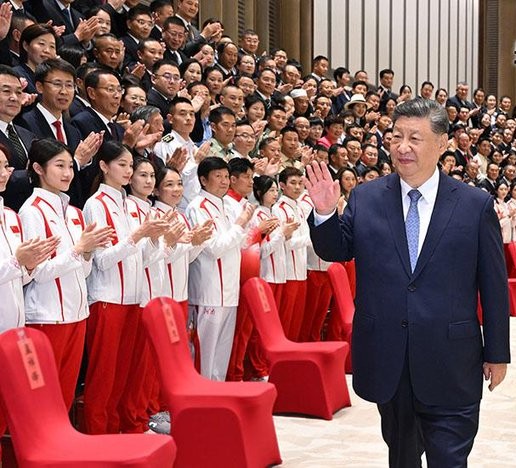
Chinese President Xi Jinping. (Image X.com)
Academic Junhua Zhang says crackdown reveals deeper systemic issues beyond corruption
By TRH World Desk
New Delhi, April 25, 2026 — China’s sweeping anti-corruption campaign under President Xi Jinping is facing renewed scrutiny after a shocking case in Chongqing highlighted what experts describe as deeper systemic problems within the bureaucracy.
According to Junhua Zhang, a retired professor and senior associate at the European Institute for Asia Studies, the issue is “more than corruption,” pointing to structural and moral decay within sections of the Communist Party’s governance apparatus.
Late last year, authorities in Chongqing launched a major crackdown targeting senior officials. Among those punished was Tang Chuan, former Party secretary of Yubei District, who was expelled from the Communist Party and dismissed from public office for violations including illegal land occupation and extravagant spending on banquets. Several other high-ranking officials were also investigated for bribery, embezzlement, and disciplinary breaches.
However, what followed stunned observers. Reports suggested that while in prison, Tang was diagnosed with HIV, and allegations emerged that dozens of female civil servants in the region may have been infected. The episode, widely discussed online, exposed what Zhang described as the “chaotic underbelly” of local governance.
The case comes amid an intensifying anti-corruption push. Official data indicates that in 2025 alone, China’s disciplinary authorities initiated over 1 million cases and penalised nearly 983,000 officials across various levels of government.
While Beijing has projected the campaign as a cornerstone of governance reform, critics argue that the rising number of cases points not only to enforcement strength but also to the scale of entrenched corruption. Recent purges across sectors — including the military and financial institutions — further underline the breadth of the crackdown.
Analysts remain divided. Supporters of the campaign say it reflects zero tolerance for misconduct, while sceptics argue that recurring scandals suggest deeper institutional weaknesses that punitive action alone may not resolve.
As Zhang notes, the challenge for China is not just punishing corruption, but addressing the systemic conditions that allow such behaviour to persist — a task far more complex than high-profile crackdowns.
China Confirms Purge of Ma Xingrui After Five Months of Silence
Follow The Raisina Hills on WhatsApp, Instagram, YouTube, Facebook, and LinkedIn




About The Author