CBSE Backs Down on Three-Language Rule After Nationwide Backlash
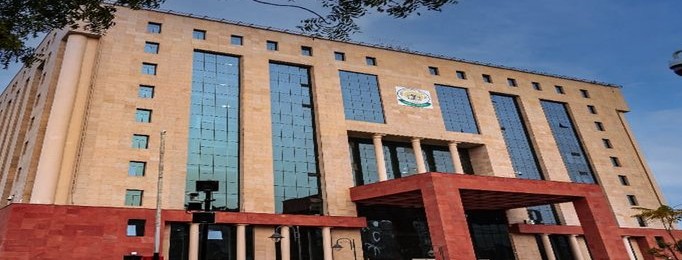
Exterior view of the CBSE headquarters building (Image CBSE HQ)
By KUMAR VIKRAM
Facing widespread criticism over its three-language policy and still recovering from the OSM evaluation controversy, CBSE has introduced major relaxations that postpone key provisions and exempt current batches from Board examination requirements.
New Delhi, June 29, 2026 — The Central Board of Secondary Education’s (CBSE) latest clarification on the National Education Policy’s (NEP) three-language formula is more than an academic circular. It is an acknowledgment that policymaking, especially in education, cannot ignore public sentiment, practical realities, and administrative preparedness.
Coming after weeks of criticism from parents, schools, language activists and state governments, the revised implementation guidelines substantially soften the original approach and indicate that the board has been forced to recalibrate.
The timing is equally significant. The decision arrives when CBSE is already battling a credibility crisis following the On-Screen Marking (OSM) controversy, which raised serious questions over the conduct of Class XII evaluations and institutional accountability. The language policy retreat therefore represents not merely an educational adjustment but an attempt to rebuild public confidence.
What Has Changed
The revised CBSE guidelines introduce several important relaxations.
Students currently in Classes IX (2026-27) will continue with their existing language combinations. Their third language (R3) will be assessed internally by schools, and there will be no CBSE Board examination for the third language when they reach Class X in 2027-28.
Students currently studying in Classes VII and VIII who had already opted for two non-native languages will now only have to add one Bharatiya Bhasha and continue with that arrangement until Class X. Again, the third language will only be assessed internally.
Only students entering Class VI from the 2026-27 academic session onwards will fully transition into the new framework requiring two Bharatiya Bhashas, with the third language eventually becoming part of the Board examination at the secondary level.
The Board has also provided multiple exemptions, including for Children With Special Needs (CWSN), CBSE schools located outside India, and foreign students returning to India.
Another significant concession is for families relocating between states. Students migrating because of their parents’ transfers will be allowed to continue with their existing language combinations, while schools will be required to arrange adequate teaching resources.
Recognising implementation challenges, CBSE has also permitted schools to rely on retired teachers, postgraduate scholars, inter-school teacher sharing through Sahodaya clusters, and virtual or hybrid teaching wherever language teachers are unavailable.
A Retreat Driven by Public Pressure
Although the circular frames these changes as implementation support under NEP 2020, the revisions unmistakably reflect the intensity of the backlash that followed the earlier guidelines.
Parents questioned the practicality of introducing additional language requirements midway through schooling. Schools warned about an acute shortage of qualified language teachers. Several states argued that linguistic diversity cannot be managed through uniform administrative directives.
The revised framework effectively postpones the toughest implementation challenges to younger batches while insulating current students from disruptive academic transitions.
That is a tacit recognition that policy rollout requires flexibility rather than rigid adherence to timelines.
The Shadow of the OSM Controversy
The climbdown cannot be viewed in isolation.
Only weeks ago, CBSE faced one of its biggest crises after the On-Screen Marking (OSM) controversy, where allegations over answer-sheet evaluation triggered widespread concern among students and parents. The controversy dented the Board’s reputation and renewed questions about its administrative preparedness for large-scale reforms.
Against that backdrop, the language policy assumed greater political and institutional sensitivity.
Another prolonged confrontation with parents over the three-language formula would have further eroded confidence in an institution already under intense scrutiny.
Instead, CBSE appears to have chosen consultation over confrontation.
Implementation Remains the Bigger Test
The revised guidelines address several immediate concerns, but they do not eliminate the larger structural questions.
Where will thousands of qualified language teachers come from?
Can digital teaching realistically substitute classroom learning in remote districts?
Will smaller private schools possess the resources needed for multilingual education?
Can internal school assessments maintain uniform academic standards across the country?
These questions remain unanswered.
The Board’s emphasis on “joyful learning” and conceptual understanding reflects the aspirations of NEP 2020, but implementation will ultimately determine whether those aspirations become reality.
A Lesson Beyond Languages
The controversy offers an important lesson for education governance. Major reforms cannot succeed through circulars alone. They require careful consultation with teachers, parents, state governments and educational institutions. India’s linguistic diversity is one of its greatest strengths, but managing that diversity requires consensus rather than compulsion.
Ironically, the biggest takeaway from CBSE’s revised guidelines may not concern languages at all.
It is that institutions regain credibility not by refusing to acknowledge criticism but by demonstrating the willingness to course-correct.
In that sense, CBSE’s latest circular represents both a policy adjustment and an institutional admission that implementation must move at the pace of public confidence.
(This is an opinion piece. Views expressed are the author’s own.)
CBSE OMS Tender Row: How a Student’s Probe Put Coempt Eduteck Under Spotlight
Follow The Raisina Hills on WhatsApp, Instagram, YouTube, Facebook, and LinkedIn




About The Author