CBSE OSM Row Escalates as Centre Transfers Top Officials
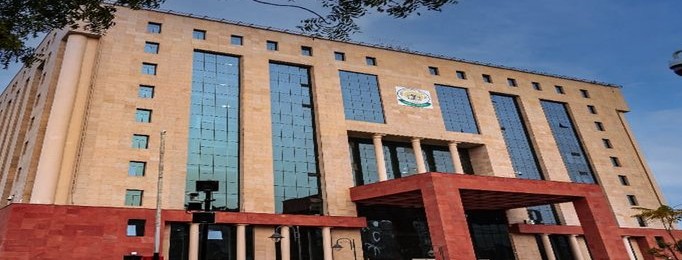
Exterior view of the CBSE headquarters building (Image CBSE HQ)
By AMIT KUMAR
The Centre has transferred CBSE Chairman Rahul Singh and Secretary Himanshu Gupta and ordered a probe into the procurement of the On-Screen Marking (OSM) system amid allegations of irregularities in Class 12 evaluation.
New Delhi, June 2, 2026 — The controversy surrounding the Central Board of Secondary Education’s (CBSE) On-Screen Marking (OSM) system took a dramatic turn on Tuesday after the Centre transferred CBSE Chairman Rahul Singh and Secretary Himanshu Gupta and simultaneously ordered a formal inquiry into the procurement of the digital evaluation platform used in the Class 12 examination process.
An Office Memorandum issued by the Cabinet Secretariat announced the constitution of a one-member committee headed by S. Radha Chauhan, Chairperson of the Capacity Building Commission, to investigate matters relating to the procurement of services for the On-Screen Marking System by CBSE.
The committee has been asked to submit its report to the Department of Personnel and Training (DoPT) within one month.
The development comes amid mounting criticism from students, parents, education activists and opposition parties over alleged irregularities in the digital evaluation process that many claim led to unexpectedly low scores and widespread discrepancies in Class 12 results.
While the government has not publicly linked the transfers of the two senior CBSE officials to the inquiry, the timing has stoked speculation that the Centre is taking the allegations seriously. Rahul Singh had received a two-year extension from the Appointments Committee of the Cabinet as recently as November 2025, making his sudden removal particularly noteworthy.
The OSM controversy first gained traction on social media, where students questioned unusually low marks, inconsistencies in evaluation and the effectiveness of the subsequent re-evaluation process. Several students aspiring for admissions to foreign universities and competitive examinations reportedly claimed that unexpected scores adversely affected their academic plans.
The issue also reached Parliament’s Standing Committee on Education, chaired by Digvijaya Singh, which held discussions with CBSE officials on Tuesday. Shortly after the meeting, the Centre announced both the transfers and the formation of the inquiry panel.
Congress leader Jairam Ramesh alleged that the action validates concerns raised by students and opposition parties. In a post on X, he argued that the inquiry and the transfer of CBSE’s top leadership indicate that irregularities may have occurred in the procurement and implementation of the OSM system. He further demanded accountability from Union Education Minister Dharmendra Pradhan, calling for his resignation.
Education commentator Nagendra Sharma also criticized the government’s response, describing the transfers as an attempt at “perception management.” He argued that the damage to students had already been done and pointed to complaints from students affected by what he termed faulty marking and a problematic re-evaluation process.
However, the inquiry’s terms of reference suggest that the immediate focus will be on the procurement process of the OSM platform rather than the broader question of whether the digital marking system itself produced flawed academic outcomes. That distinction may prove crucial as the investigation progresses.
The controversy has once again raised larger questions about the rapid digitization of high-stakes examinations in India. While digital evaluation systems are intended to improve efficiency, transparency and consistency, critics argue that technological failures or procurement irregularities can have far-reaching consequences for millions of students.
With the committee expected to submit its findings within a month, the inquiry is likely to become a significant test of accountability for both CBSE and the Union Education Ministry. The outcome could influence not only future examination reforms but also public confidence in India’s school evaluation system.
Anatomy of a CBSE Crisis: AI, Outsourcing and Accountability
Follow The Raisina Hills on WhatsApp, Instagram, YouTube, Facebook, and LinkedIn




About The Author