Brazil Election Results: Lula’s Historic Comeback Defeats Bolsonaro Dynasty
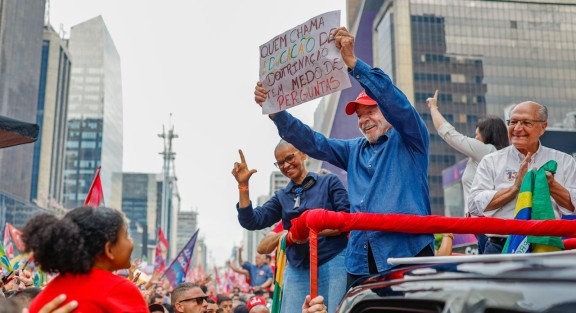
Lula wins a fourth term after overturning his first-round defeat (Image Lula on X)
By TRH World Desk
Brazil’s president secures an unprecedented fourth term with 51.78% of the valid vote, overcoming a first-round defeat. The victory offers relief to the left but leaves Lula facing a conservative Congress and deep public divisions.
New Delhi, October 26, 2026 — Brazil has delivered a remarkable political reversal. President Luiz Inácio Lula da Silva defeated his predecessor Flávio Bolsonaro to win an unprecedented fourth presidential term, demonstrating that a first-round setback does not necessarily signal the end of a political comeback.
Also, the Brazilian verdict may also be seen as an affirmation of a global trend in which the far-right politics is in the backfoot. For US President Donald Trump, the Brazilian verdict seems a dampener as he finds thin crowds at his Mid-Term rallies for Republicans. While he has again endorsed Israeli Prime Minister Benjamin Netanyahu in a long post on his Truth Social, Israel is also sending indications of the far-right politics having hit the plateau.
According to Brazilian newspaper Folha de S.Paulo, Lula secured 51.78% of valid votes against Flávio Bolsonaro’s 48.22% in the October 25 runoff. The result overturned the first-round verdict, in which Bolsonaro had finished ahead.
The outcome is more than a personal triumph for Lula, who turns 81 on October 27. It is a setback for the political movement built around former president Jair Bolsonaro, whose son sought to convert the family’s conservative following into a return to power.
A victory, not a mandate without limits
Lula’s victory suggests that concerns about democratic institutions and the prospect of another Bolsonaro presidency helped mobilise voters who wanted to prevent a right-wing return. Yet the narrow margin also exposes the limits of the president’s appeal.
The electorate remains divided over the economy, public security, living costs and the credibility of political institutions. Lula’s record on social welfare and poverty reduction helped sustain his support, but economic anxieties and persistent anti-Workers’ Party sentiment gave Flávio Bolsonaro a formidable electoral base.
The result should therefore not be interpreted as Brazil abandoning conservatism. The Bolsonaro camp remains a powerful force, and its electoral strength extends beyond the presidential contest.
As Folha de S.Paulo noted in its election coverage, Lula faces a more conservative Congress, which could complicate appointments, legislative negotiations and the implementation of his agenda.
That institutional arithmetic may prove more consequential than the celebrations following his victory. Lula will have to build coalitions, address concerns over crime and living costs, and demonstrate that social protection can coexist with fiscal credibility.
The election also carries significance beyond Brazil. Lula has positioned himself as a defender of national sovereignty and an advocate of a more autonomous international role for Latin America’s largest economy. His victory frustrates a regional rightward trend, but does not settle the debate over Brazil’s relationship with Washington.
Follow The Raisina Hills on WhatsApp, Instagram, YouTube, Facebook, and LinkedIn




About The Author